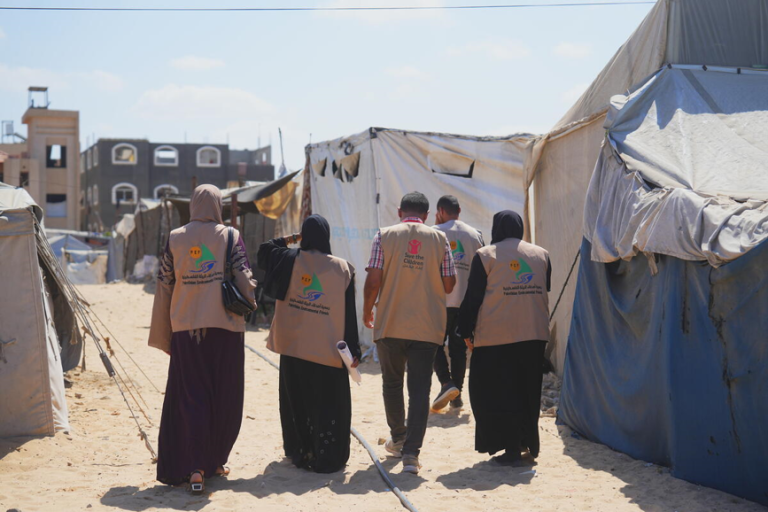
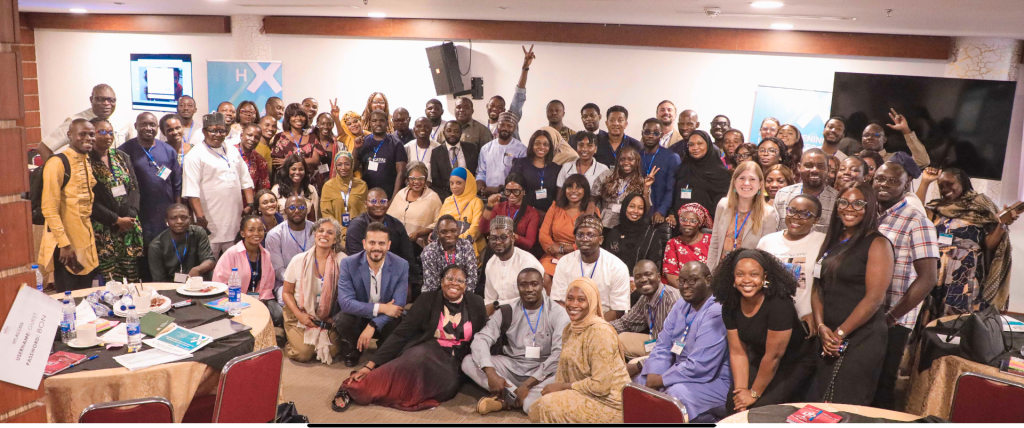
The Humanitarian Leadership Academy with Save the Children International Nigeria convened a collaborative space for knowledge-sharing, peer learning and cross-sectoral dialogue for humanitarians across Nigeria this July.
For decades, humanitarian aid has followed a familiar model: international organisations provide funding and technical expertise, while local organisations deliver the response on the ground. Increasingly, many within the sector believe that model no longer reflects reality.
At Humanitarian Xchange (HX) Abuja, more than 120 humanitarian practitioners, government officials, researchers, youth leaders and community organisations, funding partners, researchers and academicians gathered under the theme: “Strengthening Local Voices, Partnerships and Innovation in Humanitarian Response”. Their message was clear: those closest to crises should play a far greater role in leading the response.
The need for stronger coordination among humanitarian actors has never been greater. No single organisation can address the scale of today’s challenges alone. When we coordinate effectively, we reduce duplication, use resources more efficiently, amplify local leadership, and ensure that assistance reaches those who need it most.”
The two-day conference took place against the backdrop of complex humanitarian crisis. According to the latest Cadre Harmonisé analysis, 36.2 million people across 26 states and the Federal Capital Territory are expected to face acute food and nutrition insecurity between June and August 2026. Among them, 2 million people are projected to be in emergency levels of food insecurity.
In Borno State alone, more than 758,000 people are expected to face emergency levels of food insecurity, while malnutrition rates remain critically high in areas such as Mobbar, Nganzai, and Maiduguri.
At the same time, humanitarian organisations are grappling with shrinking donor funding, rising operational costs and growing pressure to do more with fewer resources.
Participants of HX Abuja argued that these challenges demand more than additional funding, they require a different way of working.
Throughout the two-day event, the theme of localisation dominated conversations, but delegates stressed that localisation is not simply about local organisations delivering projects on behalf of international agencies.
Instead, it is about shifting decision-making, resources and leadership to national and community actors who understand local contexts and maintain trusted relationships with affected communities.
Many participants said local organisations continue to be treated primarily as implementing partners rather than strategic leaders. They called for more equitable partnerships, greater representation in humanitarian coordination structures and increased access to flexible, direct funding that enables local organisations to set priorities rather than simply execute externally designed programmes.
Innovation was another recurring theme, though participants challenged the notion that it is defined solely by technology. While tools such as early warning systems, anticipatory action, geographic information systems and cash assistance programmes are improving humanitarian response; delegates argued that the greatest innovation lies in changing how organisations work together. Stronger collaboration, adaptive management and meaningful community participation were identified as equally important innovations that can improve humanitarian effectiveness.
The conference also called for a shift from capacity building to capacity sharing. Rather than viewing expertise as flowing only from international organisations to local ones, participants described learning as a two-way process. Local organisations increasingly mentor peers, strengthen governance systems and develop future humanitarian leaders, demonstrating that knowledge exists throughout the humanitarian ecosystem.
Youth leadership featured prominently in the discussions. Participants highlighted examples of young volunteers leading community responses during emergencies such as the Monday Market fire and the Maiduguri floods. Despite these contributions, young people remain underrepresented in humanitarian decision-making. Delegates called for greater investment in youth-led initiatives and stronger representation of young leaders in governance and coordination platforms.
Thank you for believing in young leaders and for creating platforms that inspire learning, collaboration, and growth. Your leadership and dedication to creating meaningful learning spaces are truly commendable. The conference broadened my understanding of humanitarian innovation, localisation, and the vital role of youth-led organisations in shaping more inclusive and effective responses. I am especially grateful for the opportunity to engage with experienced professionals, exchange ideas, and contribute my perspective as a youth leader. The knowledge and insights I gained will significantly influence my work with local communities
Another major concern was humanitarian financing. Participants warned that declining donor support has intensified competition among organisations, often undermining collaboration and limiting investment in long-term institutional capacity. To build a more resilient humanitarian system, they recommended diversifying funding through government investment, philanthropy, private sector partnerships and locally generated resources while expanding direct funding for national organisations.
The conference concluded that effective humanitarian action depends on genuine partnerships built on trust rather than hierarchy. International organisations continue to offer valuable technical expertise and global experience, participants noted, but local organisations should be recognised as equal partners with the authority to shape priorities, influence decisions and lead responses.
The conversations in Abuja reflected a broader shift taking place across the humanitarian sector. The future of humanitarian action may depend less on finding new solutions than on trusting the people who have been responding to crises all along.
Listen to reflections from HX Abuja participants
Learn more about Raquel Kasham Daniel, Maryam Hassan Gambo, Stephen Olushola Oladepo, David Habba, Dr Biobele Davidson, Rukaiya Ibrahim and Philip Ali Yidawi on the podcast page.
About Humanitarian Xchange
In 2024, Humanitarian Leadership Academy launched the Humanitarian Xchange (HX) – a groundbreaking global event series designed to cultivate a forward-thinking environment for addressing humanitarian challenges and driving transformative change.
HX serves as a platform to bridge the gap between international humanitarian actors and local responders, ensuring that crisis-affected communities have a direct voice in shaping humanitarian action. It is a collaborative space for knowledge-sharing, peer learning, and cross-sectoral dialogue among humanitarian practitioners, local responders, donors, and researchers.
The inaugural Humanitarian Xchange (HX24) event was held on 20 February in London, UK and was named Best Charity Event/Event for Positive Change in the Conference and Event Awards. From London to Gaziantep, Sarajevo to Baghdad, Kampala and now Abuja. Humanitarian Xchange is supported by Google.org and Center for Disaster Philanthropy. Visit the HX website to learn more.