18th June 2026
75 years ago, the world made a promise for everyone’s benefit: people forced to flee have the right to seek and live in safety. For World Refugee Day 2026, George Graham, Executive Director, Global Impact at Save the Children UK shares his personal reflections – and calls for a revival of shared values: a common humanity to drive collective solutions to support refugees.
This year’s World Refugee Day feels more important than ever. In countries around the world, we’re seeing a rise in hostility to refugees and migrants and a growing resistance to the idea of collective action to provide protection and support for people who’ve been forced from their homes.
If the 1951 Refugee Convention were being negotiated today, it seems very unlikely that anything like the current framework would be agreed. We’ve moved from the ugly but functional framing of refugees and IDPs as ‘caseloads’ that need to be managed to an even less attractive framing that sees displaced people as a threat to be controlled, or even expelled.
The current international refugee protection framework was negotiated by tough-minded and often quite conservative politicians in the 1940s and early 1950s. An important thing they had in common, and which wouldn’t be the case if negotiators gathered today, is that they had all experienced war. They knew that war is hell and they were determined to find ways to prevent the horrors that they’d seen from replaying. That understanding, forged from hard experience, seems lost among many of today’s leaders and culture-formers.
There’s a hypocrisy in modern attitudes to refugees in that people often applaud the protection given to refugees in the past while condemning efforts to provide similar protection in the present. In my own country, for example, we celebrate the sanctuary that was given to Jews, particularly unaccompanied Jewish children, in 1940s Britain.
We also look positively on the protection given to Ugandan Asians in the 70s, a group that has gone on to play a prominent part in British life ever since. And yet we’re seeing striking hostility – from at least some parts of the population – to refugees from other places today.
So, for me, this year’s World Refugee Day is a precious chance to remind ourselves of – and to fight for – some basic truths that seem too often neglected or forgotten: no one chooses to flee their homes, everyone has the same basic rights, we all have a responsibility to try to support people in need; and collective challenges require collective solutions. Cutting across all of these is the idea of our common humanity.
Fighting for the right to childhood
At Save the Children, we are, as you would expect, focused on how forced displacement affects children. The key thing is that childhood doesn’t just stop when a girl or boy is forced from their home. Everyone has the right to childhood, and fighting for this right is especially pressing for refugee children.
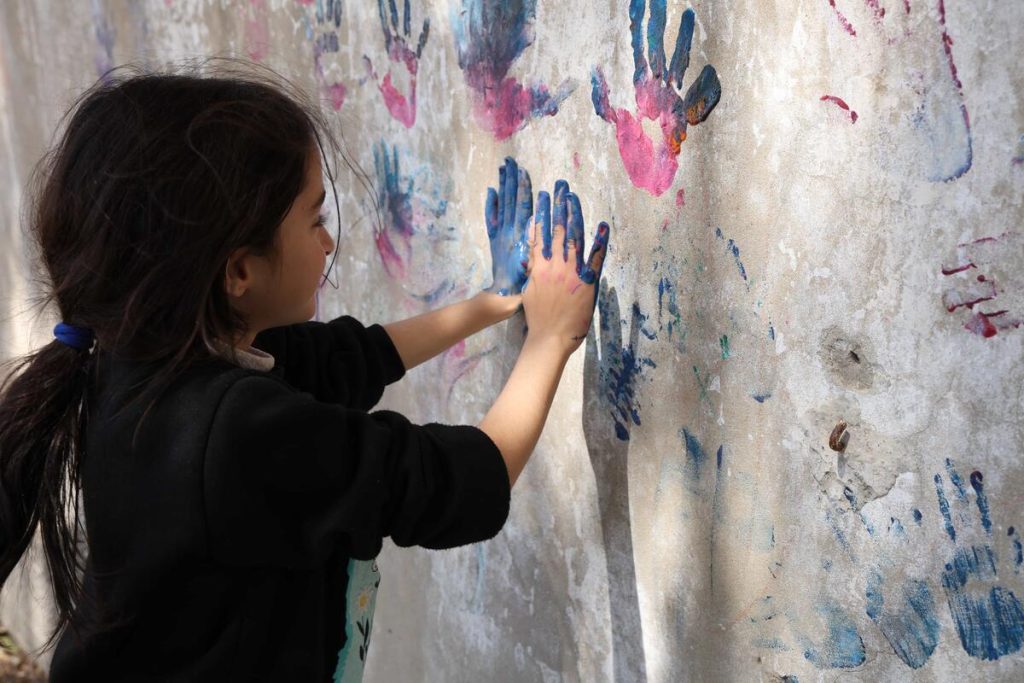
Image credit: Save the Children
I’ve met displaced children all over the world. Numbers are hard to pin down, but I’ve seen estimates of up to 70 million children worldwide who are currently living in situations of displacement or international migration. Most of these have been forcibly displaced. Displaced children are particularly vulnerable and, once displaced, they often face a series of compounding challenges that affect every part of their lives. Importantly, these needs are not the same as those of adults.
Education is usually one of the first things children lose when they are displaced – and it’s one of the hardest to recover. Of the world’s 14.8 million school-aged refugee children, nearly half – approximately 7.2 million – are still out of school. Enrolment drops sharply at secondary level, where just 42% of refugee children attend, compared to a global average of 77%. At university level, only 7% are enrolled. When children fall behind, catching up becomes harder with every year that passes. This is a massive waste of human potential.
With healthcare systems often disrupted, overwhelmed or non-functional and food security often precarious, children miss routine vaccinations, face disease outbreaks and may go weeks or months without adequate nutrition. Disease and malnutrition in early childhood have lasting effects, causing lifelong damage to physical and cognitive development.
There is also a heavy psychological toll. Most children who flee their homes have witnessed or experienced things no child should have to face – violence, the death of loved ones, dangerous journeys, family separation. Moreover, displacement creates conditions where children are far more vulnerable to violence, exploitation and abuse. They may be separated from parents during flight or parents may die during conflict.
Unaccompanied children face these challenges without even the protection and emotional security of a caregiver, making every risk more acute. The impact can be profound and long-lasting. Children affected by displacement show significantly higher rates of anxiety, depression and post-traumatic stress than their peers. Without access to mental health support – which is often unavailable or unaffordable – these difficulties can persist for years, affecting children’s ability to learn, form relationships and eventually rebuild their lives.
The future can – and will – be brighter
But a displaced child isn’t defined only – or even primarily – by their needs or by the things that they lack, and it is important not to focus only on hardship and challenges. Even in the toughest circumstances, children have agency, a voice and a future.
One constant theme in the many conversations I have had with children in so many parts of the world, living in so many different circumstances, is optimism – the idea that the future will be brighter. I think there’s real truth in this; children everywhere show remarkable resilience, curiosity and creativity and most can achieve great things even from the toughest starts.
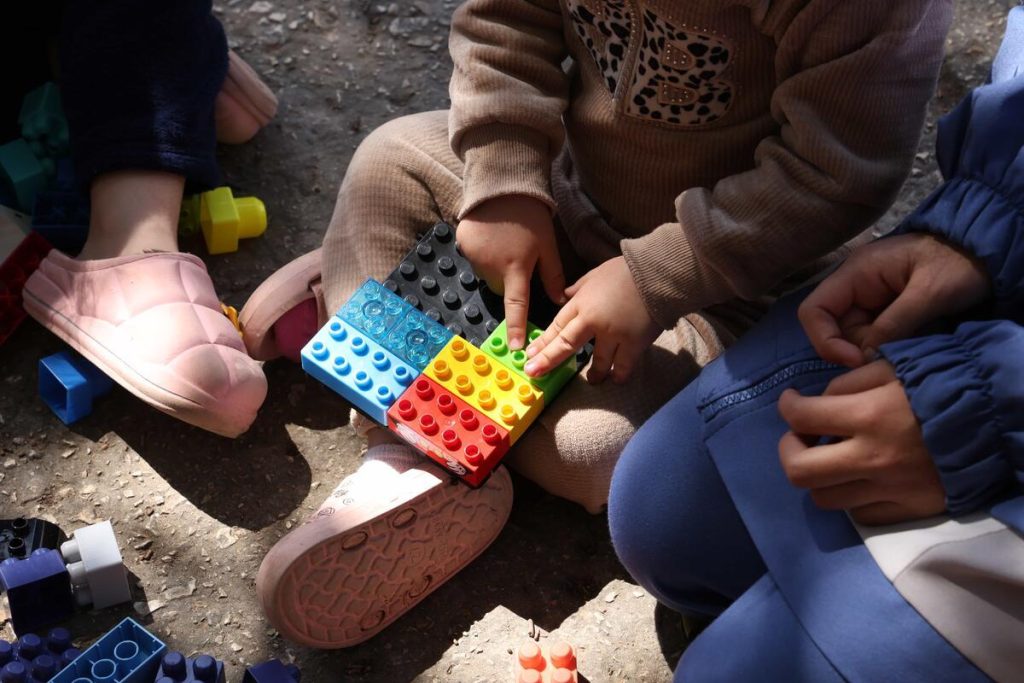
Image credit: Save the Children
We can all think of many, many people who have been refugees or have experienced other forms of displacement and yet have gone on to have thriving lives – indeed, we may be such people ourselves. Our world is becoming tougher for refugees and migrants, but futures such as these are still very much possible.
So, this World Refugee Day I will be doing two things. I will be reflecting on what contribution I can make – and we can all make – to reviving the idea of a common humanity that was seemingly more intuitive 75 years ago than it is now. And I will be treasuring and celebrating children’s optimism about their own capacity, whatever their circumstances, to meet the future on their own terms.
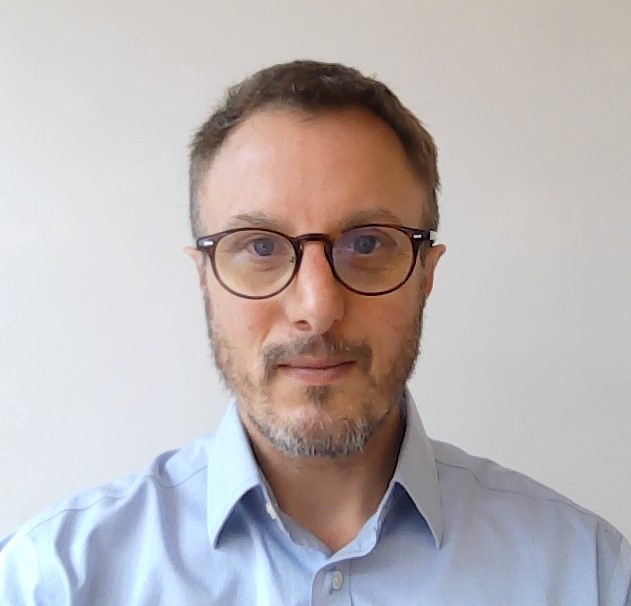
World Refugee Day is a precious chance to remind ourselves of – and to fight for – some basic truths that seem too often neglected or forgotten: no one chooses to flee their homes, everyone has the same basic rights, we all have a responsibility to try to support people in need; and collective challenges require collective solutions.
About the author
George Graham is Save the Children UK’s Executive Director for Global Impact. He leads the organisation’s international work to improve the lives of children worldwide, overseeing global programmes, advocacy, and strategic partnerships. George returned to Save the Children in 2025 after four years as Chief Executive of Humanity & Inclusion UK, an NGO working alongside people with disabilities and those affected by poverty, exclusion, conflict, and disaster. In that role, he championed equity and inclusion and helped strengthen the organisation’s partnerships and values-based approach.
He previously spent thirteen years with Save the Children and five with the International Rescue Committee, with experience spanning humanitarian response, programme quality, policy, advocacy, campaigns, partnerships, and crisis management. He has worked in the Middle East, East Africa, India, and the Balkans, and led Save the Children’s global humanitarian advocacy, including the ‘Stop the War on Children’ campaign.