7th May 2026

What does it take for a nonprofit to develop a strong product and service orientation – while staying true to mission in an increasingly challenging sector context?
For us here at the Humanitarian Leadership Academy, our digital learning platform Kaya has been an integral part of that journey. We reflect on the Kaya development journey over the past 18 months: the rationale, the successes and lessons learned along the way, and the partnerships that have enabled it – as well as a look ahead to the vision for future AI integration.
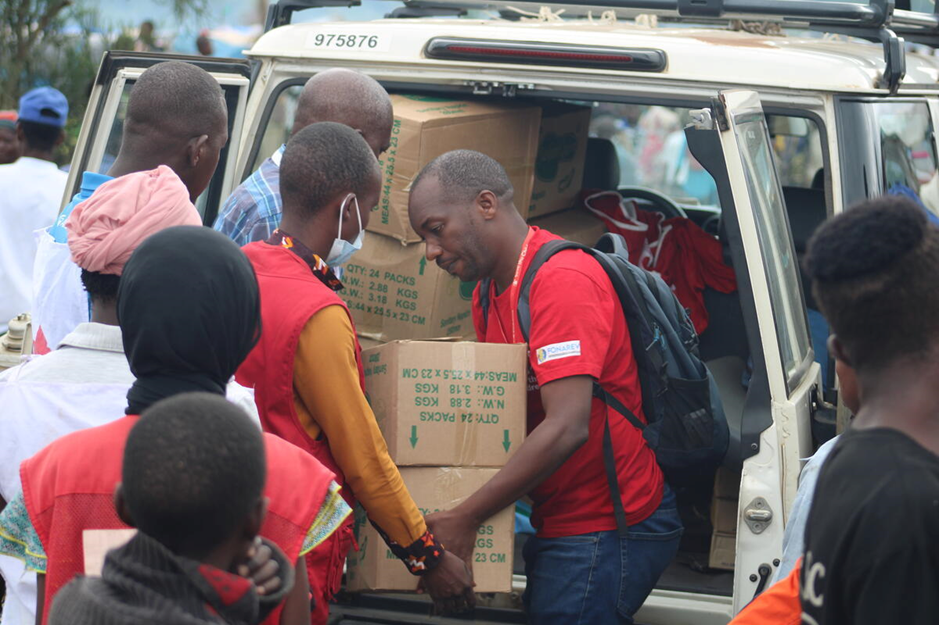
As the humanitarian and development sectors navigate challenging operating environments, structural challenges and change, the question of how to sustain critical services while investing in the future is one that organisations of all sizes and scale are grappling with.
The HLA’s response has been to make intentional investments in Kaya, our flagship learning platform – building for sustainability now and to lay the critical foundations for future innovation, including AI.
Kaya is integral to the HLA’s mission of accelerating the movement for locally led action, and represents one of the most significant free learning resources the humanitarian sector has. Our 30+ partners include a diverse range of actors, reflecting the breadth of the community Kaya serves and the trust it has built across the sector over the past decade.
During this time, the Kaya community has grown to 900,000 learners from 190 countries. Learners can access more than 700 learning resources, with content available in 15 languages spanning every level of experience – from people taking their first steps in humanitarian action to seasoned professionals. Keeping it sustainable has been a critical priority for the organisation, our partners, learners and the wider sector.
Getting the foundations right
At the heart of Kaya’s recent evolution is a platform migration that took around 18 months to complete – moving from Totara to Moodle Workplace. It required significant investment of time, money and organisational energy, and it asked a great deal of the partners who rely on the platform every day. There were moments of disruption, launch dates shifted and budgets were stretched.
Yet, for the HLA’s Senior Platforms Lead Shaun Richards, the case for doing it was straightforward – even if the path ahead was not without significant challenges. Shaun explained: “If you’ve got Lego blocks and you keep adding to your building, eventually it’s going to become unwieldy. What we did was strip it right back to as it should be and then change some pieces.”
After a decade of incremental additions and workarounds, the platform needed rebuilding from a solid base. The result is a leaner, more sustainable operation – support costs reduced by around two thirds – that is no longer carrying the weight of accumulated technical debt.
Critically, it is also a platform built for what comes next. AI integration is no longer a distant ambition but a near-term development priority, with infrastructure already in place to support everything from generative AI course content creation to AI-powered self-service support. The investment made now is what makes future innovation possible.
There is also a broader principle at work in how the HLA is approaching the platform’s development. Rather than maintaining improvements as bespoke additions – accumulating technical debt – the team is contributing developments back to the open-source Moodle community, so that the Moodle team can maintain these components and the enhancements become available to organisations worldwide, including schools, universities and other nonprofit organisations. Sustainability is the holistic ethos behind Kaya – not just as an organisational goal, it also represents Kaya’s contribution to the sector as a whole.
Kaya 2.0, as we termed it, was launched at the end of 2025 – with positive reception from the wider community. Our social media announcement of the successful migration completion received comments of ‘welcome back!’ – a testament to the affection and pivotal role Kaya plays in global humanitarian learning.
Trust as infrastructure
While technology can be rebuilt, trust takes longer. It is human relationships and collaboration as much as any technical decision that underpin Kaya’s sustainability.
Some of our Kaya partners – including IRC and CALP – have been part of the community for ten years. That longevity reflects a relationship that has been built carefully over time, through disruption as well as success. When the migration landed, one IRC representative described the experience honestly: it was like someone shaking up your house. You know your things are there, you just have to find them. That kind of candid feedback is what genuine partnership is built on.
Fay Loosley, Sales and Account Lead at the HLA, joined our Partnerships team this year, bringing experience of working across tech for good organisations. Fay’s philosophy starts with listening – understanding what each individual partner actually needs rather than applying a standardised approach. She explains how some partners want deep collaboration, co-creating content through blogs, podcasts and webinars, using Kaya to amplify their voice across the sector, while others simply need a reliable platform.
The approach flexes accordingly. “When you’re selling something to organisations that are not-for-profit, that money is very, very precious,” she says. “If I start that relationship in the right way, I’m building trust from the outset – and then hopefully we will be the partner of choice later down the line.”
The end goal, as Fay sees it, is always the same: building strong partnerships that funnel down to reach more people – local actors and first responders that Kaya ultimately exists to serve. It is less about growing a customer base and more about deepening what already exists.
Looking to the future: building AI readiness
Kaya Match is a concept currently under development, representing the HLA’s forward-looking exploration of what the next stage of humanitarian learning could look like. Prototypes were developed thanks to the support of an AWS Imagine Grant for Nonprofits, and tested at a hackathon in London in January to test and iterate ideas for developing Kaya’s AI readiness. Kaya Match explores how AI could connect learners to job listings, volunteer opportunities and surge support roles in their local communities – turning learning records into real-world impact and mobilising local expertise where it is needed most.
As James Maltby, the HLA’s Head of Global Engagement, Platforms and Communications puts it: “The true impact of Gen AI will come after enabling organisations closest to the problem to access the best practices and technology they need to build their own solutions.”
It is an ambitious concept that is only now viable because the foundations are in place – a sustainable platform, a deepened partner community, an organisation that has developed the product and service capability to take it forward responsibly.
The Humanitarian Reset and its pressures are not going away. The time, investment and focus on Kaya – on infrastructure, in relationships, in the slow work of building trust is part of a longer-term vision for the future of humanitarian action. Sustainability is the foundation of our vision for Kaya: for the HLA, learners, partners and humanitarians globally.
The true impact of Gen AI will come after enabling organisations closest to the problem to access the best practices and technology they need to build their own solutions.
You may also be interested in
Humanitarian Leadership Academy Named Winner of 2025 Amazon Web Services Imagine Grant for Nonprofits
Read the article
From barriers to breakthroughs: HLA at the AWS hackathon 2026
Read the article
Kaya for organisations
Read more