30th July 2026
 Deogratius Kiggudde
 Tino Kreutzer
 Meheret Takele Mandefro
 Esther Grieder
 Ka Man Parkinson
Thank you to everyone who joined us for our Humanitarian AI webinar on 30 July 2026 held in partnership with NetHope.
We were delighted to welcome 190 live session attendees from 65 different countries. You can watch the recording and view the slide deck. We’d love to hear your feedback and suggestions for future sessions – email us on info@humanitarian.academy
Session transcript
This transcript has been generated using automated tools and has been lightly edited for clarity and readability. The transcript has been reviewed but minor errors or omissions may remain.
Ka Man: Hello everyone, and welcome to today’s webinar, brought to you by the HLA in partnership with NetHope. My name is Ka Man Parkinson, and I’m delighted to welcome you to today’s session: Collective Action on Localised Humanitarian AI, Unlocking Solutions Together. It’s great to see people already joining the room and introducing themselves in the chat. We’re absolutely delighted to have over 450 people registered from over 90 different countries, so we’re really excited at the global interest in today’s conversation.
Today’s session is set to last for 90 minutes, beginning with this welcome and introductions, followed by some housekeeping. Then we’ll hear from you through a short audience poll. Then we’ll move into a series of short presentations from our wonderful speakers. Then in the second half of the session, we’ll move into audience Q&A, so that’s where you’ll be able to put your questions to the panel. If you have any questions, please submit those through the Zoom Q&A function — that’s in your toolbar, you’ll see a question mark icon. Please submit any questions at any time, and we’ll pick those up in the second half of the session.
It’s great to see people introducing themselves. Hello, Vijay from India, Muhammad from Pakistan, Aileen from Berlin, Martha from Uganda, welcome.
I’m absolutely thrilled to be joined by a stellar group of speakers today — a huge thank you and welcome to Deo, Meheret, Tino, and Esther. I’d now like to invite each speaker to say hello and briefly introduce themselves, and tell us why they’re interested in today’s conversation on localised AI. Let’s come to you first, please, Deo.
Deo: Thank you so much, everyone. My name is Deogratius Kigggudde, and I manage programmes at the Upanzi Network. We are a pan-African research network hosted at Carnegie Mellon University here in Kigali, where we build, test, and independently assess digital public goods and infrastructure, and the AI that goes through them.
Why I’m interested in this conversation is because I spent over a decade in the humanitarian world, especially in the mapping sector, looking at how people moved from depending on commercial maps — that were very scarce in some of the communities we were working in — to working with open source, community-run, default maps like OpenStreetMap. Because local people were funded, and built their own, and managed their own resources on that. I think for localised AI, this is the same problem, and I want us to see how we can solve that even faster this time. Really excited for that. Thank you.
Ka Man: Thank you so much, Deo. It’s fantastic to have you here today. Meheret, would you like to introduce yourself?
Meheret: Definitely. Thank you, Ka Man. Hi, everyone. I’m Meheret Takele, and I’m based in the Netherlands. I’m from NetHope, I’m a digital transformation analyst, leading our NetHope Connected community. I work closely with local and national nonprofits across Africa, Asia, and beyond, and I’m here today because their experience with AI is exactly what I believe this conversation needs. These organisations are already doing remarkable work on localised AI, but often in isolation. That’s precisely why I believe collective action matters — it’s how we make sure no one has to build the same solutions twice. I’m really looking forward to the conversation.
Ka Man: Thank you so much, Meheret. Over to you, please, Tino.
Tino: Thanks so much for having us. We’re truly delighted to be here — I think for us it’s an honour to be talking here, because Kobo is a non-profit really dedicated to having better data collected all around the world. For us, localisation is always a bit of a funny word, because the vast majority of organisations who use our tools — open source data collection that’s really the standard for humanitarian actors, Kobo Toolbox — those organisations are local. To them, this is the tool they use. They speak to local organisations in their own languages, so localisation is the default for us and for our users, and this is where we start from. AI, for us, has to conform to that — it’s not an afterthought, it doesn’t work unless it’s local to begin with. Happy to engage with everyone here today. I’m really excited to talk about this. Thank you.
Ka Man: Thanks so much, Tino. Kobo really is doing some incredible work in this space, so thank you for being here and sharing your experiences. Over to you, Esther!
Esther: Thanks, Ka Man. I’m Esther Grieder. I work for NetHope as the Director of Membership Engagement. NetHope has a membership of around 60 INGOs. We also have a second community, which Meheret mentioned, which I work closely with her on — a community of smaller, more local organisations, and that’s a growing community. What’s really exciting for us at NetHope at the moment is that through that community, we’ve started giving grants for AI work and AI projects, and so we’re learning so much from that community at the moment. It’s really great to be here to share with others what we’re learning, and also hear what other people are learning through their own experiences as well. Thank you.
Ka Man: Fantastic. Thank you so much, Esther, and thank you to all of you for taking the time to be here with us today.
For those of you who don’t know me, I’m Ka Man Parkinson from the Humanitarian Leadership Academy, and I’m based near Manchester in the UK. The HLA is part of Save the Children UK, and our mission is to accelerate the movement for locally-led humanitarian action. We really do see AI and technological developments very much as part of this conversation, and that’s the lens through which we’re looking at this today. Thank you once again, and thank you to everyone introducing themselves in the chat — it really is so lovely to welcome you here.
This session is being recorded. It will be uploaded to the HLA YouTube channel, and an email will be sent to you with the slide deck early next week. Zoom captions are enabled, so you can turn those on by going to your Zoom toolbar and pressing CC, and translated captions are available as well. We want this to be a lively and interactive discussion space, so you’re very welcome and encouraged to use the chat to share any reflections or comments as we go along. If you have any questions for the panellists in the second half of this session, please submit those using the Q&A function.
As a kind reminder, please keep any questions or comments respectful and on topic — relevant to localised AI in humanitarian work. Finally, in recognition of your learning and engagement in this forum today, you’ll be able to claim an HPass digital badge — keep an eye out for a separate email for details of how to claim that next week.
We’d now like to hear a little bit from you, our audience members — we’ve just got a couple of questions to ask you, and Esther’s going to walk you through that.
Esther: Thanks, Ka Man. We would love to hear from everybody, what brings you here today? We’ve got a few options which you can hopefully see on your screen: exploring localised AI for your own organisation, curious about the technology, you have specific questions to ask, you want to connect to others or share ideas in the chat, general interest — just here to listen — and then “other”, which is obviously the most exciting option, because we really want to hear what other reasons people might have joined for. So please do type in the chat if you’ve chosen “other”.
Ka Man: Fantastic, we’ll just give that a second. I can see that over 70 people have responded, and it’s going up rapidly — that’s great to see people engaging. Okay, I’m just going to end the poll now.
Esther: Okay, so hopefully you’re seeing the results up there on your screen. It looks like the largest contingent are here because they’re exploring localised AI for their own organisations, which is really interesting — that does mean there’s potentially a lot of organisations here with things they can also share in this forum in future. Then we have a lot of people coming because they’re curious about the technology, some to connect with others, and others for general interest. So please do type in the chat if you have another reason for joining as well, and we’ll be interested to hear. Thank you, everyone.
Ka Man: Thanks, that’s really interesting that people are keen to dive into the technology a little bit. We’ve just got a second question that we’ll launch now.
Esther: Second question: what is the main challenge that you currently face with using AI in your context? We’ve put a few options there to get you started. It might be costs — for example, licences and maintenance. Lack of suitable tools available to you. AI expertise — for example, skills, particularly technical skills and AI literacy. Data concerns around security and privacy. Infrastructure, such as power and connectivity. Language access. Leadership factors — thinking about how you can get buy-in from the right people in your organisation. Or time and capacity to focus on AI. Again, we have the “other” option as well, in case you have something else to add.
Ka Man: That’s fantastic, we’ll just give that a second. I can see over 70 people have responded, and that’s going up as well, so thank you. Now going to close the poll.
Esther: Great — seeing the results coming in, it looks like the highest contingent voted for AI expertise — AI literacy, digital skills, technical skills. That’s the biggest barrier that people are seeing. Close second and third are data concerns, and then costs, for example licences and maintenance. We also have a few people who voted for lack of suitable tools, or issues with infrastructure, and some for leadership. Language actually got a very low number of votes in this particular poll, which is interesting.
Ka Man: Thank you very much, that’s really interesting to see. What surprised me is data concerns ranking so highly. Thank you very much for sharing that. So we’ll continue. I’m just going to spend the next few minutes contextualising today’s discussion in the HLA’s work, before I hand over to Esther, who will do the same from NetHope’s side.
So why are we talking about AI in the humanitarian context through a localised lens, when AI is a global phenomenon, some people may wonder? For those of you who’ve been engaging in our work over the past year, the HLA, together with our partner Data Friendly Space, has been tracking how humanitarians are navigating AI adoption decisions. That’s been conducted through two surveys, with over 4,200 responses from over 140 different countries. On top of that, we’ve been continuing the dialogue through convenings — like these webinars with NetHope, and other settings — where we’ve been getting continuous feedback through the community. Through that, we’re hearing the concerns from the sector, as well as things that people are excited about.
We see that humanitarian AI is being driven very much by individual uptake of commercial tools, and that’s due to accessibility — lots of people are using free versions of tools like ChatGPT, Claude, Copilot, DeepSeek, and so on. What’s interesting and notable is that AI adoption, because it’s individually driven by humanitarians, is not following what you might see as a typical global north-to-south diffusion pattern. Because it’s driven by individual usage, it’s actually clustered and concentrated and aligns with operational need — for example, at country level, we’re seeing that the most intensive use was in Kenya, Sudan, and Bangladesh.
In these convenings and discussions, we keep note of what’s coming up, and these are some of the key themes that emerge time and again. If anything resonates with you, put something in the chat, or if you’ve got a different perspective, feel free to share your thoughts — we’re really interested to hear. You’ll see that a lot of these themes cluster around this notion of localised, contextualised humanitarian AI solutions that are driven by local need and grounded in local context.
We conducted a series of interviews with humanitarian practitioners and members of our community. I think Nour is on the call with us today — hello Nour — she works in community engagement, and she’s very much an advocate for building together with communities, rather than starting by default with large solutions.
Ivan, from Uganda, has a particular interest in climate resilience, and has very bold ambitions and visions for AI use cases in humanitarian work, including in the area of climate resilience, and also MHPSS — mental health and psychosocial support. He’s very optimistic; however, he’s very much telling us about the context he works in, Rhino Refugee Camp — connectivity challenges, different languages being used — so we really want advocates for donors working in partnership with humanitarians to understand those local needs.
Finally, Shudarshan, who I think is joining the call today as well — he works for a technology firm in Kathmandu, Nepal, and he’s working on a platform for anticipatory action. It’s a very interesting case study, because this platform is being scaled across Nepal — very ambitious — and also in contexts like Bangladesh and Malawi. But even though it’s scaling, he really advocates for contextualisation and localisation — that solutions have to integrate with local platforms, systems, and people.
Those three quotes have just been chosen to put a human face on those data points and themes that have emerged through our research and convening over the past year. Based on that evidence, qualitative and quantitative, this points the HLA and our work and engagement with the community into this space of localised AI, and we’re absolutely delighted to have this session today, together with NetHope, so that we can pull together our collective thoughts, ideas, and networks in this space.
I’d now like to pass over to Esther, who will say more from the NetHope perspective. Over to you, Esther.
Esther: Thank you. If you just go to the next slide — I wanted to briefly touch on the always thorny issue of terminology, because as we know, terminology around localisation is already extremely complicated. But it only gets more complicated when you’re also talking about technology and AI. I just wanted to make a distinction here about what we’re going to be talking about in the webinar. We’re talking about localised AI in terms of AI which is designed to meet the needs of communities — whether that be in terms of accessibility needs, or communities having been involved in designing AI tools. So we’re talking in that very broad sense, of AI that has involved communities in its design, and is also owned and governed by communities.
What we’re not specifically talking about is local AI or local LLMs — models that are hosted on one machine or device. We probably will mention that at some point, it might come up in our discussions, but that’s not the main focus of the discussion. I just wanted to make that distinction before we start, in case there’s any confusion.
Now this slide — hopefully it’s showing properly on your screen — it’s harking back to a webinar that we had in January. Some of you may have been at that webinar as well. Ka Man and I hosted that along with some other speakers, and we talked a little bit about some of our predictions for 2026. Because we’re halfway through 2026, I thought it would be nice to put that slide up again.
The ones highlighted in blue are the ones we’re going to touch on today, so we’ll be thinking about what progress has been made on those topics: more localised AI use cases and tools developed in the Global South, smaller and more agile organisations demonstrating what can be achieved when they’re unencumbered by red tape. Potentially linked to that as well, discussion about environmental impacts — it’s linked to the idea of having more local tools, or really prioritising tools that have a positive impact for society over other tools. That also links a little bit to discussions around moves away from dependence on US tools, and discussions about open source. And of course it touches on the “beyond the hype” theme as well, because the organisations in this webinar are all thinking very specifically about what they can design to meet the needs of the communities they’re working with, and solve actual real-world problems.
I just wanted to bring us back to that discussion we’d had in January to touch on that. On this slide, I wanted to briefly mention some of the signals we’ve seen over the past few months that relate to some of those themes. Within NetHope, we’re constantly sharing articles and exciting developments that we see coming up. The first one here — I believe Meheret flagged this to our team — is a new multi-language speech-to-text model for Ethiopian languages. There are many Ethiopian languages; this model is available for five languages currently, and it really opens up new possibilities in terms of tools that can be developed for the Ethiopian context and solve Ethiopian-specific problems. That’s one small development we’ve seen over the past few months that has really big implications.
In terms of the environment, there have been so many reports coming out to do with AI and the environment, which all tell us that we really need to prioritise the use of AI where it’s actually going to have the most impact. I’ve put some quite scary statistics there, from one of the recent reports about AI’s overall environmental impact — quite frightening. And then lastly, I put something there about how open source AI is gaining traction — an open source AI gap map, which we spotted, pulling together a whole range of different open source AI tools, and also an article about human rights defenders and how they’re using AI tools — they’re often the ones who most struggle with using big tech, and are often looking for alternatives. So I thought I would pull out those, in terms of the big picture, to illustrate some of the trends we’re seeing over the past six months.
Ka Man: Thank you, Esther, that’s really interesting to see. It was also interesting to revisit those predictions you shared back in January. Oh sorry, you’ve got this other slide as well, I do apologise — over to you again.
Esther: This is also going back to January — this was a quote from Tom Fletcher, which we looked at in January, and I think this really gets to the heart of what people are talking about today: how can we really make sure that we’re prioritising using the AI tools available to us to solve some of the most important social problems, for the benefit of humanity. I just wanted to share that quote again because I think it’s inspiring and sets the scene for the rest of the discussion.
Ka Man: Thank you, Esther. Yes, exactly — very grounding words. Now that we’ve set the scene from the HLA and NetHope’s institutional perspective, we’re now going to dive deeper with the expert perspectives — Meheret, Deo, and Tino. We’ll have a series of short presentations, starting with Meheret. Over to you, Meheret.
Meheret: Thank you so much, Ka Man, and thank you, Esther. As we’ve already done the introductions, I’m going to jump straight to my presentation. It’s great that you’ve already set out what we mean when we say localised AI, and what I’m going to do is take that one step further and ask the question of what localisation means for international nonprofit organisations. Next slide, please.
Okay, thank you. What I’ve done is I analysed the localisation narratives in the strategy documents of around 40 international nonprofit organisations, because these documents are where we say who we are, and what we’re committing to for the next five to ten years. The first thing to say is that localisation is not one single idea — based on the analysis I’ve done, it has six distinct framings that came out from that analysis, and I’m going to share that with you today.
The first one is localisation as empowerment, which means shifting power to the people most affected.
Second is localisation as system strengthening, which refers to investing in local institutions.
The third one is localisation as collaboration across sectors, which also relates to building digital hubs connecting across sectors.
Fourth is localisation as innovation, which means building platforms to scale solutions built on local ingenuity.
The fifth is localisation as accountability — it relates to centring communities so that the work is legitimate. And the last narrative from that analysis is localisation as normative commitment, which refers to localisation as a sector-wide standard to adopt.
Looking across these six narratives, we can see these are not just soft statements — this is a serious, well-developed commitment, and the thing that really interested me most in this work is that, as you can see from the examples of each framing, digital is not sitting outside of these framings — it’s already inside every one of them.
In these strategies, they rarely name AI specifically, and I believe that’s entirely reasonable for a five-to-ten-year document. But we can see that AI is the newest layer of that same digital commitment, which means the guidance is already there. The question is not whether we believe in localisation, it is how deep localised AI actually goes. Next slide, please.
I’m going to lay out some layers of localised AI, and each one asks a deeper question than the one before. I’ll start with the first, which is language — a question that asks: does the AI work in the language people actually speak? Not just the interface, but the training, the support, the documentation, the help desk.
The second is access — related to the question: does it run where people actually are, on the channel they already use, with the connectivity they actually have?
The third layer is data — related to asking whose reality is encoded in the system we’re developing, who decides what counts as a case, a risk, or a harm.
The fourth is governance — asking who sets the rules, whose ethics, whose safeguards are written, and by whom. And the last layer is ownership — who decides and who still holds the initiatives we’re building, the AI tools, after we’ve developed them.
What I want to mention is that most conversations about localised AI focus at layer one, and layers one and two definitely matter enormously, but they relate to adaptation.
When we see layers three, four, and five, that’s related to where ownership genuinely shifts — that’s the difference between translating an interface and localising an AI tool.
What I want to mention is that it’s also a question any funder or international organisation can ask: which layer are we actually funding, or implementing? Are we implementing the language layer, the access layer, the data layer? So we can identify through these layers. Next slide, please.
To see what local organisations are actually doing, I went and looked through some local nonprofit organisations. I focused on a recent NetHope AI grant, which Esther already mentioned, that supported six connectors — local organisations that are part of our NetHope Connected community.
As we can see from this table, three are using AI to deliver their mission, and three are building AI readiness and governance into their organisation. Generally, what this table shows is the organisations and what type of AI project they’re conducting.
Just to go through them: the first, in Tanzania, Digital Agenda for Tanzania, is promoting the ethical use of AI in journalism and civic media. In Egypt, Educality is strengthening small civil society organisations to adopt AI responsibly through an ethical AI readiness level.
In Uganda, Rural Smile Foundation is piloting an AI trade monitoring tool for reporting and intimidation of human rights violations. In Somalia, Safe Somali Women and Children are embedding responsible AI into their protection work for women and children.
The fifth, in Italy, Shield APS is building a practitioner-powered harm intelligence system for online safety. And the last, in Nigeria, Women’s and Girls Empowerment Network is running an AI-powered SafeVoice platform, which supports women and girls to report gender-based violence and access justice.
After this, we’re going to see what happens when we hold these six projects against the five layers we already described. Next slide, please, Ka Man.
So here, remember the five layers from our previous slides — these are some examples of where the AI projects I described align with the different layers. Just to mention one example for each, but you can see the other projects relate to these layers too.
To start with the language layer: in Tanzania, journalists and civic media groups are building verification and localisation workflows in Swahili — and you can see others in Egypt, in Arabic, and so on. Related to access, the second layer: the women’s organisation in Nigeria that runs a reporting platform for survivors of gender-based violence — what’s really interesting about access here is that the tool they built, the AI-supported service, can be reached in four ways: through an app, through a web platform, through WhatsApp, and also plain SMS.
Looking at the third layer, data: we can take the example of the Shield project, which uses a shared harm dictionary so that harm data gathered by each organisation can be compared across organisations. In relation to governance: the women’s organisation in Somalia is writing their own AI governance policy and ethical framework — that’s an example of the governance layer being built by this organisation.
And the last layer is ownership: the SafeVoice AI platform makes sure the survivor is told what happened to her report, so she stays connected to her own information rather than losing it to the system — that’s the kind of ownership we want to see in localised AI work.
Just to wrap it up, this shows how these projects fit into these layers. But I have to mention that there are certain barriers, which include language, connectivity, funding, and working in isolation. Ka Man, if you go to the next slide —
I’m going to conclude my presentation by saying, so what would it take to go deeper? These are some recommendations I want to lay out. I want to recommend three moves. The first is we need shared, offline-ready infrastructure. The second is we have to fund AI initiatives beyond their pilot stage, through to sustainability. The third is creating a space to share and amplify, so that collective action can support the barriers we’ve already mentioned.
These are some of the recommendations I want to state, and I want to conclude by saying that no single organisation can build the whole layer alone, and none of them should have to be built twice, in isolation, by different organisations. As I already started with, talking about localisation — localisation is the sector-stated commitment, which we’ve already shown through the strategy documents. The layer is where we find out how deep we’re building localised AI tools. I think that’s all. Thank you so much — over to you, Ka Man.
Ka Man: Thank you so much, Meheret — I really love the work you’re doing in this space, and I appreciate the clarity through your narrative framings, as well as the layers. I think that’s a really good and useful framework for us in this space, so thank you so much for sharing that.
If you have any questions specifically for Meheret, please pop those in the Q&A, and we’ll pick those up later. Now I’d like to hand over to Tino. Over to you, Tino.
Tino: Thank you so much — that was an amazing framing to follow on. I’ll add to this discussion, the presentation, by talking about the implementation side. Kobo and Kobo Toolbox are, from the ground up, really — our whole organisation is dedicated to having organisations rely on better data to measure and inform their programming.
I’ll start by saying a few things for those who may not be too familiar. Kobo is a non-profit organisation, we’re global in scope, and our primary tool, Kobo Toolbox, is a data collection tool primarily for humanitarian workers, but also widely used across human rights, development, environmental sectors, and so on.
If you can pop to the next slide there — we really are, from the ground up, and as a tool in our organisation, always come from the sector, from the perspective of users. We were researchers, we were UN workers trying to find the right tools to collect better data for our own work. Kobo is about 20 years old, but the word “Kobo” and “Kobo Toolbox” actually originated in northern Uganda, where our enumerators, doing co-design sessions, came up with a name for this really early version of what became Kobo Toolbox for electronic data collection.
Fast forward a number of years, and if you can go to this next slide — the tool we released, just over 10 years ago in 2014, was the first version of our global platform for survey data collection. Launched in 2014, and from then onward, many organisations drove this bottom-up approach — that data collection shouldn’t be done only by large UN organisations and large INGOs, but actually should be done primarily by local organisations.
If you look at this graph, showing the number of survey submissions we’ve been receiving and hosting on many servers for humanitarian workers and many other sectors, we’ve actually reached 1.5 billion — this graph is slightly outdated, we’ve reached just recently 1.5 billion surveys collected by over 35,000 organisations in over 200 countries.
What’s really special, and something our whole team is really dedicated to, is that our organisation is dedicated to keeping this as accessible and as free as possible — 95% of our users, and we have hundreds of thousands of users, use the platform day in, day out for free, and rely on their whole programme, M&E, and evaluation framework built on the fact that they can rely on this as a generally free and extremely accessible platform.
That’s important to keep in mind, because if you think about lots of small organisations we work with, they don’t have large budgets for AI — as we saw earlier in the poll results, costs are a major driver. It’s not just the cost you pay today, it’s the cost you might pay tomorrow, because prices will inevitably go up. If you get the whole organisation relying on these tools and the cost doubles over time, that’s an extremely unpleasant wake-up call — that’s happened even last year with other technologies.
So for us, this is one of the major driving forces behind why we build not just Kobo as a data collection tool, but also how we integrate AI, and how we keep it accessible and useful for local teams.
Let’s go to the next slide. What you see here is some of the AI features we’ve already released. In Kobo, you can build your surveys not just to collect any kind of survey data, but also to collect what we call qualitative information — open-ended, long-form survey responses, where a lot of the depth comes in.
We’ve built these features to allow users to collect open-ended audio or text, which can then be transcribed into text — you can use AI for that step, and machine translation to translate into other languages, as you can see. And we recently, just a month or so ago, released features to allow you to use AI to actually code and categorise the long-form responses, as you can see here.
We did none of that before going through a really rigorous analysis, from the literature and with our local partners in co-design sessions, to understand the ethical risks — we’ve published all of them, there’s a link at the bottom here.
We’ve gone through a lot of checklists and careful analysis so that everything we build goes to minimise these risks. These aren’t just risks we found in the lab — they’re risks that real local research and initiatives have raised. If we couldn’t find a good way to de-risk it, to protect against it, we wouldn’t release that feature.
Everything you see now, and everything I’ll explain in the next slides, goes toward how we release something responsible and ethical for the whole sector — not just for a couple of organisations.
What we’ve done, and you’ll see this when we jump to the analysis — on every screen, there’s the ability for the human to say “I’m not quite okay with this, I’m going to verify this, I’m going to make edits to it.” Everything under the hood gets logged to say this may have been created by AI, but the human in the loop always gets to verify and check it, and if they don’t, there’s always a record showing it was not reviewed and not edited by a human — that’s really important. The AI drafts, and the humanitarian worker, the humanitarian specialist, decides what to do with that data and whether to make changes.
We’ve also released a study to show how reliable they are, because there’s no point having AI do all this if it’s not reliable. We’re happy to say that, in our testing, we found that the models are more reliable than most human coders, at least for English — that’s the big asterisk for this discussion, because of course we want to test that for many other languages, and we all know the quality is not the same for many other languages once you move away from English.
Let’s talk about some of the technical steps — if we can go to the next slide. Some of the things we’ve done under the hood, beyond the UI choices I already talked about: when we use our AI models to do the categorisation, to do the coding of qualitative data, we never send and never will send the data off to another commercial provider — so it does not go to, let’s say, OpenAI or Anthropic’s servers.
Some of these models are extremely good, but even though you can have very strong terms of service in place, there’s never full trust — we’ve seen organisations being burned by that, and increasingly regulators also just don’t trust that API handoff to say “we trust the terms of service.” For humanitarian workers, that’s also a risk we don’t want to pass on.
For us, it’s really important — if you trust Kobo, and you trust Kobo Toolbox to collect the data, then it stays in our own environment, and that extends to using AI models. We use GPT-OSS-120B at the moment as the best open-weights model. Open weights, referring to an equivalent of open source for AI, means we can host it, we can run it on our own servers, we have full control over how it gets handled. It also means it’s more reliable, because the model works the exact same way whenever you use it.
When we find a better open-weights model, which we’re currently evaluating again, we’ll host that and switch to it instead, but it will remain on Kobo servers.
The second option, really relevant for localisation as well, as you can see on the right here, is what we do for extending speech recognition, or ASR — automatic speech recognition — to more and more languages.
We already support about 150 languages for existing models, but we want to extend it to more languages that are priorities for humanitarian crises. For that, we currently use Meta’s Omnilingual 7B model — again, an open-weights model, which means we can fine-tune it, we can add more languages.
If you can go to the next slide, we’ll talk about what we’re doing in practice and which languages we’re focusing on.
Great. It was great to hear about the Ethiopian ASR models at the very beginning, in Esther’s slide — we’ve had our eyes on this for a while as well. In fact, we’ve done some of our co-design workshops in Addis, in Ethiopia, as well as in Colombia, and we’ve known that Ethiopian languages in particular are not great for any of the commercial models.
But because of the work we saw earlier, that Google and others are doing, we’re able now to extend these languages and improve them. It’s not just the ones you see on the screen here — we can benefit from the ethos of open source and open sharing through Creative Commons licensing, for example, and improve the models we have, and increasingly replace commercial models entirely, hosting all of that in our own environment.
We don’t do this in isolation — we’re working, as you can see here, with Clear Global, with UNHCR, with George Mason University, and other partners, especially local partners, to collect this data, to validate it, to process it. It’s an arduous process, it’s costly, so wherever others are already doing this work and have released the data, we can then use it to train and improve the models for those languages. There’s never a moment where you say “oh, it’s not that good” — you should always come back and test it again after a few weeks and months because of this work.
I know, in the interest of time, I’m going to pass it on to the next speaker, but if there are any questions I’ll be in the Q&A and happy to respond there or later on. Thank you so much.
Ka Man: Fantastic. Thank you so much, Tino, for that fantastic presentation. It’s great to hear about the technological developments and the things you’re working on in this space, particularly in relation to languages. Great to see the synergies with Meheret’s presentation as well, so thank you. If you have any questions for Tino, please pop those in the Q&A and we’ll pick those up shortly. Over to you now, Deo.
Deo: Thank you so much, Ka Man. We’ve definitely heard from Meheret about the layers, and Tino about how Kobo works, and I think that was really good, listening to some of the work they’re doing — I can feel a lot of synergies from our side as well.
I wanted to start with the phrasing you opened with, Ka Man, where adoption isn’t always following the global north-south pattern. We’re already seeing a lot of intensity within Kenya, Bangladesh, and others who are already demanding this use — so we’re not really missing enthusiasm for localised AI, the enthusiasm is there.
Having seen something similar during my time with the Humanitarian OpenStreetMap Team, where most times we’re working in places where connectivity is just on the edge, starting up — it’s always very good to know that the tools that really survive, that really get used, are the ones that work offline, like Kobo does, but also where local teams can run them without having to call HQ at five o’clock on a Friday when no one’s in the office, or where time zones are really tricky. That’s what we try to test as well.
The Upanzi Network is hosted at Carnegie Mellon — we have five nodes that I’ve put on the map, but we work across the continent, trying to look at what our network within these different universities works on. Next slide, please.
Within the Upanzi Network, what we’d call localised AI really focuses on three main things. Some of them Meheret and Tino already mentioned, so I’ll just touch on them briefly. The first is language. The second is context — we focus a lot on trying to assess and evaluate some of the models out there before people actually adopt them. We want to understand how these models are performing, and how we can evaluate them independently, because everyone will try to say their model is the best — we’ve seen all the commercial platforms saying that. So we try to say, okay, let’s put that to the test — how can we evaluate them? We do have spaces and ideas on how to actually do that. But also trying to understand the context they’re in — because sometimes just translating a model into another language isn’t the holy grail. You need to understand the norms, the context — whether it’s child protection, cash eligibility, how are people already understanding those conversations? If it’s not understanding the conversations it’s having, it can really struggle once you switch languages. It was really good to hear the work Meheret and Tino are doing on Ethiopian languages — we also have a project, the FIDEL project, where we’ve released some optical character recognition for Amharic, and it’s available on Hugging Face if you want to check it out. The idea is to work with lots of organisations on the ground, and I think it would be a good way to improve some of the models you’ve put out there — again, speaking to the conversation about sharing data people have without having to go back on the ground, which, as we say, is really expensive.
The second part is really about infrastructure — not necessarily the hardware itself, but accessibility, which Tino and Meheret have hinted at. Right now we’re getting a lot of people talking about different models out there, but when you look at localised AI models, no one’s really marketing them. We’re getting a lot of bombardment from the commercial ones — they’re taking up the space. I think the conversation should be, how can we get people to actually access these localised systems, or at least think about how we can localise them, because sometimes people are told from the get-go, “no, it’s too hard, don’t even bother, just stick to the commercial APIs” — it’s made easy, just a click of a button, and people are pushed away from the localised part. For me, that’s more of a marketing campaign we need to think about, and that’s something we within the network try to emphasise — why we need to talk more about how localised AI can actually be localised. We need to just have a conversation about that — it’s not that hard, and we need to make it much more accessible for people, and make it feel like they can actually do it, especially with local organisations that already feel overwhelmed with a lot of technology coming their way.
The third part is really about ownership — again, something the previous speakers have mentioned, who owns the data as it’s put out there. But the bigger part we focus on is who’s auditing the models. Everyone will say “my model is the best” — I’ve just been looking at a new model called Kimi that’s come out, and everyone’s saying it’s the best right now. We need to spend a lot of time thinking about how we keep having a humanitarian sector, or a combined effort, of auditing some of these models, because we can’t do it alone — our organisation can’t do it alone, and even countries can’t do it alone. We need to think about how we localise that auditing process — that’s what we want to look at. Next slide.
I did mention our project around FIDEL — you can go on Hugging Face and check that out. It’s something we feel like anyone working within their language can test out and check, and maybe add to your database. Another part I wanted to bring up, when it comes to localised AI, is trust. We’re in a space where we’re working with people who are very vulnerable, for whom trust isn’t the first thing that pops to mind, and with the inclusion of AI right now, with all the different AI deepfakes, anti-spoofing issues — there’s a big distrust when it comes to AI already. When it also comes to localised AI, we need to be training people, protecting them, and helping them understand how they can verify what’s real and what’s not — that’s going to be a big focus for us, because once people feel like “this is a setup on a server I don’t trust, a system I don’t trust,” or they get a bad one-shot experience, it may be difficult to get them back on board. So how can we help them detect but also know and verify what they’re working with — I think that’s really key for us. Next slide.
One of the things I want people to remember, when it comes to AI or the word “localised AI,” is we’ve seen this play out before — at least for me, way back when it came to maps as well. It used to be that commercialised maps were seen as the standard format, and over the years, in places where most humanitarian organisations were working, these maps weren’t that usable — there was less data. But as newly open platforms like OpenStreetMap came up, we saw people pull resources together, communities came together, were trained on how to standardise, use, verify, and audit these places. That’s how local mappers came up — like the way Kobo’s doing it with local data collectors. Once you really give the power to communities to take it on, evaluate it, and audit it together, it grows much faster. I think we need to treat AI the same way — localised models, but also localised builders, testers, and auditors. I think that’s where the key part is — having that skillset at the local ground, keeping it moving, keeping it growing, to a point where it’s more defaulted and more trusted as well. Next slide.
Some of these points have already been laid out — how do we move away from just having pilots? For me, one of the first conversations, and I’ve mentioned this across my presentation, is having shared evaluations. We can’t be the ones only evaluating ourselves — you build a model and evaluate yourself. We need to get to a point where we’re having shared evaluations. Independent testing is also very key, because that really builds trust — when you’re bringing a tool to people who are actually in a situation where you basically have one shot with them, you need to get to a point where they can trust the tool and keep using it. I think this has already been mentioned — funding beyond just a demo, or a couple of years — it takes time to adopt a tool, work with the tool, learn the tool. Signals like Kobo — the years that have gone by, almost two decades of growing it — we need to go in with the mindset that localised AI won’t happen tomorrow morning or tomorrow evening. It’s not going to be a year, not going to be two years. It’s going to take time, growing with the community, with the people using these tools.
One of the conversations I’m really passionate about is procurement as well. For us to say something is localised — whether it’s AI or any other tool — we need to think about how we get the resources on the ground. If you have a procurement system that focuses on contracting global platforms, making it easier for global platforms to be adopted, you need to think about how national teams in your organisation can be trained to get those tools where they are, and share results across the board. One of the things we love doing is sharing results as much as we can — let’s really open source the knowledge, the information, and not only the models, but the data we’ve put out there and worked with. So that’s what I would say. Next slide.
I’ll end by saying we need to think about how we build, test, and own locally, and — the auditing part I didn’t mention — independent testing is really key for us, because once you independently test the tool and make sure it works, you really build trust with people. One proposal I have — and I’m just coming up with these words off the top of my head — is really human-authored humanitarian evaluations of some of the models we have, especially when it comes to languages, and really making them into public goods, similar to the way FLORES and Masakhane datasets are generally put out as digital public goods. I think we need to think about how we do that from the humanitarian context, especially around activities like cash eligibility, child protection, shelter registries, and so on. But also trying to find cheap, relative ways of training people how to use the models we’re working with, because that’s really going to be key — commercial platforms are really bombarding everyone, making it seem like “don’t even try to use your localiser,” and once people hear that multiple times, once you step into the room with localised AI, they’ll just run out of the room. So if we spend a bit of time on that and do it together as a collective, I think it would be a big push for this. Thank you so much, everyone.
Ka Man: Amazing. Thank you so much, Deo — again, I really love the very practical nature of your presentation, and I like that you said “we’ve run this play before,” bringing in your contextual learnings from mapping. Thank you so much for that, and thank you Meheret and Tino as well for your fantastic presentations.
We’re now moving to panel discussion. I’ll ask each of you — you’ve all alluded to this in your presentations, what you advocate for — but I’d love to put you on the spot and say: over the next 12 months, since AI is developing so quickly and everything seems to be moving so fast, as you’ve just said, Deo — what would you really like to see, to accelerate collective action in this space, over say the next year? Could I come to you first, please, Meheret? What’s your take on that?
Meheret: Sure, definitely, Ka Man. I’ll relate to the recommendations I already mentioned at the end of my presentation. I really believe — not only me, but NetHope really believes — in collective action, and for the next 12 months, what I really believe is that, especially the isolation part of the recommendation I already mentioned — everything we build should not be isolated and only used in one organisation. What I really recommend is to go to spaces where there are such networks — we can list different networks, like the Connected Community, the START Network, CIVCUS, and other networks. What I really believe is that we should build collectively and share what we’re learning, and what’s working and what’s not working, with a community. That’s something I believe we should build on in the next 12 months.
Ka Man: I wholeheartedly agree. Esther, could I bring you in as well? Do you have anything to add from the NetHope perspective?
Esther: Yeah, I guess to say — in the NetHope community, for a long time we’ve had a lot of demand for people to be really sharing practical examples. I suppose it’s that “beyond the hype” vibe — there’s always that feeling that there’s a lot going on in the AI space, but people really want to see the tangible examples of what different organisations are doing. So I think continuing to document and share those across organisations is one really important thing.
The other thing is that there’s so much work going on in the sector now around standards and frameworks and the ethics surrounding AI, and that’s something we have to take way more seriously than the rest of the world, other sectors, potentially, because we’re working with the most vulnerable people. So making sure we’re really collectively working on that effort, and pooling the resources we have, in order to make sure we get in place what we need — because we’re always going to be playing catch-up to some extent on that. So doubling down on that effort, I think.
Ka Man: I could not agree more. Thank you, Esther. Tino, what’s your take on this? What would you advocate for, what do you call for to accelerate action in this space?
Tino: It’s really about the collection of training data for the many languages that are not well represented, and in some cases not represented at all, in AI models, commercial or open-weights. We talked about some of them in the slides, and you’ve heard from other speakers that there are a lot of initiatives around this, but the speed with which that’s moving forward has barely improved over the last years.
We’re grateful for organisations that fund this and their initiatives, but everyone involved in this is basically competing over a very small pie. There are hundreds and hundreds of hours collectively spent writing grant proposals, and eventually someone gets, say, $100,000 to do work that takes 12 to 18 months to conduct, and eventually you have to justify to the donor that it was actually useful, and maybe you could do a follow-up grant and collect data for another language or two.
At this scale, this will take us hundreds of years if we continue doing this. In the world of AI, we’re collecting this kind of data in a 19th century mindset — this is insane, given that we can build applications, we can verify and improve software, and ethically we can do all this faster these days.
All of that is based on the models being what they are, based on the training data that was available — and that’s mostly a lot of English, a lot of European languages, and very little, incomplete, insufficient data — especially for transcription — for many of the world’s 7,000-plus languages. My big ask, and we speak to donors about this regularly, is to create a pooled fund. This is not something that can be done in the current way of doing things — the gap will never close, and we’re actually burning 20-30% of funding just competing over these grants. That’s not scalable.
At the end of the day, this needs to be all open source, everything open-licensed, so everyone can use that training data to improve their own models, and humanity will benefit from it — but not if we continue to fund it in the old way of doing things, which is highly out of date.
Ka Man: Thank you, Tino. You shared some very sobering stats and facts on the current state of play, and a very clear call to action there. Thank you very much. Deo, what’s your take on it? What would you like to see over the next 12 months?
Deo: I’m going to be very similar to the previous speakers. Ka Man, we talked about this a few days ago — we had a visit from some of the folks from the Gates Foundation at Microsoft, and even they were saying AI is actually expensive, and we got a report where Bill himself said his team is complaining that they’re running out of tokens and need more GPUs and CPUs, and he was shocked. We’re definitely in a space where we’re playing with a technology that’s very expensive, and I do think it has to come to a point where we think about how we share the resources we do have — especially in the humanitarian sector, where resources could be more needed now than ever.
We need to think about how we have shared resources, and how we actually use them more effectively. Like Tino mentioned, we can’t be competing in a space that needs people working together. One of the things I want to see is more collaboration, especially in training datasets, like Tino mentioned, and on my side, in evaluation as well — because everyone’s just, we’re having so many models coming out, everyone saying “mine is the best,” but we’re not evaluating them critically before deploying them with people.
What we’re getting is bombarding a lot of our beneficiary population with so much technology, so many models, and it’s getting confusing — everyone’s going for the best of anything that comes out. It’s getting to a point where it’s more confusing now than ever, rather than actually improving the technology itself.
Someone told me a sentiment once — we’re glossing over some of our problems, putting lipstick on a few things, and then putting out another model, as opposed to actively trying to improve and put out something that’s actually better. For the next few months, I would hope we see less pilots, more longer deployments, much more strategic improvement of models, and working together, especially when it comes to language, context, culture, norms, and embedding that within the models we’re working with. So I’ll go with that.
Ka Man: Thank you so much, Deo. Hearing all of you speak, I actually find it really inspiring, because sometimes when you’re in this space, it can feel quite overwhelming because of the pace, the conversations, the discourse, and everything happening in the commercial space. Sometimes you wonder how much traction we can gain with localised approaches, how we make that viable. But because all of you have set out very clear and articulated ideas, your experiences going back pre-AI — I feel quite more optimistic after hearing your presentations, and I’m sure our people on the call will too. Thank you very much for sharing that.
I’ll now move to some audience questions — thank you so much to everybody who submitted questions through the Q&A. I’m going to put a few individual questions, and then some group questions.
I’ll start with a question for Esther, from Orren, who asks if we have any advice for drafting policy or guidance documentation for organisations, because this is lacking right now, and it’s difficult to find examples. What do you think, Esther?
Esther: Thanks, Ka Man. I was delighted to see this question, and asked to answer it, because NetHope does develop a lot of different resources to support organisations to put in place policies and governance frameworks for AI. I’ll share a link in the chat to some of the ones we have available now, publicly on our website. We’re also currently developing a policy template to support smaller organisations — so keep a lookout on our resource page for new things coming up, we have lots of new reports and resources coming up all the time. I’ll share that page with you anyway so you can see what’s there, and hopefully that provides some support. Thank you.
Ka Man: Thank you so much, Esther. Now I’ll come to a question from Munia, which I’ll put to Meheret. It’s following your presentation, those fantastic layers of localisation. Munia asks: how can local actors in South Asia, or any context, gain real ownership and decision-making power, and not only provide data or access? Do you have any thoughts on that, Meheret?
Meheret: Yeah, definitely — that’s a great question. First, I’d like to mention that this question specifically mentioned South Asia, but it’s also the same thing we hear in different regions in the NetHope Connected community — the layers I mentioned apply to every localised AI solution, not specifically to that continent. For these localised AI tools to be owned and governed by the people using them, all the layers apply, starting from language to the ownership stage.
When we talk about the smaller layers I mentioned — access, language — if the tool is available in their own language, if they have access to their own infrastructure, not the one we assumed, if they’re the ones providing the governance tools, and also writing the governance that’s contextual to their community — I believe that’s how we’re going to reach the ownership stage of the layer, so the tool is owned and governed by the community using it. When all the layers are implemented, when we apply localised AI, that’s where I’d call it really localised, and we can call it localised AI.
Ka Man: Thank you so much, Meheret. Next, I’d like to come to a question for Deo, from Mo. It’s around your presentation — Mo asks, apologies if I’m not pronouncing this correctly, what are the challenges in your work on FIDEL Amharic OCR? Bit of a techie one. But have you got anything to chip in on that one?
Deo: Yeah, one of the challenges, actually, is getting enough data. To generate this, we worked with over 2,000 people generating handwritten questions and everything, and that still wasn’t even enough — we felt it was still small, so the first challenge is just getting enough data. We need enough people to sit down and write these things out and get that recognised. The second part is we need to do a lot more training — we needed a lot more CPU, a lot more people to work on training the dataset, and that’s still going on, actually, as I speak, to keep improving accuracy — because it’s not just one snapshot where you collect once and everything’s done, we have to go back and forth on that.
Right now we’re working on improving the accuracy and the models, and trying to get the data working with the right models — that’s also been a challenge. Some models say they’re good, and once you start working with them you find out they’re actually not, so it’s almost hit and miss with different models, and we had to try many out. But the process itself really helped us find out which ones actually deliver on what they say. So some of the challenges: one, creating the data is very expensive, so you have to spend a lot of time collecting it; two, the models themselves say one thing, but once you start working with them you find you have to keep shopping around and changing them out all the time. So that’s some of the challenges we’ve faced with creating this FIDEL dataset.
Ka Man: Wonderful, thank you so much, Deo. I’ve got a question I’d like to put to Tino. How can we ensure that locally designed humanitarian AI also addresses specialist functions, such as finance, donor compliance, and audit requirements, where a contextually incorrect recommendation could directly affect programme delivery and accountability? Do you have any thoughts to share on that one, Tino?
Tino: That is so specific, I love it. I forgot to say this earlier — Esther, thank you so much for bringing the definitions up. I think it’s so rare that these discussions are preempted and framed with proper definitions, because otherwise you spend two hours talking about localisation and at the end realise no one agreed on what it actually means.
Using that definition to answer the question: the challenge you describe could be one of localisation, absolutely — if the training data is inherently using up-to-date financial reporting data for your organisation, your country, that’s great. Although this is where even the best models, even for European and U.S. questions, are starting to struggle, because they were trained on everything, and that could be out of date by the time they stop training. It was incomplete and conflicting. So nothing replaces proper sharing with these models of absolutely up-to-date, correct, authoritative data. Anyone relying on these models to say “how do I report my taxes” or whatever is going on an extremely slippery slope, even in the best circumstances.
Localisation, I would argue, should not play the role of filling these gaps. It can certainly help so that the model is not completely unaware and doesn’t completely hallucinate on these topics, but it’s so specific, and you’re always going to be liable to ask “was our training up to date?” By definition, it’s never going to be up to date.
At the end of the day, I’d say the onus is unfortunately on the user — here are the correct guidelines for financial reporting, upload those as part of the context in the prompt, then ask the model the question you’re trying to answer: how should I report this, is it this page or that page, option A or option B? But that’s not, in my understanding — maybe the other speakers disagree — the job of localisation, to bring that up to speed for every country and continue to be current, which is such an impossible task at the same time.
Ka Man: Thank you, Tino. Next, I’m going to ask a question I’ll put to the group, for anyone to jump in. This is a question from Syed around security, who says this notion of security and challenges has been at the core, vis-à-vis humanitarian data. Syed’s question is around trust in using AI, especially when local organisations, or even INGOs, don’t have resources. Would anyone like to share any thoughts on that?
Deo: Yeah, sure, I can take a crack at it. One of the things we do here in the lab is — most of the work we do, cybersecurity really comes key, so we need to first look at how data is actually moving, and how that affects the users as well. But I must say, for an organisation looking to take on localised AI, or just AI in general, security needs to be first and foremost — especially in a sector like the humanitarian sector, where you’re working with vulnerable people, refugees, displaced persons. That should really be at the core of whatever you’re implementing.
The rule we tend to have is to try to avoid data always moving — you can always test more, edit, train models in place. Organisations, even countries, now have national data protection policies — you try to follow those, really trying to keep the standard as it is as much as possible, because you don’t want to break the rules you already have just because you want to get AI on board. In the end, what you’re trying to do is improve service delivery for the people you’re working with, make their lives better. If you feel you can’t fully implement AI without compromising security — especially data security for the people you’re working with — we always tell people, don’t take the risk.
We work with a lot of analysts — when we’re doing our tests, our audits, and everything, we try to work with a lot of synthetic data and do lots of testing and demos before we say “okay, let’s go live, let’s deploy.” You’d rather spend months and years and let everyone go forward and get the shiny things, because there’s a fear now of missing out — everyone’s saying “I have the new tool,” and you fear you’re missing out. I don’t think that should be the case. You should be saying, we’d rather have the oldest model ever, but it actually works for us, or a mid-sized model — you don’t have to be at the top of the game to really improve the work you’re doing. That’s the notion we go with — start off small, sort of what you can secure, because right now resources may not be enough, but you start where you can actually control and secure what you have, and keep growing, rather than going full blast trying to compete with everyone.
Ka Man: Thank you so much, Deo. Did anyone else want to weigh in on that one? Okay, I’ll move to the next question. This is a question around tools, from Ishaku — they’re asking what the HLA recommends, but as a neutral convener in this space, we don’t recommend specific tools, but we’re obviously really keen to learn about the ecosystem and what’s fit for purpose for different humanitarian contexts. I’ll put this to anyone else on the panel: how would you go about thinking through the tools you’re using in alignment with localisation in humanitarian programming?
Meheret: Maybe I can say something, and please feel free to add if there’s anything. When I see this question — I don’t think there is one single recommended tool that we’re going to say “use this,” because I believe the whole argument is that the right tool depends on our context and our use cases. Maybe you’ve seen in the chat, I shared some of our latest briefing, written on local AI, which works offline, on our machines, that doesn’t go online, our data doesn’t go out. If we have that kind of context and want that kind of thing, this local AI approach might be something to explore.
As I mentioned, related to use cases — for example, if we’re exploring data collection tools, Kobo has already been mentioned, Tino already mentioned it — so based on our use case for data collection, we might say Kobo. For other things, we might say other tools. Based on our context, and based on the use cases, there are a variety of tools we’re going to adopt for the humanitarian work we’re implementing. So that’s how I’d address it.
Ka Man: Fantastic, thank you so much, Meheret. I see a lot of appreciation for your response, as well as everybody else’s contributions throughout this webinar, which I can’t believe is almost time to draw to a close.
Thank you so much to everybody who submitted questions — I’m sorry we didn’t get a chance to answer more, I would love to have a three-hour webinar, but I don’t think everybody else would be up for that! [laughs] What we’ll do is collate all the chat, all the questions, go through that, and if there’s a way we can incorporate that and respond to it in different formats, we’ll look into how we may do that. After the January webinar, Esther and I worked on a guide, which we produced as a follow-up, so we’ll see if we can produce some form of resource as an outcome from this session. Thank you so much to everyone for your fantastic engagement, and of course our incredible speakers for sharing your insights, which I honestly found very reassuring and inspiring as well.
I’m just going to spend the closing minutes wrapping up together with Esther. Thank you to our wonderful audience for taking the time to be here, and really engaging in this conversation.
When the browser window closes, a short Zoom survey will pop up — if you can answer those, I’d really be grateful for your feedback. This recording will be uploaded to the HLA YouTube channel, and you’ll receive an email with that, and all the links. I know everyone’s really keen to get the slides so you can go through the info in more detail — we’ll share that in a PDF format. You’ll also receive an HPass digital badge for your engagement in this session today, and you can share that on LinkedIn — tell the community and your networks your thoughts, what you learned. We’d really love to see that.
As I say, we’ll compile some resources if we can, to build on the existing resources we have out there, including some examples. You’ll notice these two wonderful guests have been on our podcast in September last year, so do listen to those — they’re really insightful conversations.
In terms of upcoming events — there is one massive event in the calendar, which I hope everyone will be able to join in person or online, and I’ll hand over to Esther to say a few words on that.
Esther: Hello, yes, I love an opportunity to talk about our NetHope Global Summit. That’s coming up again in October — there’s four days of the summit happening in Amsterdam, but what I really want to talk about here is the Virtual Summit Day. That’s happening on 3rd November, and it’s free for all non-profits to attend. It’s a really good opportunity to join all kinds of different sessions — there’s about 25 different sessions happening that day, a whole track related specifically to use of digital tools in fundraising, cybersecurity, and of course AI is all over it as well. Do please sign up to that — even if you can’t join all the sessions at the Virtual Summit, if you sign up you also get the recordings, so you can look at those afterwards. Thank you very much, and thanks so much for having us all here today as well.
Ka Man: Oh, thank you. I really love the HLA-NetHope collaborations, because we really do bring together complementary networks, and people can have these candid conversations and hear insights we don’t normally hear in our day-to-day, so it’s fantastic — and I think, just to echo what everyone has been saying, that’s really critical for collective action in this space. I really hope we can build on these conversations at the virtual summit, which I hope you’ll all be able to join.
The HLA will be at both the in-person and virtual summit. My colleague James Maltby will be giving an in-person session, together with AWS, on using AI to connect humanitarian talent to where it’s needed most. And at the virtual summit, I’ll be giving a workshop together with Madigan Johnson from Data Friendly Space on moving humanitarian AI out of the shadows — so we hope you’ll be able to join us for a practical workshop on encouraging a culture of open learning and communication.
That leaves me to say thank you once again to our wonderful panellists and speakers — Deo, Tino, Esther, and Meheret — and to our wonderful audience for taking the time to learn together with us today. Thank you very much, and have a good rest of your day.
Session description
As AI choices expand beyond general purpose, cloud-based tools, there is growing interest in more specialised approaches for humanitarian work – including localised AI solutions. What does this look like, and what will it take to move from individual organisational efforts to coordinated action?
We’ll explore emerging developments in localised AI and the choices shaping its adoption across the sector.
This is an opportunity to learn from shared experience and contribute to building a more informed, responsible approach to AI that supports the humanitarian sector’s overarching commitments to localisation.
Speakers
- Deogratius Kiggudde, Programs Manager, Upanzi Network at Carnegie Mellon University Africa
- Tino Kreutzer, Chief Operating & Innovation Officer, Kobo
- Meheret Takele Mandefro, Digital Transformation Analyst, NetHope
- Esther Grieder, Director, Membership Engagement, NetHope [opening remarks]
- Ka Man Parkinson, Communications Lead, Humanitarian Leadership Academy [Host]
Who this session is for
This session will provide valuable insights to support humanitarians navigating AI adoption. The discussion is aimed at practitioners of all levels – no technical or prior experience in AI is needed. The discussion will also be of interest to technologists, researchers, donors and government stakeholders who would like to gain insights into the humanitarian AI landscape.
Links
- Research:
- Artificial intelligence in the humanitarian sector: mapping current practice and future potential. Visit the HLA landing page featuring research insights conducted with Data Friendly Space, as well as resources including podcasts, webinar recordings, podcasts, microlearning guides and more. Explore the insights
- Tino Kreutzer from Kobo shared links to research papers during this webinar:
- NetHope Connected: Find out more about NetHope Connected and how you can get involved
- NetHope Global Summit 2026: Register for the NetHope Virtual Summit (3 November 2026) – free for all nonprofits. The HLA will be in attendance and leading sessions – read more.
- Online learning on Kaya: Explore free courses in AI for the humanitarian and nonprofit sector on Kaya, including courses from the HLA and NetHope. Visit Kaya
- NetHope AI Lighthouse: Access a range of AI tools and resources via NetHope’s AI Lighthouse. The NetHope team highlighted this new briefing in the chat: GPU (graphic processing unit) is the New Bandwidth: The Case for Local AI in Humanitarian Work.
About the speakers
Deogratius Kiggudde
Deogratius Kiggudde is a Programs Manager for the Upanzi Digital Public Infrastructure Network at Carnegie Mellon University Africa. He manages teams that oversee multi-country research, innovation, capacity building, and outreach initiatives across AI, cybersecurity, connectivity, digital ID, payments, data governance, and DPI implementation.
He leads stakeholder engagement in the digital sector, bringing together government, donors, the private sector, and academia through policy panels, solution demonstrations, conferences, and roundtables. He enhances partnerships and promotes delivery with user training and documentation.
Previously, he served as Senior Programs Manager for Technology and Implementation at the Humanitarian OpenStreetMap Team, where he coordinated multi-country teams, expanded a regional grant portfolio, and built impactful partnerships. He holds a BSc in Quantity Surveying, a Postgraduate Diploma in Monitoring and Evaluation, and a PMP certification.
Tino Kreutzer

Tino Kreutzer is the Chief Operating & Innovation Officer at Kobo, the nonprofit behind KoboToolbox. Used by over 32,000 organizations globally for humanitarian action, disaster response, and climate resilience, KoboToolbox is the leading open source data platform for challenging contexts. With over 15 years of field experience across Central African Republic, DR Congo, Uganda, Liberia, Palestine, Nepal, and Sierra Leone, Tino specializes in bridging high-level AI technology with the practical realities of fieldwork and evaluation.
He leads Kobo’s work on responsible AI for humanitarian and disaster-related data, focusing on ethics-first design and human-in-the-loop safeguards, solutions for low-connectivity environments, and speech-to-text pipelines for low-resource languages. His approach is grounded in extensive research on the ethical implications of processing personal data with AI in crisis settings and a Ph.D. in Health from York University focused on improving humanitarian needs assessments through natural language processing.
Meheret Takele Mandefro
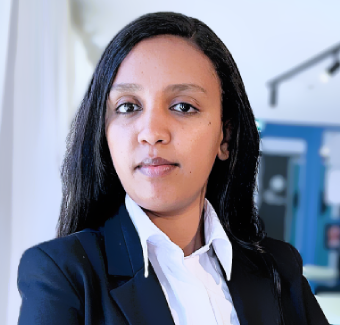
Meheret Takele Mandefro is a Digital Transformation Analyst at NetHope and leads the NetHope Connected Community, supporting small to mid size local nonprofits in their digital transformation journeys. In this role, she focuses on strengthening community driven digital capacity, fostering peer learning, and helping organizations navigate emerging technologies, including AI, in ways that advance locally led impact.
Prior to stepping into this role, Meheret served as NetHope’s Business analyst, conducting comprehensive sector research that deepened her understanding of nonprofits’ digital transformation needs. She produced data driven briefings and reports, and led analyses on AI adoption, digital skills demand, cybersecurity, and responsible innovation. She also led NetHope’s AI Working Group, collaborating with international nonprofits to shape sector wide conversations on AI use.
Her academic and professional background spans data science, artificial intelligence, and information science. She previously worked as an assistant lecturer in Ethiopia, a data engineer at Gmaven in South Africa, and a research intern at IRC’s WASH program in The Hague, exploring AI’s role in improving operational efficiency. Now based in The Hague, Meheret is committed to advancing equitable, community centered digital transformation across the humanitarian and development sectors.
Esther Grieder

Esther Grieder is a community engagement and partnerships expert with over two decades experience in the humanitarian and nonprofit sectors. As Director of Membership Engagement at NetHope, she supports a global network of organisations driving impact through collaboration, collective action and smart use of technology. Previously at the Humanitarian Leadership Academy, she led strategic partnerships and global community initiatives, and developed sector-wide platforms and services. Esther is passionate about building inclusive, purpose-driven communities.
Ka Man Parkinson

Ka Man Parkinson is Communications Lead at the Humanitarian Leadership Academy where she leads global engagement, storytelling and advocacy as part of the organisation’s convening strategy. Through her work, she connects people, organisations and ideas to help accelerate the movement for locally led humanitarian action. Ka Man’s interdisciplinary background – spanning two decades of experience in nonprofit communications and marketing, a technical education in management and IT, and practice as an EMCC-qualified coach and mentor – shapes her holistic and people-centred approach. She initiated and co-leads the first global study tracking how humanitarians are using AI in their work, and founded and hosts Fresh Humanitarian Perspectives and the HLA Webinar Series. Ka Man is based near Manchester, UK.
About NetHope
NetHope, a consortium of over 60 leading global nonprofits, unites with technology companies and funding partners to design, fund, implement, adapt, and scale innovative approaches to solve development, humanitarian, and conservation challenges. Together, the NetHope community strives to transform the world, building a platform of hope for those who receive aid and those who deliver it.
About the HLA Webinar Series
The HLA Webinar Series is an online initiative designed to connect, inform and inspire humanitarians from around the world. We promote information sharing and knowledge exchange on topical issues facing the sector.
Through these regular free online sessions, we strive to bring you fresh and engaging insights from diverse speakers ranging from seasoned leaders to more recent entrants to the sector.