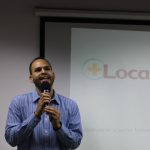
Excerpt – Julio
It’s not only about one INGO. We need to work together as a system and in a coordinated way just to achieve localisation goals in Sudan. And also this is a message for local and national actors because they need to continue.
Introduction – Musaab
Welcome to Fresh Humanitarian Perspectives, a podcast by the Humanitarian Leadership Academy. My name is Musaab Al Hadi, Group cash transfer, technical specialist in the Children International Sudan Country Office. I’m your host in this episode of the Eye on Sudan series titled From Policy to Practice: How Localisation really Works in Sudan. This episode, in the second instalment in the Eye on Sudan series. The series, birthed at Humanitarian Xchange Kampala is focused on amplifying the work of responders in the Sudan crisis.
There is a sentence you hear constantly in humanitarian spaces. ‘We need to localise aid.’ It appears in donor strategies, conference panels, global communities, policy documents. But in Sudan, Localisation is not theoretical. It’s already happening every single day. Sudanese responders are negotiating access across conflict lines, supporting displaced communities, running community actions, keeping clinics operational, organising volunteers, moving suppliers, and sustaining humanitarian response in places international actors often cannot reach, consistently.
And yet, despite carrying so much of the response, many local actors still describe feeling excluded from decision shaping work. So today we are asking a difficult but necessary question – If local responders are already leading operationally, why does power and the humanitarian system still feel so centralised?
Welcome to Eyes on Sudan, a series exploring the realities shaping humanitarian action across Sudan. Today we are speaking with someone working directly inside the humanitarian system on one of the most sensitive transition moving from, international control toward locally led response. This is a conversation about partnership, but also about power, about the gap between humanitarian language and humanitarian practice, and about whether this sector is truly ready to change. Thank you so much, Julio, for joining us.
To start, can you introduce yourself and tell us about your role in Sudan?
Julio
Thank you. Thank you so much. Musaab. I’m really pleased to hear your introduction because at the end, when we talk about localisation. Yes, in fact, we talk about power, but, yes, let me introduce myself. My name is Julio and I lead the partnerships and localisation team in Save the Children Sudan. Regarding my role, my role focuses on how we can improve the work with local and national actors, how we engage with them, how decisions are made, and how partnerships evolve over time, considering, of course, both implementing and strategic partnerships.
Previously in Save the Children in Sudan, the partnerships department, were more closely linked to awards. So, the focus was largely, on compliance and delivery. What we are, doing or are trying to do now is shifting toward a more equitable relationship-based approach, which, of course, requires changes not only in system but also in mindsets and behaviours.
And this is, and this new approach is supported by the Country Director, Mohamed Abdiladif who is strongly committed to this and the whole Senior leadership as well.
Musaab
Thanks Julio. So you mentioned mindset shifts, on a personal level, what shaped your own thinking around localisation?
Julio
Around localisation Well, I’m going to talk a little bit about my previous experience and how these experience shape what I think about localisation. Because before Sudan I worked with Save the Children in Venezuela. And that experience really shaped how I, how I understand localisation. I work closely with Anly Nerson, who is currently the Global Head of Locally led delivery and Partnerships. And she really pushed the localisation agenda in Latin America. Not just at a strategic level, but in how we work with partners day to day. At the same time I was mentored by Baiwa Wan from Save the Children Norway, a well-known localisation advisor who helped strengthen my perspective, particularly around the idea, that localisation is how you, how you mentioned at the beginning of the of the meeting, fundamentally about power, decision making and whose voices shapes the response. That combination had a strong influence on how I approach this world today. Of course, before Save the Children I have some idea, I had some idea related to localisation.
What was localisation? But I truly believe that in Save the Children I understood completely what localisation means and of course what we can do in practice to achieve the grand bargain commitments and localisation policy.
I wanted to highlight this because of course this episode is about Sudan. But it’s important to mention to our audience that localisation is not only a global commitment but a strong and significant Save the Children’s effort across the movement in many places. Yeah. That said, localization to me is understanding that local national actors pivotal part of the response in contexts like Venezuela, Ukraine, Sudan, among others.
And that the real challenge is whether we are working in a way that recognize and supports that leadership in our decisions, our system and how we share power. And I like to think about myself as a change maker. And that’s why I think localisation is really important for us, for our present, for our immediate future and of course for the, for the humanitarian sector as well.
Musaab
Okay, so, and I just wanted to elaborate more why specifically Sedan.
Julio
I think that in Sudan, and this is something that Save the Children in Sudan also recognize localisation matters, because local and national actors are already central to the response. We, as an organization, we truly believe that our role is to enable and amplify that leadership by strengthening equitable partnerships, supporting organisational capacity, and shifting how power and resources are shared so that the response for children is more sustainable, locally owned, and truly grounded in the realities on the grounds, in the community, in the communities we work.
Musaab
Okay. So basically localisation is one of those terms everyone uses, but people often mean, very different things by it. How does Save the Children, define localisation in Sudan?
Julio
Localisation in Sudan… I think that in Sudan, Save the Children recognizes that localization is not an abstract, concept is a reality. And in many, in many parts of the country, especially where access is constrained, local and national actors are the ones, sustaining the response every day. And they remain present, they understand the context as they maintain relationships with, communities and they are closer to communities. For us localisation is already happening. And we need to see how our systems and way of workings are aligned with our reality.
That’s why for us, localisation is really about influence and leadership. And it’s not about whether local actors are present, they clearly are. But when we think about localisation in Sudan is more about, yes, localisation is happening, but local national actors are shaping programs, are influencing priorities, are contributing to decisions and local and national actors are recognised as leaders in Sudan. So, for us, localisation is about who has a say, not just who is involved.
Musaab
So that means localisation is about leadership and follows, not visibility alone, not participation alone. Awesome. So, institutionally, what change, have you made to support that shift?
Julio
Yeah, it is important to mention that when we talk about localisation, we talk about, several dimensions. And of course we talk about leadership, we talk about visibility, but also we need to talk about the recognition of local and existing, local existing capacities. How we are, promoting or advocating for more direct access to funding, from local national actors. How they are part of the coordination mechanisms and of course how they are influenced the policies in country. We, all of us, we understand that, Sudan is a very sensitive country. And of course, when we talk about influencing, policies, it’s quite difficult to imagine that today. But at the end, localisation is a process. And when we talk about localisation about a process, we need to see many different aspects of localisations as an integrated, component.
That’s why we talk about several dimensions, when we talk about localisation. But yes, it means leadership, it means visibility. And of course, all relies in how local and national actors has the power in country.
At the end localisation is and to support the local leadership, and to guarantee that localisation is a reality in country. Of course there is a commitment to achieve that goal, those goals. We’ve taken important steps to move from commitment to practice. We developed recently a localisation strategy. But more, more importantly, we are building on real progress. For instance, we consistently provide indirect cost recovery to partners when possible. And this is when I’m, what I’m mentioning, when possible is because sometimes donors are not that flexible regarding indirect cost recovery.
Of course we are also providing some flexibility during implementation, although we are pushing for more flexibility in line with partners requests. And we’ve also strengthened engagement and learning spaces including regular partnership meetings, an ongoing dialogue with local national actors.
Because at the end it is not Save the Children’s understanding on localisation, because we also need to see how local and national actors are seeing localisation in country, how they are experiencing localisation in country.
And based on that we need to move forward to provide the most necessary support to achieve those goals related to localization. And, internally we are moving toward more demand driven capacity sharing support based on partner priorities rather than predefined assumptions.
And for instance, we are currently implementing a pilot with six partners to strengthen their financial capacity by putting financial administrative system, in place. I think the name is QuickBooks for that for that system. And this effort is particularly significant as it is demand driven, having been requested directly by the partners during the last annual partnership meeting. And that’s why I think it’s important that yes we are moving forward and we are trying to achieve our localisation goals and priorities but we are doing nothing if we don’t hear our partners, if we don’t hear the voices of our local national actors in Sudan. So we as Save the Children, we are not starting from zero but the key focus now in Save the Children Sudan is ensuring that this progress becomes consistent across the organisation. And that’s why we are pushing for a more equitable partnership approach in, in Sudan.
Musaab
Okay. Okay. What you’re, you, what you’re describing, Julio, sounds like humanitarian system is still caught between two models, one based on control and one based on collaboration.
Julio
Yes, I think it’s quite complex to explain this because when we are and this is basically the question related to seeing the partner as a subcontractor or as a partner, and at the end it should be a partner. And this control approach which is more related to this subcontracting model, this is something that is in transition in Sudan. We understand, and it is important to understand that local, local and national actors are central to, to delivery, especially in areas where access depends on them.
And also that more early engagement in program discussions and stronger relationship based partnerships needs to happen rather than purely compliant driven ones. So I think that the humanitarian sector is changing, maybe is not changing at the speed that we are, that we want to, because we need to see how we can be more flexible, how we can work more directly with partners under an equitable partner approach and how we conceive that partners are contributing to program design and how they help shape implementation approaches. So yes, at the end it’s about control and control is something that it is when we talk about localisation and the control world is important because it’s not only control, it’s about power imbalance. And localisation is basically about how we can avoid or how we can overcome this scenario where there is a significant power imbalance between INGOs and local and national actors.
So what we need to do now is shift from implementation to collaboration. And of course this is not yet consistent across all organisations, because of course I’m speaking from Save the Children’s perspective, but of course there are other NGOs that are making significant efforts to move forward from a control scenario to a more collaborative scenario with local national actors.
But as I mentioned before, this is not yet consistent across all organisations. And this is where the focus should be now. Also. And you asked me about control and you’re mentioning the, the control scenario where we probably are right now. But this start, this control, scenario is also more related to how we express ourselves, how we use the language when we are talking with partners and the terminology we use day to day to talk about our partners, about local and national actors.
This is something that we need to work on because the way we communicate with local national actors reflects our mindset, behaviours. For instance, we don’t need to call any of our partners, an implementing partner because they are partners. We don’t need to add a last name to the relationship or use the sub agreement wording when we’re referring to partnership agreements. At the end, it is visible the power imbalance.
And this power imbalance can be shown in so many ways.
Musaab
Yeah, so true. So let’s move from strategy into practice. How are local actors or local responders actually involved in programme design, budgeting and prioritisation?
Julio
So we are seeing a gradual shift toward earlier engagement. For instance, in several programs, partners are now involved before proposals are finalised, helping define priorities, location, feasibility and somehow the budget, that we need to implement those activities in the field, as partners used to say when they are involved early, the programme reflects the reality much better.
We also see that is a strong involvement in response prioritisation, particularly in context where needs and access change rapidly. At community level we see that participation is embedded through outreach teams, service centers, feedback and accountability mechanisms which allows also to communities influence services directly.
But one area, one area where we continue to improve and we need to improve is budget decision making where partners influence is still more limited.
Musaab
Actually that feels like an important distinction. Because local actors may be closest to communities, closest to operational realities, even closest to the risks, but it’s still not fully included in the financial decision shaping the response. So how much do you think that before we go to the another question, we should stop here. So how much do you think that affects trust between international organization and local partners?
Julio
I think the trust is affected significantly because at the end, when we talk about budget and somehow how we decide to allocate the budget, within the program and how much is going to be implemented by one of the partners in the response when we are not clear about how we get to that number and why is that budget instead of a different one. Or maybe the budget that the local national actor mentioned that it was important for them to implement the activities at the end affects the relationship, and the trust between the two parts of the relationship because it can be seen as a lack of transparency. And transparency is one of the key values that we need to strengthen when we talk about localisation and partnerships, how we can build on equitable partnerships without being transparent.
And of course I’m not saying that we are not being transparent. Maybe we need to be more, more close to the, to the, to the, to the, to the. Maybe we need to approach the local national actors to the decision and also in connection with the donor and open the space for, for them to talk about the needs, talk about the necessary budget, and somehow we need to improve this at local, but also at global level. And that’s why it is really important for local national actors to be part of the discussions before the budget, before the program activities are defined. Because we need to show them that we are truly engaged with them. And that should be an open and direct dialogue between the local, the national actor and the INGO.
So in my opinion it affects the relationship, the trust in the relationship because it can be perceived as a lack of transparency. And at the end it’s not a lack of transparency. Sometimes we don’t have enough time to explain all details related to the program, to the activities.
But of course perception is really important in these type of relationships.
Musaab
Can you give us a concrete example where a local partner directly shaped a humanitarian response?
Julio
Yeah, of course. One example that I think that I can mention comes from displacement context, in Sudan where conditions change very quickly. In one of our programs, the initial design was based on expected locations and assumptions about access. When local partners were engaged early they highlighted that communities had already moved and that priorities have shifted.
They also clarified that was realistically accessible. Based on this the program had to adapt both where we work and how a system was delivered. This illustrates that partners were not just implementing activities but actively shaping the response itself.
Another example related with one of our key partners, the communities. And that really stands out for, for me is a pilot we did using group broadcast, using group cash transfers at community level.
And this is something that for you can be really familiar as you were leading this, this process, this process. And I think it was it was quite a simple idea but very powerful in practice. Instead of designing everything centrally, we put communities at the centre of the process. Local community led groups were the ones identifying the needs and deciding how the support should be used. So rather than just receiving assistance, they were actually, they were actually shaping the response themselves.
What we saw was that participation became much more real. It wasn’t just consultation, it was actual decision making.
Musaab
So, so in practice the, the program become more accurate only once local actors entered the conversation early enough to challenge the assumption behind it.
Julio
Exactly. Because at the end if we are going to provide, if we are going to provide and deliver a response at community level and it is important to hear the voices of the communities because the effectiveness and the impact of the project will be measured by how we can address the needs, the real needs of communities.
And I think that’s really, really important when we talk about localisation and how we can involve also community, child led groups, women led groups, non-formal groups in the discussion. It’s not only about formal local national actors. It’s also about how we can connect with communities with child led groups and at the end, how we can connect with the communities we served.
Mussab
Awesome. Working alongside the local actors what have you personally learned from Sudanese led groups?
Julio
Yeah, in Sudan. Well, I’ve mentioned this before. One key lesson I think is that localisation is already happening, not always in a structure or systematic way.
And that’s a really key lesson for us because partners consistently highlight the same priorities. Please engage us earlier, be transparent with funding, recognise the work we are already doing and this is visibility how they can be more visible regarding the impact they are doing in the field. We’ve also learned that when partners are engaged early, programs tend to be more realistic, more relevant and more effective. And importantly, localisation is not only about organisation, it’s also about community participation and whose voices shape the response.
And this is in line with the example that I gave before related to the group cash transfers pilot.
Musaab
Okay, so basically Julio you’ve made a really important point throughout this conversation that localisation in Sudan is already happening operationally. But at the same time there still seems to be major structural, barriers to making that localisation more equitable, and consistent. So where do you think the biggest tension or obstacles still exists?
Julio
Yeah, I think that it’s not difficult to include partners from the beginning in any of the responses that we are planning to, that we are planning to deliver. Because at the end it is about commitment and how we…If we received, if we received a call, from a donor to work on a proposal. Of course sometimes we don’t have enough time to do it, because the donor, the call, the proposal call, gets to us today and we need to send budget or concept, no, next week.
So sometimes it’s about time. But what we need to do is maybe to change the approach, how we are connecting and how we are defining these priorities and projects together and referring to implementing, to implementation only.
But partnership is not only about implementing activities. And this is something that we also need to elaborate more because partnership is also about how we build on strategic partnerships and this goes beyond implementation. But I just wanted to add up because it’s important for us to also change the meaning when we talk about partnerships.
And it is a broader, it is a broader component. And that’s why we need to talk more about strategic partnerships rather than implementing partnerships. But I think that the difficult part is how we can engage earlier, from the beginning of any potential response with local national actors. Of co,urse there are other constraints related to localisation and how we can involve the partners early, how they can be part of the funding decisions and all that. And this is sometimes related to how they are, they have access to the same spaces that INGOs have access.
For instance, we are more able to, we are more able to sit in the table, in the same table with a donor. And this is something that sometimes the local national actor is for for them it’s not possible because they don’t have their relationship. Sometimes the donor prefers to talk to, prefers to talk to the INGO because they already know our, knows our work, they already know our system, they trust in international NGOs because of our systems or because we have the experience in many contexts.
And this is something that unfortunately local and national actors has not, the possibility is not with them. And this is something that we need to advocate more because it’s not only about how Save the Children is providing access to funding, to decision making, to programs at early stage. It’s also about how we as a sector are changing the way we are doing things at the moment. And that’s why of course there is a lack of trust from donors in working directly with local national actors. Because we know that local national actors work in highly complex environments.
But we need to see how we can advocate, how we can advocate better for that in any context and how we can build these trusts. And that’s why for us is really important to, to also when we are working with local national actors, we are also putting our attention on capacity sharing because at the end we need to reinforce these local, and national existing capacities because we know that in the future, in a really close future, in an immediate future, the local responders will be leading the response in any countries, in any context because it is more sustainable and because the humanitarian sector is changing.
And that’s why for us, Save the Children its really important to focus also in capacity sharing. And how we can build on these capacities, of course, based on a demand driven approach, not only about what is expected from the donor, or what we believe the local and national actor needs to improve just to adhere to the donor compliance.
It should be more focused on organisational capacity and how the capacities that we are building with local and national actors are sustainable for the future.
Musaab
Okay, awesome. Awesome. So Julio, if we move beyond the language of commitments and releasing operationally, institutionally and even politically, what would meaningful progress on localisation actually look like in Sudan over the next two years?
Julio
Over the next two years? I think that is a really complex answer. I think that in the next, one, two years, in Sudan, meaningful localisation would mean being more consistent and intentional. And this is a message for INGOs and donors. And we need to see how we as humanitarian system, we include as part of our priorities.
Making early engagement and standard practice, improving transparency in funding discussions, strengthening partner sustainability and institutional capacity. Increasing visibility and recognition of local leadership. Of course the goal is not perfection because we are talking about the future in just two years. But to ensure that what already works becomes embedded, across all programming.
And national actors because they need to continue. they need to continue push on, on, local. On INGOs, just to. Just to make sure that, they are involved across all the. They are involved and they are leaders in the response. It’s not only, as I mentioned before, it’s not only about consultation. It’s also about how they are truly involved in the response.
And of course, for the donor, I think that, donors play a, very critical role in enabling localisation. Donors are a significant, and key part of the process. Because localisation is a process and enabling, deeper localisation in Sudan, it means also providing more flexible and predictable funding, supporting access for local. For local actors, aligning compliance frameworks with operational realities because we all understand that, operating in Sudan is quite complex. And when all these elements are aligned, I think that localisation will become more feasible to implement in practice.
Musaab
One thing that, being very clear, throughout this conversation is that local respondents are not waiting to lead. They are already leading. If Sudanese volunteer community responders or local organisation leader listening right now, Took only one thing away from this conversation. What would you hope it would be?
Julio
Yeah, thank you, Musaab. And that’s really important to mention that, local responders are already leading. So I would like to start by saying a very sincere thank you to local national responders in Sudan for their contribution, their impact, and the role they play every single day in sustaining the response, often in very difficult conditions.
Their work is not only important, and it is what makes the response, possible in many parts of the country. I also want to recognise that local actors, are not only responding, they are continuously pushing for a more localised response, even while navigating significant constraints. And this is incredibly important from our side, as INGO, the responsibility is clear to continue adapting how we work, how we engage, how we fund, and how we share decisions.
Because localisation is not about bringing local actors into our system. It is about adjusting those systems to match the local leadership that already exists. And I strongly believe in localisation because it’s not the future. I think it’s our present. If we, as a sector want to be sustainable, effective, and close to communities while delivering humanitarian and development responses.
Musaab
Thank you so much. Julio, again. Thank you for listening to Eyes on Sudan. In our next episode, we will move from policy into solution, exploring alternative funding models, locally led partnership, and what a genuinely shared humanitarian system could look like in Sudan.
Thank you for listening to this episode of Fresh Humanitarian Perspectives, a podcast by the Humanitarian Leadership Academy. Today’s conversation reminds us that localisation is not a future ambition in Sudan. It’s already happening every day. Local responders are leading negotiations, organising communities, adapting programs, and sustaining services.