This transcript has been generated using automated tools. It has been checked but minor errors or omissions may remain.
00:00: Chapter 1: Introduction
[Intro music]
[Voiceover, Ka Man]: Welcome to Fresh Humanitarian perspectives, the podcast brought to you by the Humanitarian Leadership Academy.
[Music changes]
[Voiceover, Nour]: Humanitarians, we know, we did a lot of digital transformation, and we failed at most of it, in my opinion. Sorry. And that’s because we didn’t ask the right questions to the right people.
[Voiceover, Musaab]: Ethical AI is not really a technology discussion — it’s a power discussion. Who designed the system, whose data is used, whose perspectives are represented, who benefits, and who carries the risks
[Voiceover, Ali]: it’s very important to invest in cultures, in the transformation, to see the end-user perspective, to not focus only on the models but on how they will be rolled out and designed and all those different stages. So try to imagine things, think differently, and see how we can leverage them to support those colleagues on the ground who are supporting the communities we are serving
[Music changes]
Ka Man: I’m Ka Man Parkinson, Communications Lead at the HLA. And for the past year, together with Data Friendly Space, we’ve been leading the first global study mapping how humanitarians are using AI in their work.
Welcome to the second instalment of a two-part conversation on humanitarian AI. In part 1, I sat down with Madigan Johnson from Data Friendly Space to take stock of what we think our year of research and convening tells us is urgently needed as the sector navigates ethical and responsible approaches to AI, amidst deep sectoral change and challenges. As Madigan reflected later on LinkedIn, we’re grappling with the question: How do you build responsible AI when the money’s gone and the ground keeps moving under your feet?
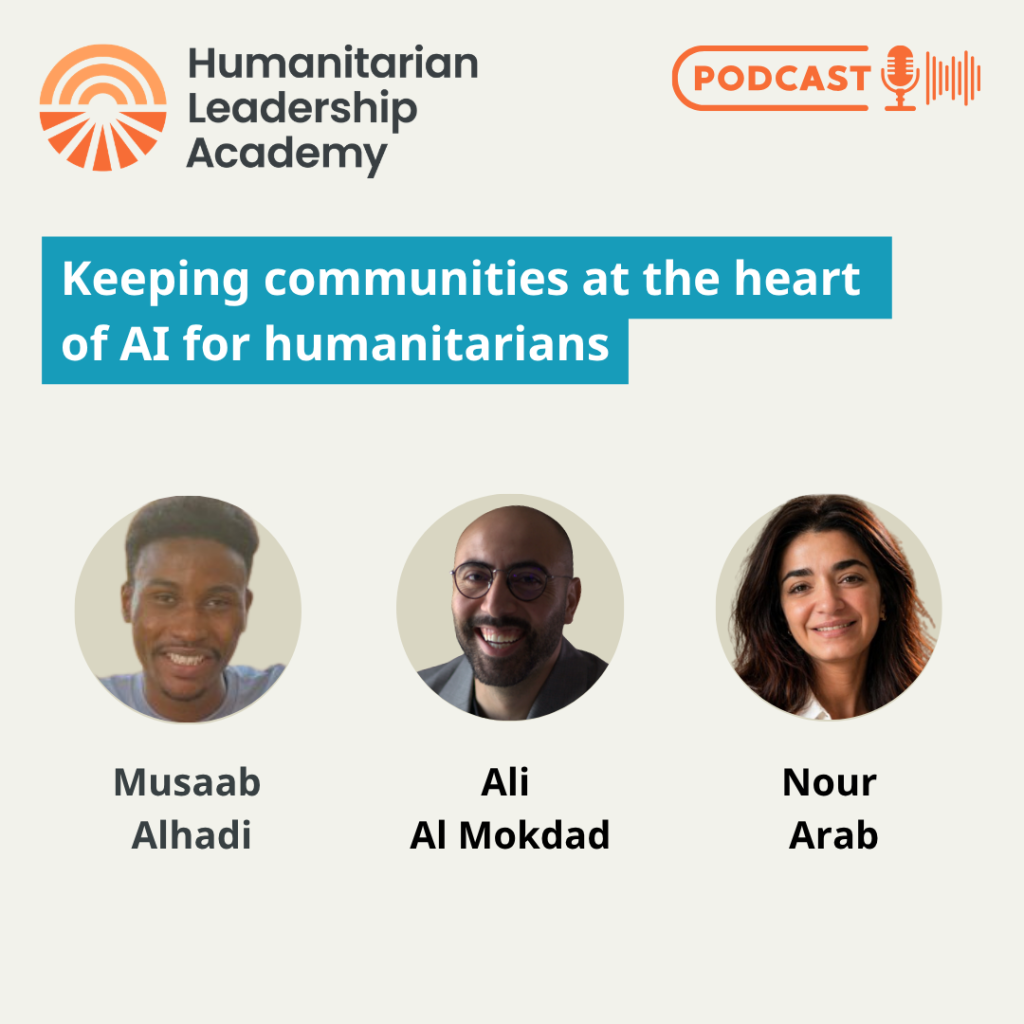
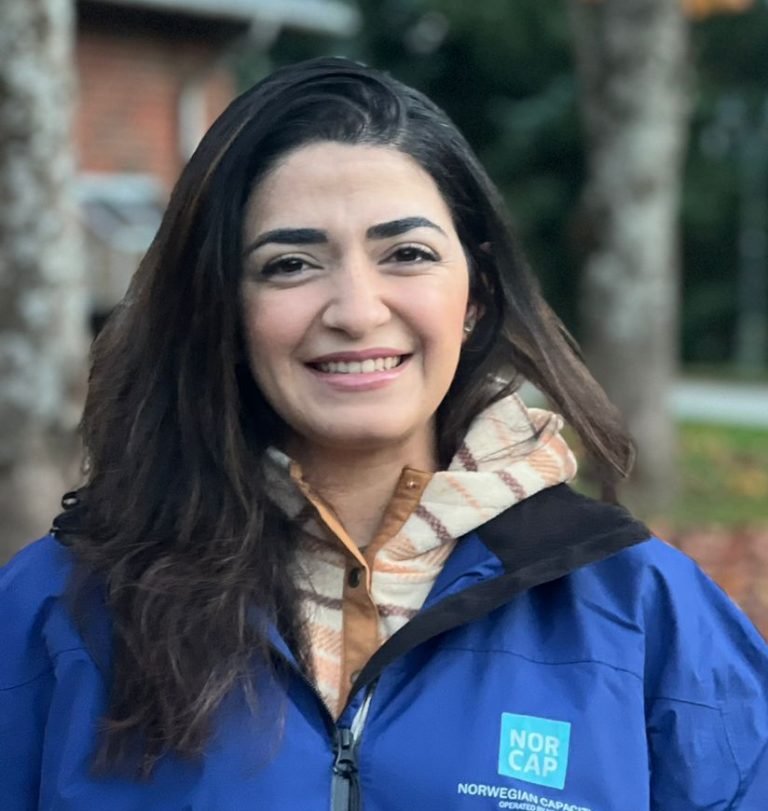
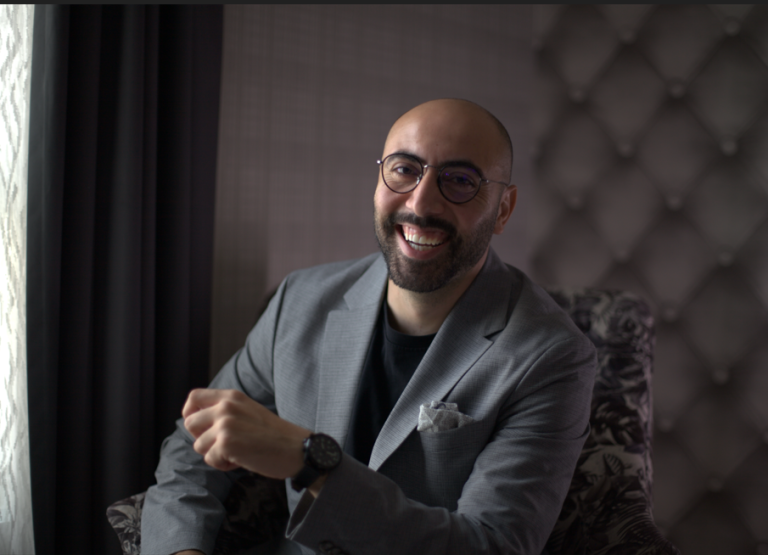
Today’s episode deepens and contextualises this conversation: it’s a candid discussion on the promise, potential and pitfalls of AI during this era of the Humanitarian Reset, from the perspective of three humanitarians. I’m delighted to speak to Musaab Abdalhadi, Nour Arab, and Ali Al Mokdad who’ve been an integral part of this research and convening journey. They bring perspectives from Sudan, Lebanon, and across the globe, living through and supporting communities during immense challenges and crises, through conflict and displacement.
If we want to stress test humanitarian AI applications and concepts, this is the lens through which we must consider genuine needs and use cases. Musaab, Ali and Nour each return to the same point: AI must support local leaders and the communities we serve.
[Music ends]
Ka Man: Hi Nour, Musaab, and Ali, welcome to the podcast!
Mussab: Hello, hello!
Ali: Hello
Nour: Thank you very much.
Ka Man: Oh, it’s so nice to have this time to speak to the three of you, especially as we’ve had such close collaboration over the last few months, and longer than that, actually, on humanitarian AI, in terms of convening, our webinars, podcasts, and your support for broader initiatives. So, it’s so great to regroup and have a chat about how things are looking from your perspective in this area in 2026, and looking ahead to the second half of the year.
So, to kick us off, for listeners who are new to our work, would you like to briefly introduce yourself and your interest and background in AI in humanitarian work? So, let’s start with you, please, Nour.
Nour: Hello, everyone. My name is Nour. I work across communication, community engagement, and emergency response globally. I’ve been exploring and using AI for the last two and a half years, and I found myself naturally developing a skill of coaching AI to organisations and people, and I do this right now.
Ka Man: That’s fantastic, thank you so much, Nour. So, let’s bring you in now, Musaab. Would you like to introduce yourself?
Musaab: Thanks for having me. My name is Musaab Alhadi, and I currently work in Sudan, supporting humanitarian programming with a particular focus on locally led response, partnership, and group cash transfer approaches.
Like many humanitarians, my relationship with AI has evolved quite quickly over the last couple of years. Initially, I was curious about its potential to help with drafting, analysis, learning, and knowledge management. Today, I use AI regularly in my work, whether for brainstorming, reviewing documents, developing training materials, or helping structure complex ideas.
At the same time, working in an active humanitarian response has made me very aware of both the opportunities and the limitations of these tools. AI can support decision-making, but it cannot replace contextual understanding, community relationships, or human judgement. That’s where most of my interest lies — how we can use AI responsibly, while keeping humanitarian principles and local realities at the centre.
Ka Man: Thank you so much, Musaab. You’ve been doing some incredible work haven’t you, with local responders, with your group cash transfer work, and also AI capacity strengthening training alongside that — also with Ali Mokdad as well — so it’s an absolute pleasure to have you here today. So let’s come to you, Ali. Would you like to introduce yourself for those who are new to your work?
Ali: Yes of course. First of all, thank you for having me. My name is Ali Al Mokdad. I currently advise international and national organisations, NGOs, and social enterprises on organisational transformation and optimisation of their governance and processes. Among the things I support organisations with is AI integration and digital transformation, including the integration of digital solutions like AI agents or large language models with their processes and workflows. I also have a couple of published research, including Inclusive and Intelligent Governance, and I have a bestseller book called Quantum Humanitarian.
Ka Man: Amazing, thank you so much, Ali. Just hearing you all recap who you are and what you’re about really made me think how, obviously, there’s a lot of convergence – from what I know of you – in your work and approaches, but you do occupy different perspectives as well, different vantage points as well, so it’ll be really interesting and useful to hear your take on developments in this discussion.
07:56: Chapter 2: Operational realities: Reconciling disconnects between systems and people
Ka Man: So, to get started, I’d like to talk to you broadly under the theme of operational realities. So through the research that the HLA has conducted with Data Friendly Space — through the convening, through the survey, and interviews like I’ve done with you, Nour, with practitioners — a key theme that came through, particularly from local leaders, is that AI systems must be developed to respond and adapt to operational realities, that they can’t be removed from each other. So, avoidance of a technology solution being imposed on a context without that contextual understanding. I thought it’d be really good to dig into that a little bit more from your perspectives and experiences, your rich experiences across the sector.
So, first of all, I’ll come to you, Ali. Could you share something about AI in your day-to-day context along this theme? For example, I’d be really interested to hear about when you’ve seen a disconnect between how systems are being shaped and how humanitarian work actually happens in practice.
Ali: Let me give you a fresh example — something I’ve been working on with one organisation, where we were trying to look at the challenges they are facing from an organisational psychology perspective, some of the issues, and possible ways to optimise their processes. What we did was use AI to go through so many layers of workflows, processes, policies, and documents, building on the data that they have.
And of course when we did that we found tonnes. We found almost 700 documents, tons of templates and tools, and multiple offline solutions that they had — and because they have area, country, region, and headquarter level with multiple representation offices, we used AI agents and tools to scan all those documents and processes, and identify workflows.
And after identifying those workflows and looking at who’s doing what, we managed to identify multiple what I call organisational disorders — which means a gap between communication at field level and headquarter level, duplication and multiple responsibilities, multiple people stepping over each other’s responsibilities without even realising. We started finding other issues causing gaps in communication and collaboration.
After mapping all those workflows and identifying those issues, we started coming up with AI solutions — for example, automated communication between setting something on the system at HQ and taking it to field level, or identifying duplication in multiple roles and seeing how an AI agent can work on those. And multiple other things.
But the challenge we faced was the transformation element. AI helped us organise this massive amount of data across different levels, but once we started applying those digital solutions, we found, one, a capacity issue — which I would brand as an AI literacy issue. Two, there’s the need at field level for offline solutions and lack of access to the cloud. And adding to that, we needed to present it from a cultural perspective, because there was a bit of moral panic, a bit of lack of clarity, and not all the people were on board with having those solutions and all.
So we needed to step back and focus on organisational transformation, offline solutions, and site-level realities — trying to see how we could work before we sync with the cloud, and work on the cultural element before we even start deploying those tools.
So what I’m trying to say here is on the positive side, it helped us scan massive amounts of data from around ten years, identify multiple organisational disorders, bring solutions, and work as an ally and a tool to the leadership at headquarter, regional, and country level. But the challenging part was the rollout, the offline solutions, and introducing those cultural elements. This is just a fresh example of what I have seen at organisational and institutional level.
Ka Man: That’s fascinating. I have so many questions but I don’t want to take up all the time. I found it really interesting that you pointed first to the people aspect and culture — organisational psychology, organisational disorders — I think a lot of listeners will be nodding their heads and relate to that context. So, thank you very much.
Let’s turn to you now, Musaab. Could you share any experiences where you’ve seen this sort of mismatch or disconnect between systems and people?
Musaab: Yes, I have so much to say here [laughs]. One thing I often notice is that many conversations about AI assume that information is readily available, is structured, and consistently updated — but humanitarian work rarely operates like that. Definitely in Sudan, decisions often have to be made with incomplete information, rapidly changing context, communication disruption, and significant access constraints.
I remember working on humanitarian programming where displacement patterns changed within days. Communities moved, markets shifted, and security conditions evolved rapidly. In those situations, the most valuable information often comes from local responders, community leaders, volunteers, and partners who are physically present and consistently engaged with communities. That is where I sometimes see a disconnect. AI systems are often built around data.
But humanitarian response is also built around relationships, trust, and contextual interpretation. There have been many moments where I have thought: I wish the people designing these systems could spend one week in a humanitarian field operation to see the realities — not because the technology is wrong, but because they would quickly see that reality is much messier than any dataset. A recommendation generated by AI may look logical on paper, but local actors may immediately recognise why it won’t work in practice. For me, that highlights an important lesson: AI should support local decision-making, not replace it.
Ka Man: Thank you so much for sharing that. I mean, it’s such a vivid example, because obviously you’re working directly with local responders now — so you see the issues day in, day out, you know the challenges, and you know the workarounds, and you know the cultural factors at play, and the nuances that like you say, an AI would not understand. That plea that people spend time actually – when developing these systems — to understand what is this the situation like, that can really help to shape the actual system design. So thank you very much.
So let’s come to you now, Nour. Could you share any examples or perspectives of this sort of disconnect between systems and people?
Nour: I would actually like to add to what Ali and Musaab were saying. When the solution comes from humanitarians, it’s always a much better solution. That’s why AI literacy is quite important. When an outsider comes with AI expertise, let’s say, to an organisation, they would come with AI as a solution, while the problem is totally different, and the solution to the problem is not AI.
I was approached recently by one local NGO. They said, Nour, we’re sure you can help us a lot with AI, and I smiled and said: no, I can help you, and then if AI is the answer, I can be useful on this matter. So, tell me about your problems first. And as a humanitarian insider, I was able to ask the right questions and then identify what they need — by asking very simple things, like: what frustrates you in your work? What’s repetitive? What makes you bored at work? What’s something you would like to do – and this I wouldn’t touch when it comes to AI. And then, let me see your latest report. What systems do you have? What’s your data protection policy? And this is where the conversation flows very naturally from one humanitarian to another, and we start identifying the issues as we go.
And as Ali was saying, it’s overwhelming what AI can do — it can come up with so many solutions for people because it identifies patterns and gaps so quickly, maybe not humanly possible with the short contracts that we have.
But it’s always very important to understand where the organisation stands when it comes to AI, and how much acceptance they would have in integrating these changes into their system. Personally, I start with the simple things, and then expand to the bigger scheme. In time, people start to accept, integrate, and also come back with troubleshooting, some problems they faced — and then we fix, or simply let the whole agent go if necessary. Because again, the main issue is to solve a problem, not to install another system. As humanitarians, we know, we did a lot of digital transformation, and we failed at most of it, in my opinion. Sorry. And that’s because we didn’t ask the right questions to the right people. I’m not planning to do that anymore [laughs].
Ka Man: Thank you, Nour. It’s quite interesting — when you said those closing words, Musaab and Ali both smiled and nodded their head, so that obviously really resonates.
Nour: There’s one thing I’d like to add.
Ka Man: Yeah
Nour: In one of the coaching sessions I had, one of the people I was talking to — a senior humanitarian — was saying: I’m having this problem with my boss, and I don’t know how to explain what I do to her. And I said: okay, let’s do that with AI. He had four extremely complicated Excel sheets — very, very good work he was doing, but his manager didn’t understand what he was doing. So we spoke together, asking the right questions — what’s your objective, what would you like her to understand — and we came up with a platform that was so easy to understand.
With AI literacy, it doesn’t just improve the system of the organisation, but also the communication between departments that is sometimes — or most of the time — impossible [laughs].
Ka Man: Yes, again, that probably resonates with a lot of people listening. What I’m hearing from the three of you is – if we’re look at this in terms of a flowchart – is that people and conversations and communication are foundational — that’s the very first step — whereas it can be so easy to just bring in a system and install that [laughs], overwriting all of that stage, bypassing that, and that’s where the problems begin.
Ali talked about organisational psychology and transformation before talking about the actual technical solutions.
You Musaab, you were talking about the cultural nuances and the understanding that a lot of data will be unstructured because of the nature of the work and the context in which you’re working.
And Nour, you were talking about the same themes. So that really comes through to me. So I just wanted to throw it back to you — whether any of you had any brief reflections to share on what’s just emerged.
Ali: I have to admit, and make a confession — I’m guilty. I have made so many mistakes before, when I led the rollout of ERP systems, when I led automation and Power Apps and Power BI initiatives, when I established AI communities and super users, and led governance of multiple business processes. I have learned so many things from those failures. One of the key things I learned is culture — and the people in the organisation. And going back to first principles: any conversation must start from first principles, especially when we are talking about design, rollout, development, maintenance and all that.
The second thing I want to say is about roles, specific roles, workflows, and processes. We have to keep in mind, when we are talking about AI’s impact on positions, we have to distinguish between purpose and task. There is a huge difference. The project manager’s purpose is to oversee the project cycle management. But managing a budget, preparing a forecast, preparing a plan — that’s a task.
So AI, from my perspective and what I have been doing, is not coming for the overall purpose — it’s coming for the task. How that project manager is forecasting, how they are doing the monitoring, the planning, the designing.
So when I talk with people about the impact of AI on organisational workflows, I always try to distinguish between purpose — the overall goal and scope — and the task. Because the integration at this moment, AI in humanitarian development is mainly in that area: the tasks, how leaders and people at different roles are doing those different tasks. It hasn’t impacted the overall purpose until this moment. That’s from my perspective and experience working with different organisations.
Ka Man: Thank you. Purpose and task. I think it’s hard for organisations to think about that sometimes, especially in the current context and all the changes generally, beyond AI — so having that framework is a useful one. Thank you so much.
25:10: Chapter 3: Humanitarian AI learning: Now and in the future
Ka Man: I want to share thanks again to the three of you, and our appreciation for your involvement to help shape the development of our Ethical AI Use and Decision-Making in Humanitarian Work microlearning, developed together with Data Friendly Space as well. I’m so excited to see that launched on Kaya. So many thanks again to the three of you for your rich contributions and feedback.
So I wanted to ask you to briefly share one reflection or takeaway from what you saw, your involvement or that process — and then, more broadly, what do you think needs to be prioritised in terms of AI literacy in humanitarian work, or just more generally, in the second half of 2026? So, let’s bring you in first, Musaab.
Musaab: Thanks Ka Man. As a humanitarian, one of my key takeaways from the Ethical AI Use and Decision-Making in Humanitarian Work microlearning was that ethical AI is not really a technology discussion — it’s a power discussion. Who designed the system, whose data is used, whose perspectives are represented, who benefits, and who carries the risks. Those are questions humanitarian organisations are already asking in localisation discussions and agendas, and I think they apply equally to AI.
Looking ahead as I see priorities to the second half of 2026, I believe one priority should be making AI literacy accessible to frontline humanitarian workers and local humanitarian responders. Right now, there is a risk that AI conversations become concentrated among technical specialists and headquarter teams, while local actors remain consumers rather than contributors.
If localisation is important for humanitarian action, then local actors should also have a voice in shaping how AI is used within humanitarian response. I also think we need to invest more in critical AI literacy — not teaching people to blindly trust AI, but teaching them how to question it, challenge it, identify bias, and understand its limitations as Nour and Ali mentioned. Because responsible use is not about knowing what AI can do — it’s about knowing what it cannot do.
Ka Man: Well said, Musaab. I was just reflecting recently how, in our immediate circle, we do naturally frame AI literacy and AI development in the localisation agenda – situate clearly within there. But outside of this particular group or people with this school of thought, shall we say, the innovation agenda and the efficiency agenda may be more dominant.
So I’m pleased that you’ve surfaced that here and you’ve always spoken, when we’ve had conversations about this, like at our HNPW session back in March, you really put it down to power. Made that a central theme and question in the use of AI tools. So thank you very much for sharing. So, Nour, let’s bring you in. What’s your take on the ethical AI microlearning and AI literacy in general?
Nour: It was twenty minutes of knowledge. I don’t call it a microlearning course — I learned a lot myself from it. And I think it answers an observation we have, which is that AI is going to make us lazy, or it’s a shorter route to things.
But when doing the training and going through the questions, you realise that when you use AI, you add more steps to what you do, and hence you spend more time doing what you do — but maybe differently. The workflow is different. It could be broader, based on more research, more patterns — but it’s not necessarily a shorter way to do your tasks. In my experience, sometimes I spend much less time working because of AI, and in other times I’m working ten, twenty times more [laughs]. It really depends on what task it is, and the learning curve.
Going back to my first point — not making the same problem we have, the same mistake we made in digital transformation — I really do think AI literacy is most important because the problem should be identified by the people, by the humanitarians, by the people on the ground who know the context well and are able to generate better solutions. Training on AI literacy can be a bit too general. Maybe it depends on a specific task or a specific department. Personally, I find it very useful to speak to colleagues very informally about the challenges they face every day, and how AI can help them. There are a lot of webinars and online trainings out there, and the ones that are winning, I think, are the ones that tackle specific problems and expand to the different tasks people do — for example, in communications, or finance etc. That’s what I think.
Ka Man: Fantastic. Thank you so much, Nour. I really enjoyed our conversation that we had last month — your interview is available on our website and I’ll link it in the show notes — where you made a very definitive, declarative statement that AI literacy for those who are on the ground is key. So you really do see that as a priority, particularly in line with the localisation agenda, would you say?
Nour: Yes, definitely. And I’m on the advisory board of the Community Engagement Forum, and we’re currently running a survey on whether AI belongs in community engagement or not. We’ve been receiving very interesting responses — we made it very open, we said whatever you think of AI, if you refuse it, if you hate it, if you love it, just drop your opinions there. It seems that respondents are saying they’re already using AI and they need help with AI literacy training. Another finding I saw is that they want to include communities so much in what they’re doing, and let them know how they’re using AI in their work — but at the same time, they don’t know how. They’re sharing interest but also concerns, and asking for support on specific things. I’d be more than happy to share the results at the end — that would help with your work.
Ka Man: Yes that’s fascinating. And I think that experience is replicated across the sector at large — where there is this recognition that AI is helping, AI can take some of this pressure off from me, but we’ve reached a bit of an impasse, a bit of stuckness. How do we get to the next level and unlock that? My aspiration is that this Kaya course – I’ll call it course rather than microlearning module [laughs] is part of a new wave that I hope will emerge to help the sector get across the line — so we’ve moved from “is AI okay, can I use it?” to the reality that we are using it, so how can we as a sector move forward responsibly and operationalise it in our work? Thank you very much for sharing your reflections, Nour.
So, Ali, would you like to come in now and share your thoughts on the module, and any reflections about AI literacy?
Ali: I think it’s a good course, and I highly recommend those who are listening or watching this later to go to Kaya and look into the other courses — there are so many around leadership, project management, finance management, supply chain. I’m not sure if there are now over 500, but I don’t think there is a topic you can’t find a course or e-learning on. If it’s not hosted by Kaya, then it’s another platform in collaboration with Kaya.
There is one thing I want to say here. When I design e-learnings or trainings, I always try to look at it from the end-user perspective. One of the main opportunities that came with AI and AI applications is the way we think about e-learnings. An example — something I just completed recently with one organisation. When we started designing from the end-user perspective, we looked at different ways of learning. A user enters the platform, and once they sign in, they find three options: do you prefer learning through text and listening? Do you prefer learning through videos? Do you prefer learning through scenarios or practising? The user chooses one. If they clicked on text and listening, AI agents in the background tailor the e-learning content in the language the end user wants, appearing as text and voice — they can control the speed and other things, and do the test while they’re learning. If the user picked video, AI agents come in the background, add short text, and pick from the video library. If the user picked scenarios — and that was actually my favourite — a screen appears with multiple AI agents playing different roles in an organisation, and then it’s role-play scenarios with the learner. All built on specific content, but delivered in the way the platform tailors to the end user’s preferred method, language, and approach.
The main reason I’m mentioning this is that with AI, we have an opportunity to reimagine learning — because some people like to read, others like to listen, others like to watch videos. In this case, the user has all those different options to learn about exactly the same topic, exactly the same material, but in their preferred way. And I’m not talking about the future — I’m talking about something we literally just finished.
The second thing: I think it’s very important to recognise that AI literacy means different things to different people, and different things at different levels. When I talk about AI literacy at operational level, they are already using the tools — they want an operational co-pilot, something that can match their speed. When I talk about it at headquarter or regional level, it’s more focused on governance and data analysis.
And when I do AI literacy initiatives for people outside the sector entirely, it means something different for a nurse, a doctor, a teacher. So it’s very important to look at learning from the end-user perspective, and to start leveraging the opportunities that come with these AI tools and AI models.
Ka Man: Absolutely. I think the emphasis on the user journey and personalised learning — well that’s first of all, obviously a really exciting use case for AI and the use of AI agents for such a personalised and contextualised learning experience. So that’s the future.
And a bit of a sort of plug for Kaya — thank you for mentioning the courses, I didn’t pay Ali to say that [laughs], not a paid commercial. I know you’re an online super learner, you have been throughout your whole career. But we do have, in the migration and upgrade, we’ve got plug-in ability to add AI agents in the future and other exciting opportunities. So yeah, maybe that is the direction we’ll go in, hopefully.
But I think user journeys in general. I think If we go back to the development perspective — actually thinking – rather than making assumption, this is what is needed, this is solutions, like a top-down, it’s actually from the user, from the organisation from the humanitarian’s perspective. so I think that’s a really good mental model to have across the board. So Nour, did you want to come in and add something there?
Nour: So two things actually. Very quick notes. First, I have a friend who is blind, and she was talking about the limitations when it comes to AI use — and using those agents could really help with inclusive learning whenever possible. I think that will help a lot. The other thing: I’m a huge podcast lover, and I listen to podcasts whenever I’m doing mundane work. I actually use NotebookLM whenever I want to learn something — I put different resources to generate the research and then start speaking as a podcast participant. It comes back to me with a very normal conversation, as if I’m speaking to a human being, and I start to learn things differently. I’m really liking it. So this could be one way of learning in the age of AI.
Ka Man: That’s very innovative. I like that! You’re making doing mundane tasks a learning –
Nour: Very! To be honest!
Ka Man: [laughs] And Ali — didn’t you have a podcast using NotebookLM?
Ali: It was a bit of an integration of multiple APIs and different tools, and that was more than a year ago. It went through everything I have published online, and some of the published research I have from 2013 to 2025, and generated 30 episodes of conversations around those different topics. That also opened my eyes around the learning concept. I want to mention something about those AI agents — I had a case where I did an e-learning as a participant. I started doing the modules, and I asked AI to observe what I was doing, the layout of the e-learning, how I was responding, so that it could also anticipate different reactions from different users. Some people ask me why I picked scenarios, videos, text, and audio — because that’s how I like to learn. Sometimes a video, sometimes an audio, sometimes text. I really like what Nour mentioned about inclusive learning — that’s a step toward inclusive learning, from my perspective and experience.
Ka Man: Fantastic. Oh, it’s very exciting — the future of humanitarian learning in all forms. Thank you. What a fantastic conversation. We’ll have to organise a follow-up at some point, because there are so many things I want to dig into deeper with you all. Unfortunately, we’ll have to wrap things up. But I just want to thank the three of you again, sincerely, for everything — all of your contributions, having this dialogue on an ongoing basis, and all that feedback along the way. So I truly appreciate it. So, on behalf of the HLA and Data Friendly Space, thank you.
44:11: Chapter 4: Closing reflections
Ka Man: So, would you like to share any final thoughts or message to our listeners? Let’s start with you, please, Musaab.
Musaab: Yes I should start that we’re closing this conversation [laughs.] My message will be simple. AI should make humanitarian action more human, not less. The technology will continue to evolve, but our responsibility remains the same — listening to communities, respecting local knowledge and local actors, and making decisions that put people first. The most effective humanitarian responses of the future will not be those with the most advanced technology. They will be those that combine technology with local leadership, human judgment, and genuine accountability to the people we serve.
Ka Man: Thank you so much, Musaab. Well said. How about you, Ali, any final words to share?
Ali: It’s something I usually say: technology is not the problem, transformation is. To be action-oriented about that — it’s very important to invest in cultures, in the transformation, to see the end-user perspective, to not focus only on the models but on how they will be rolled out and designed and all those different stages. And take the opportunity to think differently — because that’s one of the main advantages coming with AI and AI agents and all those tools. Try to imagine things, think differently, and see how we can leverage them to support those colleagues on the ground who are supporting the communities we are serving.
Ka Man: Thank you, Ali. And you, Nour?
Nour: If you asked me this question a year ago, I would say start using AI somewhere. But now, with a lot of people already engaged with AI, I would say: keep the people who know the problem and know the work doing AI solutions, and do not import people from outside to do it for you. Whenever it’s possible, train your teams, individuals, and community members to do the work — and you’ll see a lot of your problems solved.
Ka Man: Thank you very much. Wise words to close on. Nour Arab, Musaab Alhadi, and Ali Al Mokdad — thank you very much for joining us for today’s episode of Fresh Humanitarian Perspectives from the Humanitarian Leadership Academy.
Nour: Thank you so much.
Ali: Thank you so much.
[Music]