20th February 2026

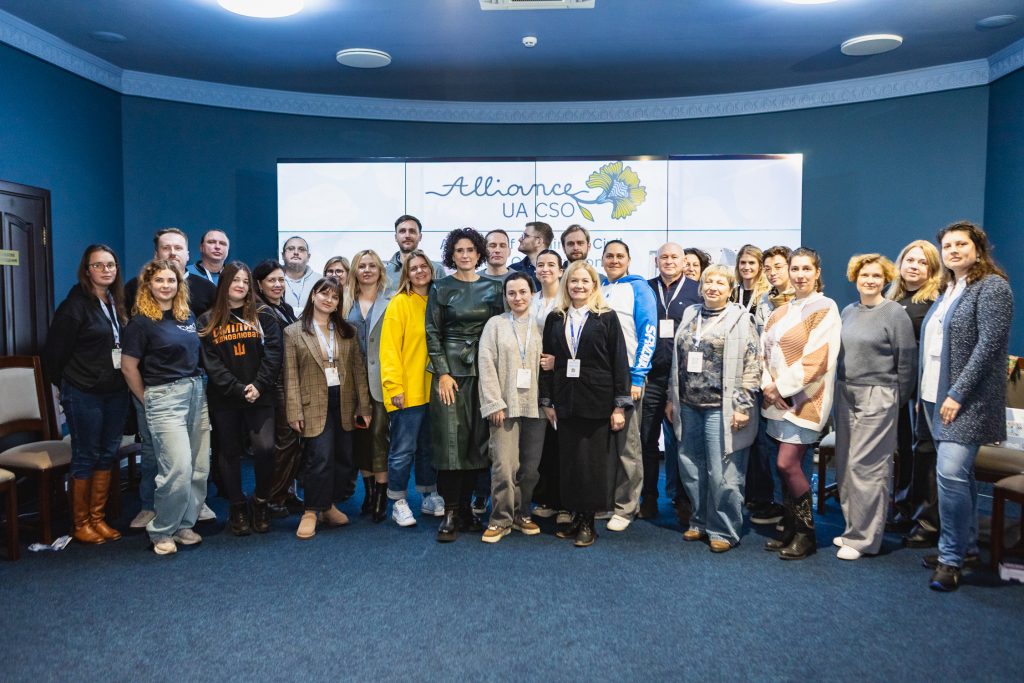
Four years into the full-scale war – and with no clear horizon for its end – Ukraine’s humanitarian sector is no longer primarily asking how to train faster or how to reach more people. The question has shifted. What kind of learning can responsibly sustain people, organizations, and leadership in a prolonged, high-risk crisis? How to maintain this knowledge for the thorough education of future humanitarians?
Humanitarian workers in Ukraine operate under constant pressure: insecurity, emotional exhaustion, staff turnover, and the growing responsibility carried by local organizations. In this context, learning is no longer a technical add-on or a supportive service. It increasingly functions as a form of infrastructure – something that can either hold the system together over time or be an additional burden that no one needs.
Training is present – but systems require responsibility
Over recent years, Ukrainian humanitarian workers have participated in a wide range of training programmes, proposed by international partners. Learning is already a familiar and widely used tool across Ukraine’s humanitarian sector. According to a survey conducted by the Alliance of Ukrainian Civil Society Organizations in June 2025, over 90 per cent of respondents had attended at least one humanitarian training in the previous two years.
Yet participation alone does not guarantee sustainability. While two thirds of respondents rated the overall quality of training as “good” or “high”, nearly one third described it as only “fair” or lower. More importantly, open-ended responses consistently pointed to the same structural issue: fragmentation. Respondents described isolated courses, limited follow-up, and weak connections between learning, daily practice, and long-term professional development.
What remains insufficient is the presence of a coherent system that allows learning to accumulate, circulate, and translate into lasting institutional capacity. This assessment is echoed in the 2025 report “Assessment of Localization Progress in Humanitarian Response in Ukraine” published by the NGO Resource Center. The report notes that many international training programmes implemented in Ukraine struggle to keep pace with the rapidly evolving humanitarian landscape. Too often, learning offers are designed externally, shaped primarily by donor logic rather than locally articulated needs. As a result, Ukrainian organizations frequently remain consumers of externally developed training content rather than recognized co-creators of knowledge emerging from their own practice.
When “one more course” misses the mark
Ukrainian organizations operating on the frontlines have evolved beyond the role of beneficiaries; they are now the primary innovators and custodians of critical experience. By necessity, they have forged their own learning practices – holistic, deeply contextualized, and understood instinctively from the inside. The challenge, therefore, creates a stark contrast: while local teams are building resilient, integrated systems, external partners often introduce fragmented training based on “outside” models. These imported solutions frequently lag behind the rapidly changing reality or miss the nuance of the context entirely. Fragmentation, in this sense, is not just an inconvenience – it is a disruption. When external learning fails to recognize and integrate with the indigenous knowledge already built by Ukrainian teams, it risks becoming a burden rather than a support, paid for in burnout and the weakening of the very local leadership it aims to help.
What a learning ecosystem means in practice
A learning ecosystem is not more content. It is coherence and responsibility.
In practice, this means connecting learning pathways across roles and experience levels; combining short intensives with mentoring, peer exchange, and post-course support; linking civil society organizations, universities, and international partners; and ensuring that learning feeds back into organizational practice and policy discussions. It also means recognizing care, safety, and ethical reflection as core elements of professional capacity, rather than optional additions.
As Mila Leonova, Director of the Alliance of Ukrainian Civil Society Organizations, explains:
“Everything we build is born inside Ukraine. Parallel systems are temporary. National ecosystems are what remain. But we are not isolated. Our role goes beyond execution. Our vision serves as a rallying point, bringing together the right partners to build bridges. We are moving away from temporary fixes to secure a national ecosystem that remains. ”
This approach positions learning not as a temporary intervention, but as a shared responsibility across institutions, sectors, and generations.
Listening to humanitarian workers
The June 2025 survey offers clear insight into what humanitarian workers themselves consider meaningful learning. Respondents most frequently identified mentorship, practical simulations, and peer-to-peer communities as the most lacking formats. Nine out of ten emphasized the importance of post-course support, reinforcing the idea that learning should not be a one-off event.
The findings also challenge common assumptions about “efficient” formats. Short webinars and micro-courses ranked among the least preferred options. Instead, most respondents favored 2-3 day intensives or week-long programmes that allow deeper engagement with complex topics. Certification mattered to over 90 per cent of respondents – not only as a motivational factor, but as formal recognition within organizational and career frameworks.
Language emerged as another critical dimension of accessibility. Only 6 per cent of respondents preferred English-only learning, while the majority requested Ukrainian or bilingual formats. This is not simply a technical preference; it speaks directly to ownership, inclusion, and the localization of knowledge.
From evidence to design
These findings now inform discussions and early design efforts around a national humanitarian learning ecosystem in Ukraine. The Alliance of Ukrainian Civil Society Organizations contributes to this process by stewarding evidence, articulating a shared vision, and creating space for collaboration across sectors. New programmes are being developed not as stand-alone offerings, but as building blocks within longer learning routes: hybrid delivery, recognized certification, decentralized access closer to affected regions, and opportunities for humanitarian workers themselves to act as trainers, mentors, and co-creators.
The Leadership and Advocacy programme developed in partnership with Ukrainian CSOs, the Humanitarian Leadership Academy and academic institutions is one such element. It is not presented as the ecosystem itself, but as part of a broader learning journey – connecting leadership development, ethical reflection, and practical influence on coordination and policy.
This layered approach has also been recognized by international observers. Reflecting on the ecosystem model, Dr Hugo Slim (University of Oxford) emphasized the importance of combining knowledge, skills, values, and attitudes in humanitarian learning – a balance essential for professional practice in complex and prolonged crises.
Why this matters beyond Ukraine
Ukraine’s experience is not a blueprint to be replicated. It is better understood as a stress test.
Ukraine has effectively become a laboratory of humanitarian experience – not by design, but by necessity. Hundreds of local organizations operate daily under conditions of risk, ethical tension, and uncertainty. The knowledge generated in these environments cannot be artificially constructed elsewhere. It must be documented, analyzed, and transmitted. Preserving this experience is not only a matter of national interest; it is a responsibility to future practitioners. Without intentional mechanisms for knowledge transfer, hard-earned expertise risks disappearing alongside exhausted teams and short-term projects.
For this reason, the Alliance advocates for the development of a learning environment centered on local expertise – both academic and field-based. Humanitarian knowledge in Ukraine does not reside solely in universities, nor only in frontline operations. It exists at their intersection. An ecosystem approach seeks to connect these domains, ensuring that lived practice informs research, and research strengthens practice.
In prolonged crises, where local actors carry increasing responsibility and international presence may be limited or episodic, fragmented learning quickly reaches its limits. What is emerging in Ukraine demonstrates that learning must be treated as infrastructure – designed for endurance, care, and shared ownership.
Learning as a form of solidarity
In long wars and protracted crises, solidarity is not measured only in funding or presence. It is also expressed through the willingness to invest in learning that lasts – learning that strengthens people, institutions, and trust over time.
Building learning ecosystems is slow work. But when urgency becomes the norm, it may be one of the most strategic and often overlooked forms of care the humanitarian sector can offer.
Additional resources 💡
Four years since the full‑scale invasion of Ukraine: Key facts and findings, February 2026 – Ukraine | ReliefWeb
Ukraine: Humanitarian Bulletin | ReliefWeb Response
Ukraine | OCHA
Webinar Recording: HNPW 2025 on Feminist Leadership Reimagining Leadership: Feminist Approaches to Transforming the Humanitarian and Development Sectors
HX 2024 session: Progressive localisation: responding to a response (Engine 2)
Video: From reflection to action — the Education in Emergencies Fundamentals training journey in Ukraine
Reports and research
Open Space Works and Elisa’s reports in Ukraine
Locally-led humanitarian research – Humanitarian Leadership Academy
Empowering Youth in Humanitarian Action in Ukraine: Lessons Learned and Pathways Forward (February 2025) – Ukraine | ReliefWeb