30th March 2026

– on contradictions, conviction, and why this year felt different for me personally
A personal reflection from Tamara Low, HLA Senior Lead Research Impact and Evidence
I’ll be honest, I have a complicated relationship with events like the Humanitarian Networks and Partnerships Week (HNPW). I’ve been working in this sector long enough to recognise the pattern. We gather. We talk about the same things. We recommit to the same principles. And then, largely, the same institutions with the same power go home and change is very slow.
One of the contradictions that feels most uncomfortable, is who is actually in the room, and I say that as someone who is very much part of the problem, as an INGO headquarters staff member who was able to breeze into Geneva on an Irish passport. Walk into most sessions at a conference like HNPW and you’ll find staff from INGO headquarters, donors, think tanks, UN agencies. The people we are supposed to serve, or even the people who work most closely to crisis, are rarely there. And yet we talk about localisation, shifting power and community voice. There’s a dissonance there that is hard to ignore.
So no, this year didn’t fix everything, but I left Geneva with something I don’t always carry home: a genuine, if cautious, sense of hope.
Some of that came from the opening session, where local actors spoke directly and powerfully alongside Tom Fletcher, the UN Emergency Relief Coordinator. What they said mattered, and it set a different tone.
- Anna Tazita Samuel, Founder and Executive Director of Women for Change in South Sudan, was unambiguous: “Now is the time to act. Let us action what we put on the table and walk the talk.”
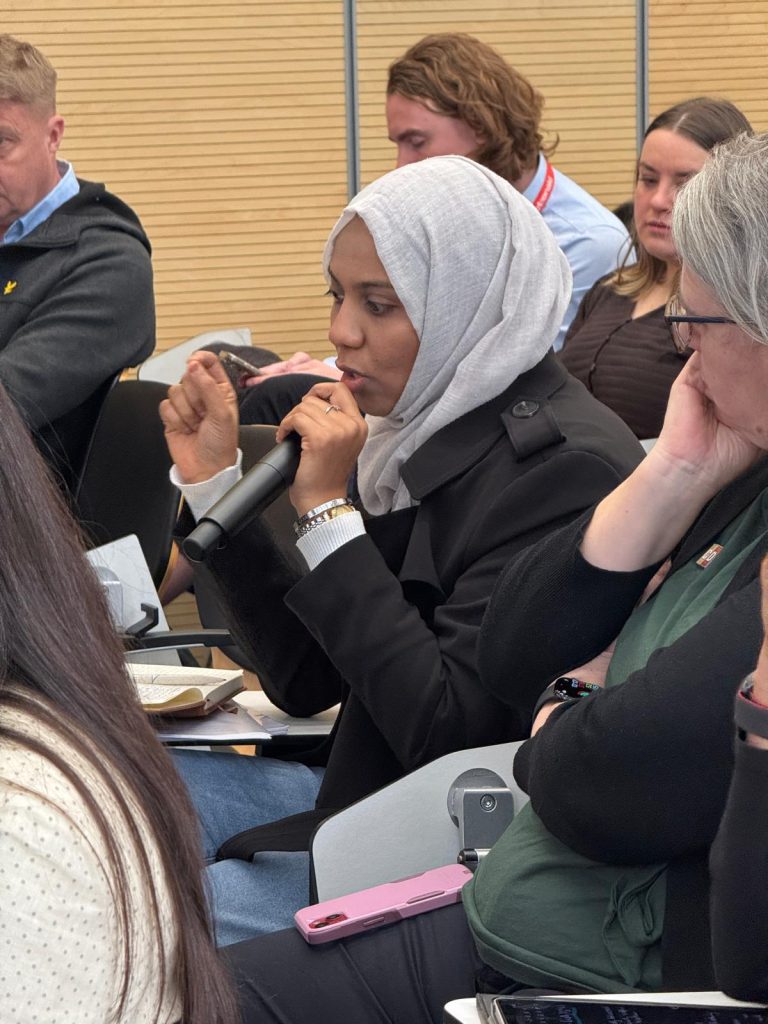
- Faiza Altamimi, Director of Nadha Makers Organisation and Chair of the Localisation Taskforce in Yemen, went further, pushing back on the very language we use: “Don’t use the term capacity building, it implies there was nothing there to start with. Nor the term ‘engagement’, which suggests someone owns the system, when we should be equal partners.”
These weren’t polite contributions but challenges to the room and sector. Ending on a strong challenge from Faiza to Tom Fletcher when she said that next year, the person sitting in his chair and facilitating the discussion should be from the Global South. He responded with a commitment that Faiza herself would be in his chair … I know that many of us will be watching with anticipation to see who is leading the HNPW opening session next year!
What moved me most, though, was more personal. For the first time in my career, I had the privilege of facilitating a panel at the HNPW that put locally led research at the centre, ‘Unsettling the status quo: The case for locally led humanitarian research’, and that centered local actors as the experts in the room. This is a topic I’ve cared about for years, but I’ll be the first to admit the topic of ‘research agendas’ is not one that fills rooms or sets pulses racing. Locally led research doesn’t have the same ring to it as, say, innovation or the humanitarian reset.
But it should do. The humanitarian research agenda, who defines it, who funds it, who gets to lead it, is one of the quieter but more stubborn expressions of power imbalance in our sector. A 2023 report by Tufts University and the NEAR Network puts it plainly: the sector operates through “a self-reinforcing triad of power, funding, and language” where well-resourced Western institutions act as “gatekeepers of research, valuing and prioritising their own approaches and concerns”. This perpetuates a cycle in which local organisations struggle to access the funding needed to build their own credibility and set their own agendas. The result, too often, is that local actors are handed a pre-defined brief with little space to shape the questions that matter to their context and communities.
What was crucial was not only the ability to have this discussion, but who was speaking. Maryana Zaviyska from Open Space Works Ukraine and Umut Güner from KAOS GL Association didn’t just make arguments; they came with evidence, with lived experience, and with real conviction about what needs to change for local actors to lead in this space. Kai Hopkins from Elrha brought an honest and constructive perspective on what funders can do differently. And the room, both in Geneva and online, was engaged.
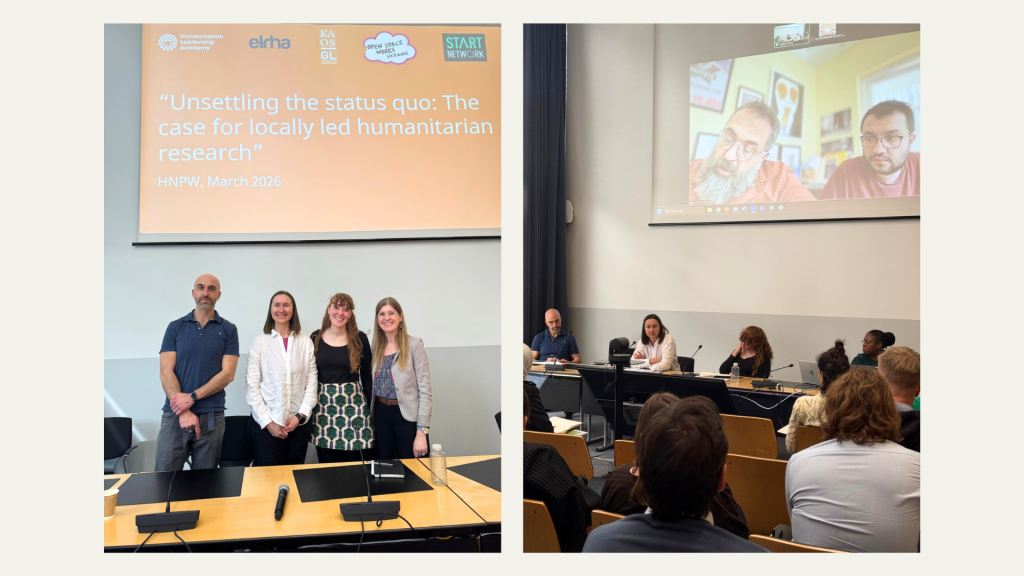
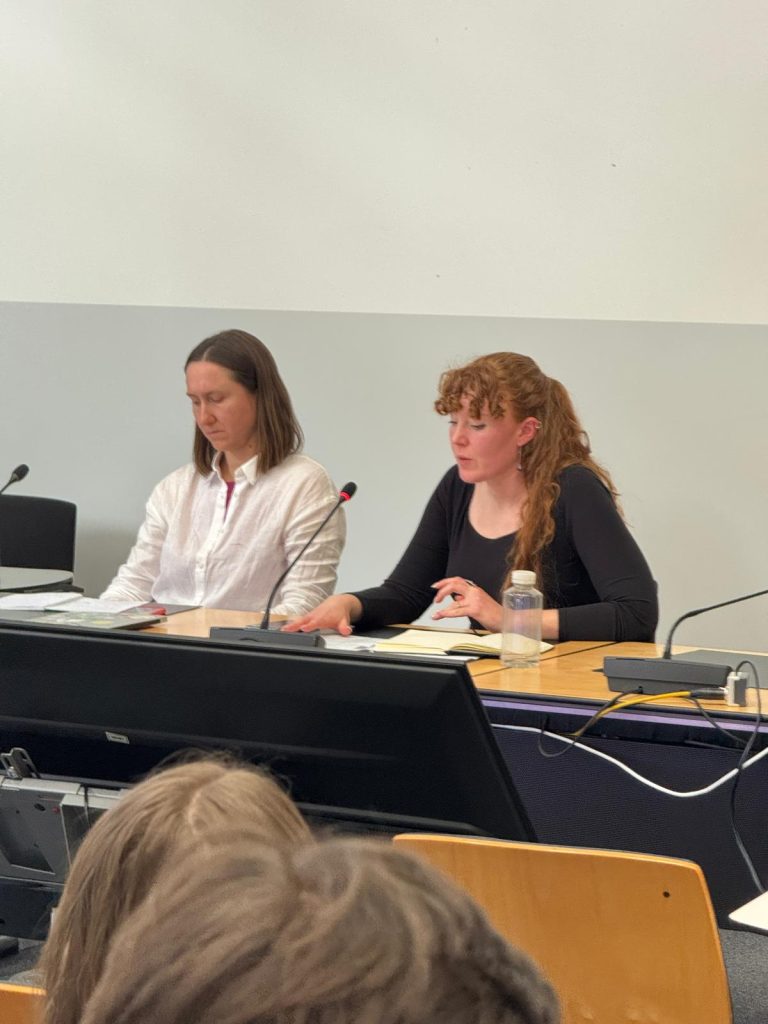
We didn’t resolve everything. One 90-minute session at a conference in Geneva isn’t going to dismantle decades of structural inequality in who controls the research agenda. But there were ripples. The panel left Geneva drafting a change manifesto, clear, practical steps rooted in the experiences of the speakers and the audience who so generously shared their thoughts, challenges and hard-won lessons. Watch this space.
The HNPW and similar events will always carry its contradictions. But if we can keep creating spaces where local actors are not the case study but the authority, where their evidence, analysis, and vision for change drives the conversation, then maybe those ripples become something more permanent over time. That feels worth showing up for and I look forward to seeing Faiza up front and centre at the HNPW next year!
The panel left Geneva drafting a change manifesto, clear, practical steps rooted in the experiences of the speakers and the audience who so generously shared their thoughts, challenges and hard-won lessons. ”