10th March 2026


What does it mean to build AI for communities that face connectivity and power supply challenges? It’s a question that goes to the heart of one of the most pressing debates in AI development today – who builds these tools, who they’re built for, and whose needs shape them. In this interview we hear from Ivan Toga from Uganda, and his views on humanitarian work, climate negotiations, and the case for localised artificial intelligence.
Ivan Toga was one of 1,729 individuals from 120+ countries and territories who participated in the Humanitarian Leadership Academy and Data Friendly Space’s Humanitarian AI January 2026 pulse survey – an ongoing effort to track how humanitarians are using AI in their work. A volunteer turned climate negotiator, Ivan speaks from the intersection of refugee response, climate finance, and the push for localised AI.
In this own words, drawn from a follow-up interview conducted by research co-lead Ka Man Parkinson, Ivan explains how he is currently using AI and his aspirations for the future. Ivan joined the call from Rhino Refugee Camp in northern Uganda. The connection dropped repeatedly throughout the call – a challenge that, as Ivan went on to explain, is central to his work.
Introducing Ivan Toga and his humanitarian work
Beginning from 2017, when the conflict began, the citizens of South Sudan had to run to Uganda to seek refuge. I happen to come from a village called Omugu, which is hosting communities who are refugees coming from South Sudan. I took that opportunity – and privilege – to volunteer with the Uganda Red Cross Society as a blood donor recruiter, and I also volunteered in family tracking for children who had got lost during war.
I was part of the Mental Health and Psychosocial Support Committee of the Refugee Response Team. I participated actively, and I supported refugees who came to Uganda to seek peace, and to seek safety.
In 2019, when Covid-19 broke into Uganda, I was part of the few young people chosen to be screening and interacting with refugees who were crossing the border point in Legu – to interview them about how challenging Covid was, and how they were isolated in the refugee points to be screened and taken care of for 14 days. I was privileged again to work with the local government district task force to perform these tasks.
I also participated as a member of the safe barrier team – to work on people whose lives went off, to interact with children, with women who had lost their husbands during war, to talk to orphans who had lost their parents because of the war.
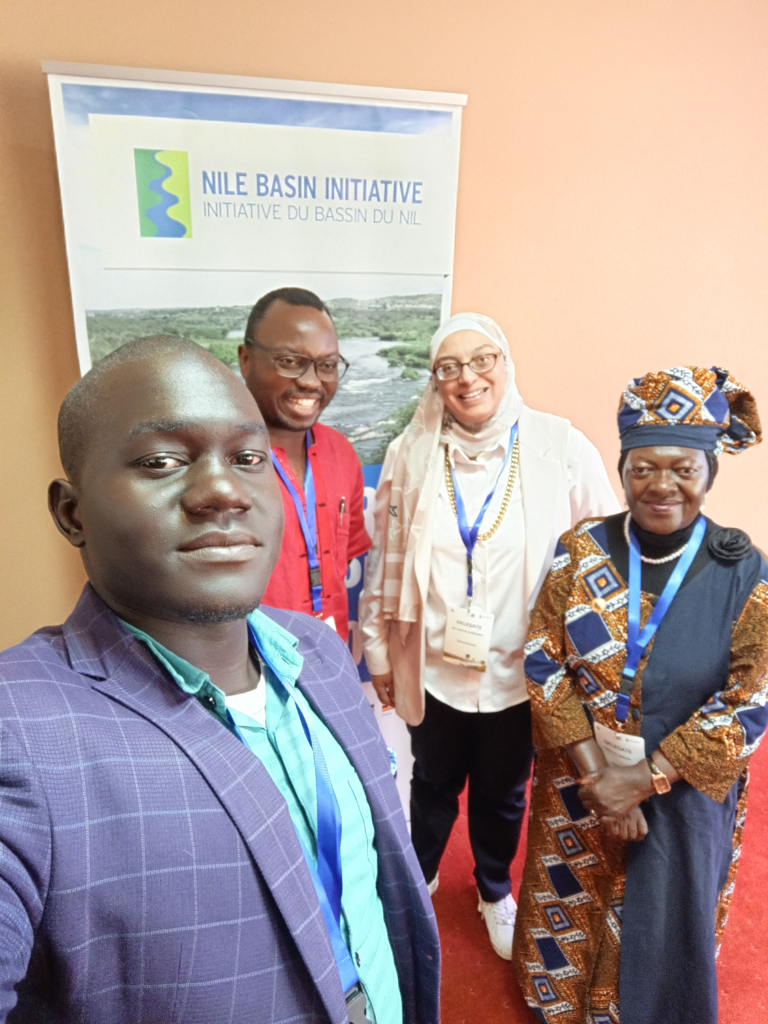
From there, I was recommended by the Uganda Red Cross Society headquarters to go for capacity building in climate governance, diplomacy, and negotiations with the University of Nairobi, under the African Group of Negotiators Expert Group. I graduated in 2023 with a postgraduate certificate. And from there, I was enrolled, and currently I represent the Paris Agreement Committee on Capacity Building – which is an arm of the UNFCCC that builds capacity of accredited civil society organisations and governments that have ratified the Paris Agreement.
My work with artificial intelligence goes back to 2017. When I was doing family tracking – looking for refugees and connecting them with their families – I remember interacting with technology, which could do what we call contact tracing.
During Covid, artificial intelligence through radio calls and satellite imaging helped to identify refugees crossing the poorest borders, to track them and rescue them from spreading Covid-19 to other uninfected people.
Currently, with the PCB network, AI has helped me to generate faster Paris Agreement policy briefs – documents I used to do manually, before we launched the Paris Agreement. From COP28 up to COP30, artificial intelligence is playing a key role in making sure that these steps are simplified in a manner that is really understandable.
I’m personally using artificial intelligence mostly for my work in climate negotiations and disaster response preparation planning.
I use different AI tools to simplify complex negotiation text. When I get back from the Conference of the Parties, I need civil society organisations to translate and interpret the conversations that we had in a manner that is understandable to all of them – and digestible. So I use artificial intelligence to help me understand this.
Artificial intelligence has also helped me to map climate vulnerability against population movement. It has gotten to a point where artificial intelligence helps me to predict if floods are coming to a refugee settlement camp, like Rhino Camp and Bidibidi – and it helps me to identify where the refugees go, and how do I reunite families when they move.
The Uganda Red Cross Society have an initiative, but whenever a flood or a disaster hits a camp, they do not have enough tools and enough information on where to go and what they can proceed with. We are not yet interacting so much with AI tools.
But with the PCB network – of which I sit on the Committee of Climate Finance and Technology Transfer and Development – we have seen that we are still developing tools in a transitional, just manageable manner.
When we sit at the table demanding for funding for technology transfer, we want an artificial intelligence that can immediately show: if you invest in this fixed solar grid for Rhino Camp, this is the exact reduction in firewood collection, and this is the exact decrease in gender-based violence risk for women and girls.
I’m thinking about this because we need an artificial intelligence that speaks the language of the donor and the language of the village where I come from – not the artificial intelligence that is built in Europe and exported to Africa.
As tech entrepreneurs, we want to work with communities to build a localised artificial intelligence tool that helps us negotiate better climate financing.
AI models that are trained in Silicon Valley need to be in places like my village – Omugu – where people understand a refugee’s trauma, where a farmer understands climate, where people understand the journey from South Sudan to Uganda.
We don’t need a laptop handed to us with a fancy application, trained to become family trackers or data scientists. We need to build models that work offline. You can see right now the challenge we are facing – stable internet. What if we have a model that is built to work offline? The global community needs to think that progress is faster than an internet connection. Because progress is a tool that works when power is out. And in a local language, it respects the dignity of a mother looking for a child right now.
We need an artificial intelligence that is good for all of us.
In the next 12 months, I want to move from theory – from these physical interactions – to seeing the application of these tools.
Through my capacity as a member of the energy cluster, we are doing feasibility studies, collecting information about homes that are using firewood, and registering these homes to solar systems and clean cooking. Our government, under the Office of the Prime Minister, spends each year one trillion Ugandan shillings on clean energy cooking in refugee settlements. That is money put to use.
I want to work with the tech community to build a localised artificial intelligence tool that will help us to better negotiate for climate financing. And I also want to include things that I learned from Ebola and Covid-19 – how do we collect household-level data now, so that if we have another outbreak of a disease, how is AI going to interact with it? How does it collect data? How does it conduct mental counselling?
We need an AI system that understands the approach of a mother giving birth in war. We need to specialise these tools. We need an AI that is good for all of us.
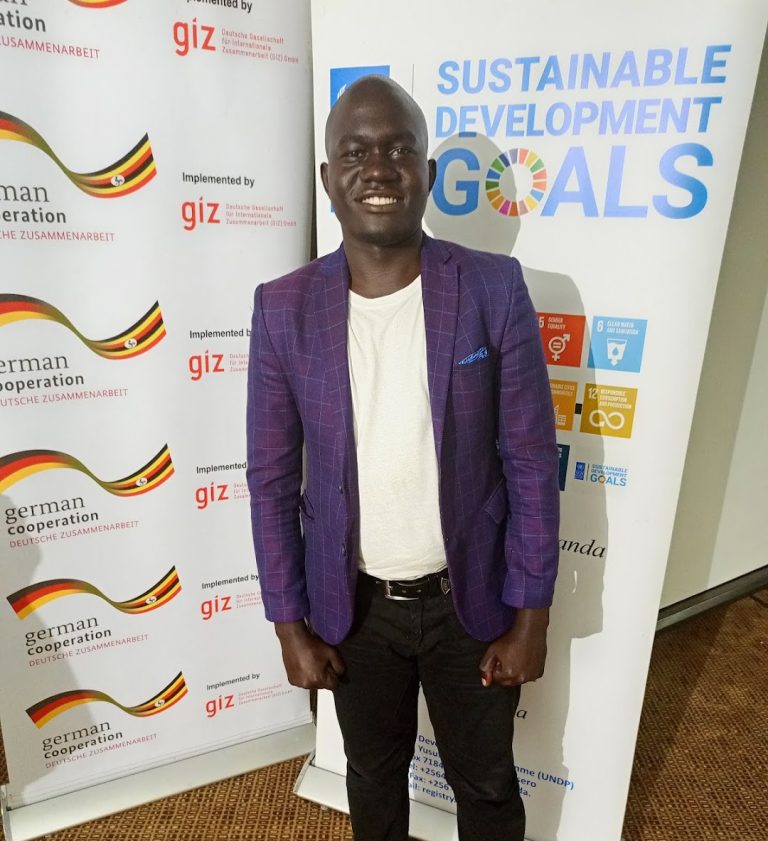
We need an artificial intelligence that speaks the language of the donor and the language of the village where I come from.
Thank you to Ivan for sharing his work and perspectives and for his contributions to the Humanitarian AI January 2026 pulse survey conducted by the Humanitarian Leadership Academy and Data Friendly Space. A research briefing note will be published in March 2026. This work builds on the 2025 foundational study and the supporting resources including reports, podcasts and webinars available on the research landing page.
You may also be interested in
Bridging digital divides: centring local leadership in humanitarian AI development – an online session as part of Humanitarian Networks and Partnerships Weeks (HNPW).
This session in March 2026 explored how AI is rapidly shaping humanitarian work, but local actors are still largely excluded from how these technologies are designed and governed, risking deeper inequalities. The panel discuss how AI can become a driver of localisation itself by embedding inclusion, ethics, and collaboration into humanitarian systems.
Humanitarian AI podcast series: Global and African perspectives
A six-episode podcast series exploring the findings of our landmark 2025 AI in humanitarian action report, featuring global and African expert perspectives on ethics, governance, localisation, and implementation barriers.
Browse the collection