21st April 2026


There is no shortage of ambition in the Middle East. Across the region, talented people from all walks of life are ready and willing to lead humanitarian response – and are already doing exactly that. With intrinsic understanding of cultures, languages, communities and ways of working, local leaders bring deep operational and contextual expertise shaped. Yet, they can often face barriers within global systems that can override local contexts and talent.
This is the view expressed at the heart of a recent episode of the Fresh Humanitarian Perspectives podcast, hosted by Faisal Mislit, Crisis Response Project Lead at the Humanitarian Leadership Academy (HLA), with guest Ali Al Mokdad, a senior strategic leader who has managed humanitarian and development operations across more than 40 countries. Speaking in Arabic, they reflect on what it truly takes to grow as a local leader in the humanitarian sector, and what the sector must change to make that possible.
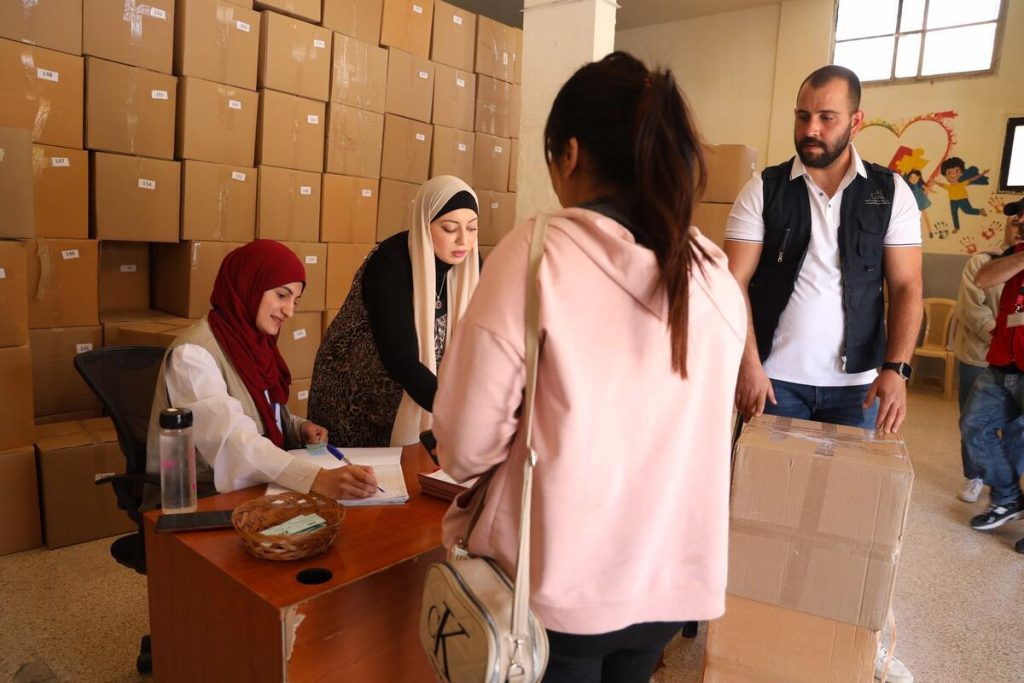
Image credit: Save the Children
Assumptions masquerading as standards
Ali Al Mokdad’s journey began in a small village in southern Syria with one main road and no internet. He walked up to two hours to reach school. He started his career as a volunteer, motivated simply by a desire to help the people around him. What he didn’t anticipate was the wall of assumptions he would encounter as he tried to grow professionally.
“Suddenly I was told the person doing my job needs a master’s degree from a specific foreign university,” he recalls. “That university didn’t even exist in my country. And I was already doing the job.”
This experience – familiar to countless local staff across the sector – points to a deeper problem. The humanitarian system has accumulated layers of credentialling, nationality requirements, and passport-based eligibility that function less as genuine quality standards and more as gatekeeping mechanisms. They disadvantage people based on where they were born, what language they speak, and which institutions they had access to – rather than what they actually know and can do.
Both Ali and Faisal are clear: these are assumptions, not requirements. Ali Al Mokdad went on to work in more than thirteen countries and manage operations across forty – with a single passport. Faisal manages a six-country crisis response project from Iraq. Neither followed a conventional international career path. Both built their expertise through experience, self-directed learning, and relentless persistence.
Hope is not a strategy
One of the most important distinctions the conversation draws is between ambition and strategy. Ambition, as Ali Al Mokdad puts it, is everywhere. But ambition without a plan is just waiting.
He introduces a simple but powerful framework he calls “zero to one” – the foundational work that happens before any tactical steps. It involves sitting honestly, reflecting and thinking with three versions of yourself: who you were, who you are, and who you want to become. What have you learned from past challenges? What resources and constraints do you have right now? What does your future goal actually require of you today?
“Passion alone is not enough, you must have a strategy,” he says. “Hope alone is not a strategy. You need to take responsibility for your own development and start working on it in concrete steps.”
This was brought to life for Ali by a single sentence from a manager, at the moment he was about to resign in frustration: “Who is stopping you from learning?” It reframed everything. Within weeks he had discovered a world of free online resources – and began a self-directed learning journey that would shape his entire career.
What organisations must change
The conversation is not only about individual resilience. Both speakers are direct about the systemic changes organisations need to make.
First, review your policies, governance and practices. Many of the barriers local staff face – credential and training requirements, nationality and passport restrictions, rigid grading structures – are not necessarily evidence-based. Rather, they reflect assumptions inherited from an earlier era of humanitarian response, and they need to be actively dismantled.
Second, invest in local leadership. Not as a box-ticking exercise, but genuinely – through sustained coaching, mentorship, and professional development that builds capacity over time rather than delivering a training and moving on. Faisal shares feedback from a local partner in the Congo who described long-term coaching support as more valuable than any external consultant: “You’re investing in me as a person. That stays.”
Third, and most fundamentally, stop thinking of local staff and communities as beneficiaries of the system. They are partners in it, and in many cases, the most effective drivers of it. The communities closest to a crisis are often already responding to it, outside formal humanitarian structures, long before international actors arrive.
A conversation that needed to happen in Arabic
There is something significant about the format of this conversation itself. It was conducted entirely in Arabic – an intentional choice to create content that speaks directly to the Arabic-speaking professionals who do not often experience their language and experience centred in humanitarian discourse.
“We always see content in English, translated into Arabic,” Faisal says. “Today we do the opposite.”
It is a small act, but a meaningful one. And it represents the kind of shift – in language, in framing, in whose voices are amplified – that the sector needs more of.
The ambition is there. It always has been. And when the right conditions are created – when barriers are removed, when people are genuinely invested in, when leadership is trusted to come from within – the impact speaks for itself.
This article is based on a conversation between Faisal Mislit and Ali Al Mokdad on the Fresh Humanitarian Perspectives podcast. Audio in Arabic. English and Arabic transcripts available.