19th May 2026

How can AI be used to scale and speed up anticipatory action efforts in disaster-prone regions?
The Humanitarian Leadership Academy and Data Friendly Space’s 2025-26 research into how humanitarians are using artificial intelligence (AI) revealed that individual uptake is outpacing organisational readiness. While the 2025 research documented some more detailed use cases from practitioners in Ukraine, Lebanon, Afghanistan and across several African countries, the majority of use cases captured to date have been individual-level applications of commercial AI tools to improve workflows. This reflects the adoption patterns across the sector where 75% of humanitarians are using AI regularly to support their work, while only 9% report of organisation-wide integration.
In this interview, we look at a different category of use case: the integration of AI into inter-agency and multi-stakeholder humanitarian work for anticipatory action, in a context where preparedness has become increasingly central to operations.
Nepal has long been recognised as a high-risk area for climate-induced humanitarian emergencies – sudden-onset hazards including floods, landslides, to heatwaves and droughts that are intensifying with climate change. Kathmandu-based Shudarshan Hamal is a Programme Manager at NAXA Private Limited, where he supports disaster risk reduction, anticipatory action, and climate resilience initiatives. He leads the implementation of DASTAA (Digital and Spatial Technologies for Anticipatory Action). DASTAA is an integrated, modular platform that combines household-level risk data, geospatial analysis, Earth Observation, GeoAI-assisted hazard mapping, citizen science, and multi-channel early warning communication to support anticipatory action. It is being implemented with local governments and humanitarian partners across Nepal, Bangladesh, and Malawi.
In his own words, drawn from an interview conducted by research co-lead Ka Man Parkinson, Shudarshan explains how AI is being used in NAXA and also incorporated into DASTAA as part of a broader process – alongside data quality, stakeholder alignment, AI literacy, and institutional coordination – to strengthen anticipatory action efforts in project implementation areas.
Introducing Shudarshan
I come from the western part of Nepal – Lamjung, where disasters are not abstract events they are part of people’s lived reality. Growing up in hilly areas, I could always see landslides near our homes. I watched agricultural lands get damaged by floods, and debris cover the fields. When the 2015 Gorkha earthquake struck, the scale of destruction made it even clearer to me that there should be organisations working seriously on disaster management supporting national government. It made me realise how important it is for Nepal to have stronger systems for disaster preparedness, risk reduction, and humanitarian response.
When I came to Kathmandu, I wanted to join one of those organisations. I pursued a Master’s in Environmental Science where my thesis focused on landslide susceptibility – I wanted to understand the causes so I could make practical recommendations. After finishing my graduate programme, I was fortunate to join NAXA, because they had been working on geospatial technologies, and I could see how those tools could be combined with disaster management. That intersection is where I have been working ever since.
My work focuses on using risk evidence, geospatial tools, and emerging technologies to strengthen locally led, anticipatory, and evidence-based humanitarian action.
From response to preparedness: the vision behind DASTAA
The core idea behind DASTAA is a paradigm shift: from response-focused disaster management to preparedness-focused disaster management. That means having granular, household-level information before disasters strike, so that governments and humanitarian agencies can act ahead of time rather than scrambling to respond.
DASTAA addresses that gap through five linked steps: data collection, hazard modelling, risk assessment using customisable frameworks, risk communication, and early action.
We have four categories of stakeholders. The first is the last-mile communities – the public living in flood-prone areas. They are our first priority, but the socioeconomic reality in Nepal is that they cannot directly pay for a system like this unless there are good benefits and opportunities attached.
So in practical terms, our main operational users are the second category: local governments – the municipalities. They co-finance the system, use it during disasters, and embed it for long-term use.
The third category is humanitarian agencies, like DCA Nepal, who work on shock-responsive social protection and cash relief – our data can link to social security numbers and pre-identified vulnerability categories so that agencies can prioritise during disasters.
The fourth is research organisations and universities, who can use the system for hazard modelling and risk framework development.
So far, DASTAA is implemented in four municipalities in Nepal. There are 753 local levels in the country, so there is a long way to go. We have not yet integrated with the national capacity – the National Disaster Risk Reduction and Management Authority and the BIPAD portal, Nepal’s national disaster information platform – but we are now approaching them with the aim of integrating our modules: the customisable risk framework, the household risk visualisation, the incident reporting, and facility specific adaptation planning.
Earning trust and scaling: the process of getting multi-stakeholder support
Starting anything new always comes with challenges. We are relying on grants – winning proposals, designing concepts and pitching them to donors. Our first implementation was in Dodhara Chandani Municipality and Bheemdatt Municipality in far-west Nepal, a flood-prone area in the Mahakali River Basin, one of the major river systems in Nepal and northern India.
When we approached the municipality, they did not have a digital system for disaster risk management. Their existing practice for early warning was to send social mobilisers and volunteers door to door on foot.
When a flood was rising, those volunteers might not be able to reach the highest-risk households in time. They don’t know the existing risk of the communities. We explained what we could offer: household-level surveys capturing socioeconomic, livelihood, and exposure data; complete geo-database; hazard modelling; and the ability to send targeted early warning messages to risk-categorised households. They liked the concept.
What really embedded us was what happened next. We had planned to survey only five of the municipality’s ten wards – the most flood-prone ones. The municipality came back and said: we want to assess every household, across the whole municipality. Over two and a half years operating in that municipality, we have sent almost 100,000 SMS messages to the public.
The same pattern of relying on grants and showing value to local partners is what has allowed us to scale. With funding from ADPC, we implemented in two municipalities – Dodhara Chandani Municipality and Parshuram Municipality in Nepal – and two unions Tahirpur Sadar and Dakshin Sreepur in Bangladesh.
With GSMA UKAid support, Phase I, we expanded to another municipality in Nepal – Bheemdatt Municipality, while continuing the implementation in Dodhara Chandani Municipality. With the support from Twilio.org, we took the concept to Malawi for the first time, working in the Phalombe and Zomba regions. A second phase of GSMA funding has now extended us to Barbardiya Municipality in Nepal and the Karonga region in Malawi.
The reason we chose Malawi was strategic. The context there is similar to Nepal – low socioeconomic status, high vulnerability to climate hazards. When we pitched our concept, the Malawi government welcomed us. The need was there, and our experience from Nepal and Bangladesh was directly relevant.
“We have had to learn it, adapt to it, and work out where it genuinely adds value” – integrating AI into DASTAA
When we started building DASTAA, we were working with digital and geospatial tools – data collection, hazard modelling, risk visualisation. At NAXA, we have a dedicated GeoAI team, and AI is becoming an enabling layer across our work. AI is the layer we have been actively integrating as we go. We have had to learn it, adapt to it, and work out where it genuinely adds value rather than adding complexity. Back in 2015, after the Gorkha Earthquake, NAXA supported an AI-integrated seismic structural damage assessment tool that used real images of earthquake-damaged buildings to assess whether buildings could be retrofitted based on Go/No-Go criteria. We have also used drones, orthophotos, geospatial analysis, and AI-supported workflows for rapid damage assessment, including post-earthquake and flood contexts.
The clearest early application has been AI-assisted hazard mapping – for floods, landslides, and heatwaves – and AI-based post-disaster damage assessments for floods and agriculture. But what we are now building is AI-generated agro-advisories [practical, location-specific recommendations to help guide day-to-day and seasonal agricultural decisions].
Previously, a technical working group at the municipality would manually collect information from the National Agricultural Research Council (NARC), the Department of Hydrology and Meteorology (DHM), and provincial systems, compile it in a Word document, and share it via WhatsApp. What we want to do is have our system pull from those same sources automatically, generate draft advisories, and have the technical working group review and validate them before dissemination to farmer groups and relevant stakeholders. The AI accelerates the process. The human validation step is not optional – it is the point.
In terms of early warning, AI is already making our messaging faster and more targeted. Where we were once sending messages manually, AI is enabling us to move toward automated, scenario-based dissemination: when a warning threshold is reached, the relevant set of pre-approved messages goes out to risk-categorised households with the push of a button. Critically, those messages were designed by the communities themselves in co-design workshops – so people know what to do when they arrive.
And looking further ahead, we are exploring AI for post-disaster damage assessment. In Nepal, the protocol requires an initial rapid assessment within 24 hours of an event. In practice, that rarely happens. With AI integrated into our system, we believe we could reduce that window to one, two or three hours – which changes what is possible in the critical period after a disaster strikes.
Preparedness for anticipatory action: trust-building, co-design and processes
In July 2024, a cloudburst event struck two of the municipalities where DASTAA had been implemented – Dodhara Chandani and Bheemdatt. 624 millimetres of rain fell in a single day. There was serious flooding and major damage across both municipalities. Despite the scale of the event, there were no casualties.
What made that possible was that every element of the system was already in place – DASTAA. The municipalities had been doing 24/7 monitoring of river and rainfall levels. They had a visualisation of risk-categorised households, the locations of safe shelters, and the contacts for security agencies. When the cloudburst hit, our system sent targeted early warning messages to high-risk households and to security agencies within the window that mattered. The Department of Hydrology and Meteorology, the National Disaster Risk Reduction and Management Authority, local government – everyone was coordinating from the same information.
That outcome was not the result of technology alone. It was the result of three and a half years of trust-building, co-design, local capacity strengthening, and institutional readiness. The technology worked because the relationships and the processes were already there.
As AI becomes more capable, the human loop is the most important thing
I think the most important thing to get right is the human-in-the loop and have that in the middle. That is the most important thing. This AI is always dominated by new models, platforms, and automations. Can the system help a local officer understand the risks if we have AI? Is it sufficient? I don’t think that it is sufficient. We need locally owned, locally understandable systems. AI should be in that loop where local governments and actors like us can validate and interpret the results to the local public.
AI literacy for frontline humanitarian actors is essential – the local government, committee institutions, they should not only receive AI outputs. They should also question, validate them and they should use them so it makes life easy for the public.
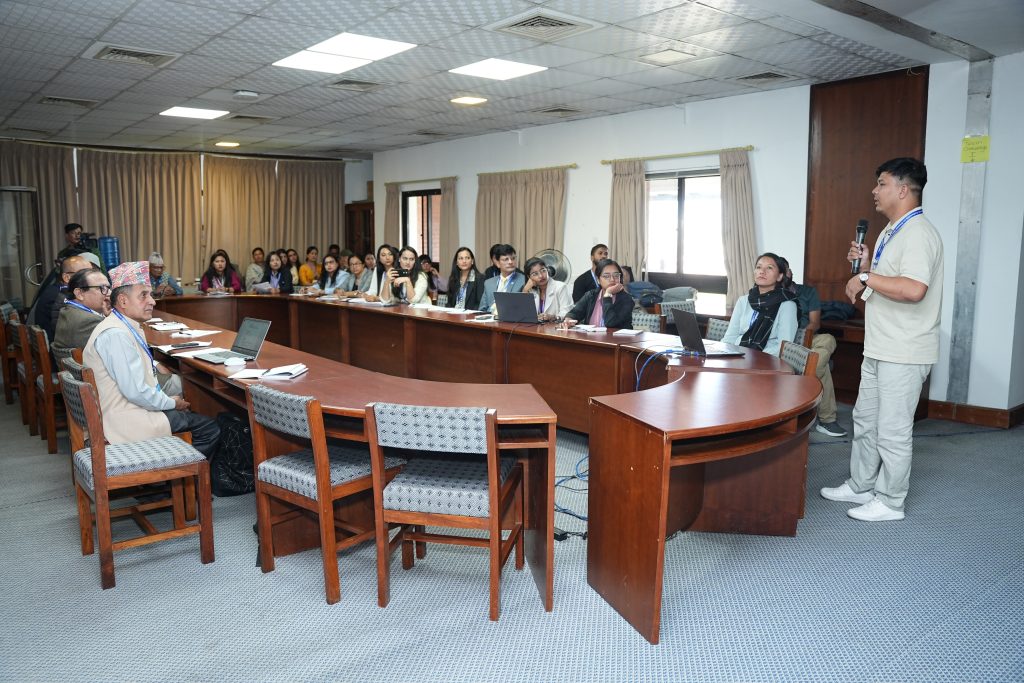
We did two workshops on AI and geospatial AI, how it will work. We need to scrape and train the huge datasets. The local governments, community institutions, the people running disaster committees – they should have the capacity to analyse and interpret what comes out of these systems, and only then communicate it to the public.
This is especially important because we are working with sensitive data. DASTAA collects household-community-facility level information on socioeconomic conditions, disability, livelihoods, and exposure. We have to be very careful. We have to ask: who owns the data, who can update it, who approves its use, who explains the result to the community, and what happens if a household disagrees with the risk profile we have generated? Good AI is not just technically accurate. It must be ethical, we must be accountable, and it should be owned by the local government itself.
Potential integration with cash group transfers
Humanitarian agencies and national governments currently use social security numbers to identify and reach beneficiaries for pre-disaster cash transfers. In our partnerships with agencies like DCA, the practice is to collect social security numbers, prioritise beneficiaries, and send money to their bank accounts.
What DASTAA offers is detailed household-level data – high, medium, and low risk categories, persons with disabilities, children under five – disaggregated data. Our database could be used, for example, in combination with those systems to enhance the targeting of relief and cash.
Looking ahead
In the next twelve months, I would like to see several things happen – in Nepal and beyond.
The first is moving from single-hazard to multi-hazard risk assessment. We have prioritised flood hazards only. Countries like Nepal face more complex climate risks – floods, heatwaves, droughts, landslides. I would like to see DASTAA or any other technology evolve further into AI-supported platforms that can assess compound risks, generate household-level or facility-level information, and recommend targeted adaptation plans for at-risk facilities, households, or institutions.
The second is the shift from early warning to adaptation planning. We should not only stick to early warning. We can use AI and our data to generate practical adaptation plans – which homes need strengthening, where safe shelters should be, which health or school facilities are exposed, and what local governments should prioritise during their annual planning and budgeting. This should be something that national government and national policies prioritise, not only early warning.
The third is linking anticipatory action with shock-responsive social protection. Nepal has a Shock Responsive Social Protection and Relief Distribution Standard 2025. We can use the social security system – beneficiary identification – together with information from our system – linking AI, the social security number, and the geodatabase – for targeting through shock-responsive social protection platforms.
Underlying all of this is the need for integrated support systems. In Nepal, DHM forecasts, household-level information from DASTAA, the National Disaster Risk Reduction and Management Authority, and national and local governments all need to be in place. With all this integrated information and an integrated AI system, we can make anticipatory action more institutional, scalable, and sustainable.
A closing message
AI in humanitarian action must be human-centred, first. It must be locally owned. And it must be action-oriented. We are talking about the system, but it should not only about the smart technology. We should have very clear information to act early, achieve fewer losses, and have more dignified assets, you know have more dignity for people at risk.
My message to the global humanitarian and technology communities is this: AI must be built with national systems and local realities in mind. In Nepal, we already have important institutions and policy frameworks – NDRMA for disaster risk governance, DHM for forecasting and early warning, a national disaster risk reduction strategic plan, and a national AI policy. We can use all these platforms and organisations to connect better with the people on the ground.
AI should not be seen as separate from humanitarian principles. It should be inclusive, anticipatory, and accountable. With the right alignment with national capacities like NDRMA, DHM, and municipal governments, AI can move from being a promising technology to becoming a trusted public good infrastructure in humanitarian action.

AI in humanitarian action must be human-centred first. It must be locally owned. And it must be action-oriented. We are building systems, but smart technology is not enough on its own. We need clear information that enables people to act early, achieve fewer losses, and protect the dignity of those most at risk.
Thank you to Shudarshan for sharing his work and perspectives. DASTAA is an integrated modular platform developed by NAXA Pvt. Ltd. in partnership with the Institute of Himalayan Risk Reduction and DCA Nepal.
This interview was conducted as part of the Humanitarian Leadership Academy and Data Friendly Space’s ongoing Humanitarian AI research initiative, which builds on the 2025 foundational study and the January 2026 pulse survey. Supporting resources – including reports, podcasts, webinars and microlearning guides – are available on the research landing page.
Disclaimer
The views and opinions expressed in this interview are those of the featured individual and do not necessarily reflect those of their affiliated organisations. This resource has been produced as a contribution to ongoing discussions on the use of AI in the humanitarian sector. Publication does not constitute endorsement of any specific technology, individual, organisation or approach.
You may also be interested in
Humanitarian AI interview with Ulrich Assouah from Cameroon
Read the article
Humanitarian AI interview with Nour Arab from Lebanon
Read the article
Humanitarian AI interview with Abdullah Azimi from Afghanistan
Read the article
Humanitarian AI interview with Ivan Toga from Uganda
Read the article/listen to the interview
Bridging digital divides: centring local leadership in humanitarian AI development – an online session as part of Humanitarian Networks and Partnerships Weeks (HNPW).
This session in March 2026 explored how AI is rapidly shaping humanitarian work, but local actors are still largely excluded from how these technologies are designed and governed, risking deeper inequalities. The panel discuss how AI can become a driver of localisation itself by embedding inclusion, ethics, and collaboration into humanitarian systems.
Watch the recording
Humanitarian AI podcast series: Global and African perspectives
A six-episode podcast series exploring the findings of our landmark 2025 AI in humanitarian action report, featuring global and African expert perspectives on ethics, governance, localisation, and implementation barriers.
Browse the collection