23rd April 2026

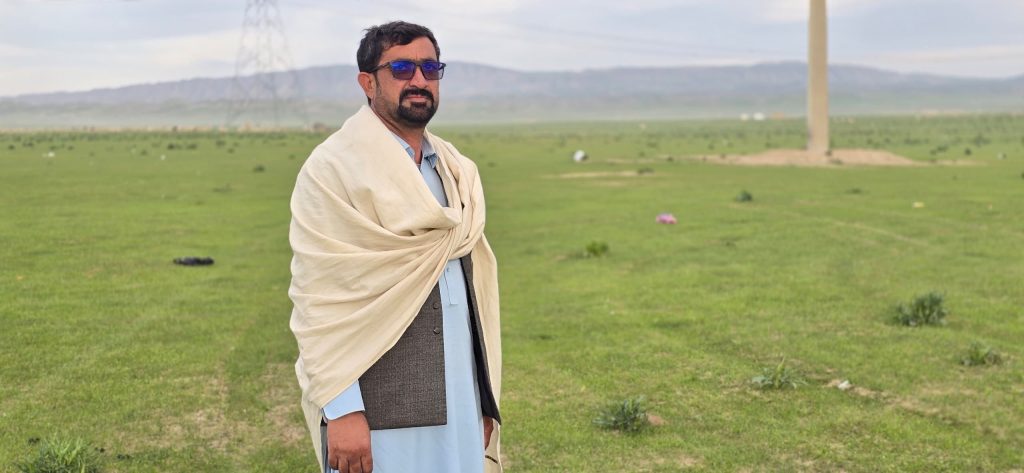
“In those stressful moments, using AI didn’t just help us work faster – it gave us confidence, relief, and even a sense of hope.“
– Abdullah Azimi
Three-quarters of humanitarians in our 2026 AI pulse survey told us that they’re regularly using AI tools to support their work. For many, like Abdullah Azimi from Afghanistan, using AI is not just a matter of efficiency: AI tools can represent an operational lifeline during times of crisis.
In this interview, Abdullah outlines his vision for AI to strengthen community feedback systems and localised tools – so that local voices are not only collected, but genuinely understood and acted upon.
Abdullah Azimi was one of 1,729 individuals from 120+ countries and territories who participated in the Humanitarian Leadership Academy and Data Friendly Space’s Humanitarian AI January 2026 pulse survey – an ongoing effort to track how humanitarians are using AI in their work. Abdullah was among the survey’s 70 respondents from Afghanistan, one of the highest respondent countries, representing 4% of the global survey population.
Key stats: respondents from Afghanistan
- 70% of respondents from Afghanistan told us that they’re using AI daily or weekly
- 27% rated their AI skill level as advanced, and 6% considered themselves to be expert (+3% and +5% compared to overall respondents respectively)
- 60% are using commercial AI tools like ChatGPT, and 26% are using custom-built AI agents
- 24% said that their organisation has a formal AI policy (+1% compared to overall respondents)
- 51% believe that AI has improved operational efficiency (-14% compared to overall respondents) and 60% believe that AI has led to better decision-making (+6% compared to overall respondents).
Research co-lead Ka Man Parkinson connected with Abdullah Azimi to find out more about his experiences and perspectives of the use of AI in humanitarian work.
Tell me about your work – and what is your view and approach to AI?
My name is Abdullah Azimi, and I currently work with IOM as an enumerator. I have experience in community engagement and data collection, and I am deeply interested in human rights and continuously improving the way I work.
For me, AI is not just a tool – it’s becoming a bridge between urgency and humanity.
In humanitarian work, we don’t have the luxury of time – and AI is helping us move faster, but also think smarter.
In my daily work, I use AI to support data analysis, reporting, and communication. When working with field data collected through tools like Kobo or ODK, AI helps me quickly organise, summarise, and interpret large amounts of information. This allows us to make faster decisions – and in humanitarian work, faster decisions can save lives.
But for me, the real value of AI became clear during some of the most difficult moments. There were times when, due to security situations, we were not even allowed to go to the office. Despite this, we were still expected to submit urgent reports within very short deadlines. At that time, I was working with IRC as a community mobiliser.
In those challenging conditions, AI became more than just a tool – it became a lifeline. It helped me quickly prepare reports, stay productive, and continue supporting communities even when access was limited. In those stressful moments, using AI didn’t just help us work faster – it gave us confidence, relief, and even a sense of hope.
Working in humanitarian operations, especially in contexts like Afghanistan, we face complex challenges – from displacement to access limitations. AI is still new in our environment, but there is growing curiosity and openness. The real challenge is not the technology itself – it is access, trust, and capacity.
Which direction would you like to go in with AI over the next 12 months – for your organisation and local context?
Looking ahead, in the next 12 months, I would like to see AI becoming more localised – not just global tools, but solutions that truly understand our languages, our context, and our realities. Personally, I want to use AI to strengthen community feedback systems – so that voices from the field are not only collected, but genuinely understood and acted upon.
Do you have a message to share with the global humanitarian and technology communities about what you think is needed to make shared progress in this space?
My message to the global humanitarian and tech community is simple:
Don’t just build for us – build with us. Communities affected by crisis should not be the last to benefit from AI – they should be part of shaping it. If AI is to be truly impactful, it must be inclusive, ethical, and grounded in real human needs.
At the end of the day, AI will not replace humanitarians – but humanitarians who use AI wisely will change the future of aid.

Communities affected by crisis should not be the last to benefit from AI – they should be part of shaping it.
Thank you to Abdullah for sharing his work and perspectives and for his contributions to the Humanitarian AI January 2026 pulse survey conducted by the Humanitarian Leadership Academy and Data Friendly Space. A research briefing note was published in March 2026. This work builds on the 2025 foundational study and the supporting resources including reports, podcasts and webinars available on the research landing page.
Disclaimer
The views and opinions expressed in this interview are those of the featured individual and do not necessarily reflect those of their affiliated organisations. This resource has been produced as a contribution to ongoing discussions on the use of AI in the humanitarian sector. Publication does not constitute endorsement of any specific technology, individual, organisation or approach.
You may also be interested in
Humanitarian AI interview with Ulrich Assouah from Cameroon
Read the article
Humanitarian AI interview with Shudarshan Hamal from Nepal
Read the article/listen to the interview
Interview on humanitarian AI with Ivan Toga from Uganda
Read the interview
Interview on humanitarian AI with Nour Arab from Lebanon
Read/watch the interview
Bridging digital divides: centring local leadership in humanitarian AI development – an online session as part of Humanitarian Networks and Partnerships Weeks (HNPW).
This session in March 2026 explored how AI is rapidly shaping humanitarian work, but local actors are still largely excluded from how these technologies are designed and governed, risking deeper inequalities. The panel discuss how AI can become a driver of localisation itself by embedding inclusion, ethics, and collaboration into humanitarian systems.
Humanitarian AI podcast series: Global and African perspectives
A six-episode podcast series exploring the findings of our landmark 2025 AI in humanitarian action report, featuring global and African expert perspectives on ethics, governance, localisation, and implementation barriers.