20th April 2026
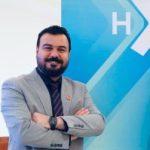 Faisal Mislit
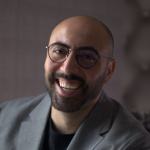 Ali Al Mokdad
How can local leaders overcome systemic barriers to drive meaningful humanitarian change?
“We don’t have a problem with ambition…the problem is with opportunities.” – Ali Al Mokdad
In this Arabic-language episode of the Fresh Humanitarian Perspectives podcast, Faisal Mislit, Crisis Response Project Lead at the Humanitarian Leadership Academy (HLA), hosts Ali Al Mokdad, Senior Strategic Leader, for an honest conversation about leading in complex humanitarian contexts. Both have navigated the barriers that so often hold back local talent — the wrong passport, the wrong university, the wrong nationality — and both have come out the other side with hard-won lessons to share.
From personal stories of frustration, rejection, and breakthrough moments, they explore what it really takes to grow as a local leader, why ambition alone is never enough, and how individuals and organisations can do better.
Audio in Arabic. English and Arabic transcripts available.
Read an English language companion blog post based on this podcast episode
View the Arabic version of this webpage
Faisal Mislit
Faisal Mislit is a humanitarian professional with over a decade of experience working across crisis and development contexts in the Middle East, Africa, and Asia. As Crisis Response Project Lead with the Humanitarian Leadership Academy, he leads initiatives that strengthen locally led humanitarian action through leadership development, organisational coaching, and strategic partnerships. His work focuses on empowering local actors, fostering innovation, and translating global frameworks into practical, community-driven solutions that deliver sustainable impact in complex and fragile environments.
Ali Al Mokdad: Senior Strategic Leader
Ali Al Mokdad is a senior leader specializing in global impact operations, governance reform, and humanitarian diplomacy, with operational experience across the Middle East, Asia, Africa, and Europe.
Ali Al Mokdad has a track record of leading organizational investments, including organizational transformation and development, as well as digital transformation. He has also published work on inclusive and innovative governance, as well as science and humanitarian diplomacy, in Europe, the United Arab Emirates, and the United States.
Transcript in English
Podcast transcript
This transcript and translation have been produced using automated tools. It has been checked but minor errors or omissions may remain.
Faisal Mislit: Welcome everyone, I’m Faisal Mislit. I’m delighted to be with you today in this episode where we discuss a very important topic: leadership in complex humanitarian contexts. At the Humanitarian Leadership Academy (HLA), which is part of Save the Children, we work to accelerate humanitarian work based on local leadership. This is a critical topic because we believe that local leaders are best positioned to understand their challenges and respond to them effectively and sustainably.
Today’s conversation will certainly not be purely theoretical. We will try to understand how leadership is actually practiced on the ground, especially in environments full of challenges and constraints.
Today I am honored and very pleased to host Professor Ali Al Mokdad, one of the experts in this field, to engage in this dialogue together. Welcome, Professor Ali — we’ll give you the floor as well. Please go ahead.
Ali Al Mokdad: Hello and thank you very much for having me. I’m really happy that we can have this discussion and talk about these topics, because I feel it is very, very important to do so. At the same time, there aren’t many discussions on this topic in Arabic, so this will be a great opportunity to share this knowledge and these experiences together. As we said before recording, let’s have fun and enjoy this conversation.
Faisal Mislit: Absolutely. Thank you, Professor Ali — it’s certainly a wonderful opportunity. As I mentioned, we in this field are opening a new space for Arabic-speaking audiences. We always see content in English or other languages translated into Arabic, but today we’ll do the opposite — we’ll speak in Arabic from the start, inshallah.
Your experience is vast and your field is excellent — we’ll try to benefit from our conversation today. Through your long experience, the youth and local leaders in our regions — thinking of the Middle East, North Africa, Arabic speakers everywhere, or those living in difficult environments — face certain challenges influenced by factors like unequal opportunities and others. Could you share some observations from your experience?
Ali Al Mokdad: Before I get into the challenges facing young people, I want to say a bit about my background so that listeners understand where I’m coming from. I was born in Syria, in a small village in the south. Like most villages in the Middle East, there was no internet and access to services was very limited. In the area where I grew up, there was only one main road. I didn’t have access to global experiences or knowledge, and I remember having to walk about an hour and a half to two hours just to get to school.
After that I moved and started working and volunteering. I spent more than a year volunteering with local organizations and volunteer teams. My main goal was simply to help the people around me — I wasn’t even thinking that people could make a career out of it. From there I started to develop professionally.
But then I started facing challenges. For example, the work was in English, and I was embarrassed to speak English because I was afraid to use technical terminology. Every time I spoke English, someone would correct me, so I developed a kind of fear. Later, when I started working with international organizations in Syria, I faced further challenges: are you international or national staff? Are you a manager or technical staff? All these distinctions were foreign to me. As I continued to grow step by step as a national staff member, new challenges kept emerging: “Where did you study? What’s your specialization? What university did you attend?” I started hearing names of foreign universities I had never heard of, as if they were the only valid standard. After that I took on assignments in other countries — I wasn’t only in the Middle East, but also in Africa, Asia, and Europe. I moved from Syria to Iraq, Jordan, Lebanon, Turkey, the UAE, Bangladesh, Afghanistan, South Sudan, Sudan, Kenya, Nigeria, and then to Europe, eventually taking on responsibility for more than forty countries. But by that point new challenges arose: what passport do you have? Can you travel? Can you get a visa? I mention all of this simply to say that I lived these problems myself — but let me get back to your question.
What I noticed, especially in the Middle East, is that we don’t have a problem with ambition. Everywhere I’ve been — cities, rural areas, small villages — everyone has ambition. But the problem is with opportunities. The second challenge I observed is that starting points in life are different. The starting point for young people is often tied to geographic location — whether they’re in a village, a city, or a capital — or to their economic situation, since some people carry the responsibility of supporting their families while others don’t. There are social classes, and in terms of education, some managed to go to university and others didn’t. So starting points are genuinely unequal.
The second issue I found is that weak policies within organizations and institutions create even bigger obstacles. Instead of young people focusing on developing themselves and reaching their ambitions, they get distracted by simple logistical problems — two hours of travel just to get somewhere, standing in queues, dealing with paperwork, visa issues — things a person shouldn’t even have to think about. All of this hinders growth. In summary, the chaos around opportunities, equality, and institutions has become part of everyday life for youth in the Middle East. They carry an extra burden of navigating this chaos instead of focusing on their future and building their lives.
Faisal Mislit: Exactly. We can certainly talk about a complex reality — upbringing, access, problems, and challenges. Those listening to us now may be facing the same issues — passports, location, identity, and the chaos you described. Systems and contexts sometimes impose unfair restrictions on growth and opportunity. The problem, as you said, is not in people’s capabilities — it’s in access to opportunities. Do you agree?
Ali Al Mokdad: Let me give you a quick example. When I was national staff in Syria, they formed a technical team at my organization and an international staff member joined us. Before even getting to know us or understanding what each person does, the first thing he did was ask everyone what they had studied. When he got to me, I explained my work, my trainings, and my experience. He said: “No, the person doing your job needs a master’s degree from such-and-such university.” First of all, that program didn’t even exist in the country. Second, I was already doing the job effectively. Third, how were those credentials even relevant? Unfortunately, he removed me from the technical team. Access to that specific university or master’s degree suddenly became a barrier to my professional development — not because I lacked the experience, skill, or knowledge, but because an arbitrary standard was suddenly imposed. And beyond education, you encounter the same thing with visas — you need a certain nationality or residency to do certain work. Suddenly you find all these obstacles based simply on the language you speak, the place you were born, and the environment you grew up in. Instead of institutions supporting and developing you, they place all these standards which, in my view, are all assumptions — because on the ground, the reality is completely different.
Faisal Mislit: I completely agree. We’re talking about the Middle East, North Africa, and surrounding countries affected by complex environments. If you look at history, you see these crises and the organizational responses that have happened over many years — yet the number of people from this region who reach senior positions remains disproportionately small. The problem is not in capabilities. One excellent example you raised is education — the academic programs relevant to this field may simply not exist here. My own background is in engineering; others come with medical or doctoral backgrounds and join organizations working in completely different areas. So you end up working on two parallel tracks: building experience in the field while also going back to find formal qualifications that you don’t actually need in practice. I also want to share something from our current work. Under HLA, I manage a project in 6 countries including Iraq, Myanmar, Nigeria, South Sudan, Ethiopia, and the Congo. Local partners there sometimes face even greater challenges than international staff. For example, in Myanmar, the preference is for people who speak the local language. I shouldn’t force people in that country to learn another language just to access opportunities — the work should go the other way. We believe leadership should come from within, from local people. That’s one example. You raised an excellent point about people, barriers, and education — something that genuinely confronts so many people.
Can we move to the next point, Professor Ali? The conversation is excellent and time is passing quickly. Earlier we were talking about people who have left organizations or left this field entirely — feelings of frustration, loss of hope. To be honest, not everything is rosy. Some people apply for long periods, some want to grow but face barriers in being accepted if they lack the right connections. How do you see these challenges affecting young people and local leaders in terms of their self-confidence, ambitions, and hope?
Ali Al Mokdad: From my personal experience, and especially having worked with many talented people across all those countries, I felt that frustration, psychological pressure, and exhaustion — to the point where it physically affects you and your relationships with family and friends — has become part of these challenges we are living.
Of course there are many dimensions to this. If you’re responsible for a family, the pressures multiply. If you’re working in your own country, you’re trying to operate in a place that may already be in a catastrophic state. If you’re in another country, your home situation is unstable while you’re working somewhere equally unstable. Throughout all my years — working across 30+ countries and managing programs, operations, and organizations — the challenges kept repeating, just in different forms. Even when I reached headquarters and regional offices, they were still there. I feel it has become part of our journey in this field. But the most important thing with these challenges is that you are able to sit with them — to live through that exhaustion or frustration, think about it, and work on it so it doesn’t keep recurring. I’ve noticed that some problems, if not properly addressed, come back in a different form, in a different place, again and again. It’s better to confront them and think about how to deal with them. What genuinely saddens me is that young people in the Middle East, because of all these challenges, find every door closing on them repeatedly — a second time, a third time, a tenth time.
Faisal Mislit: That’s true.
Ali Al Mokdad: Their hope that things will change diminishes greatly, and so does their capacity for reflection — and I consider that dangerous. It’s very important that these things — psychological exhaustion, frustration, pressure, and growing responsibilities — which often in the Middle East also have material and social repercussions, are things one must genuinely sit with and think through.
Faisal Mislit: Exactly. And we can build on that last point — despite these problems, we see different models of people who managed to cross these challenges. They could be challenges that Faisal or Ali faced, or that those listening now are facing. Some people broke through, persevered, and kept their hope alive. Someone once asked me: “How do I reach the level that some people have reached? I have the ability, I have the language, I’ve learned — but with 7 years of experience, I’m sitting at home.” What distinguishes those who persevered and reached that place? I’d love to hear your take.
Ali Al Mokdad: I could talk about this topic for hours. But there’s one thing I’ve noticed that’s common among all these people: ambition alone — everyone knows — is not enough.
Faisal Mislit: True.
Ali Al Mokdad: You need a strategy. You need to be able to think: this is my goal — what are the concrete steps I can take to get there? I’ve noticed a clear difference in people — especially administrators and managers I’ve met at very high levels, whether in companies, non-profits, or international organizations. When people talk about steps to take, they usually think from one to ten — what do I need to do? But what I’ve noticed distinguishes people who’ve reached a high level is actually what happens from zero to one. From one to ten, I can tell you the standard things: do online training, read this manual, work with certain people — everyone knows those. But the real key is from zero to one. What does that mean? It means sitting with yourself — working with three versions of yourself: your past self, examining the challenges you went through, the things you worked on, the things you were criticized for; your present self, assessing your current challenges, opportunities, and responsibilities; and your future self, defining your goal and your strategy. Think of it like a personal council where you sit with all three versions and think through the details.
Practically speaking — if my future goal is a management position, or focusing on my family, or writing a book — what are the one, two, three, four things I need to do in the present? What tactics do I have available right now? That’s why ambition alone isn’t enough — you need a strategy. The big challenge you’ll also face is assumptions. In our societies especially, everyone has advice and assumptions to offer. You need to distinguish between what is an assumption and what is reality. For example, one very common assumption in humanitarian and development work is that you need a strong passport or strong residency to work in different countries. I consider that an assumption — because I’ve worked in 30+ countries and managed 40 countries with only one passport. Another assumption is that you need a specific degree or master’s from a particular institution. That’s also largely an assumption — I eventually went ahead and completed two master’s degrees and set a record for the number of professional trainings completed, and I came to realize that most of those credentials were assumptions, while the experience gained on the ground was worth far more. You need to be able to distinguish between assumption and reality. And one more thing I notice a lot with young people just starting out: they use hope as a substitute for strategy — “things will get better, things will change.” Hope is important, but hope alone is not a strategy. You can’t simply wait for things to improve without taking concrete steps and working on them.
Faisal Mislit: Exactly — excellent. At the heart of this: as a person, you are responsible for the striving, not the result. What matters is that you actively pursue your goal. And your last point is spot on — waiting for hope means you’re in a waiting queue, not moving forward. The points you raised about assumptions — or what I’d call imaginary challenges — are very important. I’m already dealing with real challenges like passport restrictions and travel barriers. Then someone else layers additional hypothetical obstacles on top: “You’re from the Middle East, you can’t work in the UK, or Denmark, or Indonesia.” Why? “Because of your passport.” And automatically you might feel discouraged. We’ve all been through this. That frustration could cost you real opportunities. The important thing is: you are responsible for the striving, regardless of today’s challenges. Ali Al Mokdad, from a small village in Syria, now works at a major level. Faisal, from a small village in Iraq, now works in the UK. We faced the same challenges. What we’re sharing now is not discouraging — on the contrary, we’re trying to build a spirit of perseverance and continued effort.
We’ve shared some very real things today, and that’s the purpose. Before we move on — do you have a real story you’d like to share, without names, of someone who went through these challenges but overcame them?
Ali Al Mokdad: Two stories come to mind. First, my own. Early in my career I was very, very frustrated. My country was at war, the economic situation was terrible, I was far from my family, working in a field where I didn’t feel I was learning — and most organizations, unfortunately, don’t invest in their staff. I felt no opportunities were coming my way, so I decided to resign. I sent the email to everyone — I was very frustrated and wanted people to know: nothing is being learned here, there’s discrimination, and I was also young. Everything at once.
Faisal Mislit: I see.
Ali Al Mokdad: As I was leaving the office, the organization’s director called me and said: “Sit down, let’s talk.” My first reaction was almost a shock — the director spoke English, and I was very anxious about speaking English. I knew it, but I was afraid people would correct me or think I couldn’t express myself properly. I sat there with hands between my knees, very nervous. She asked one question: “Why are you resigning?” I said: “I’m not learning anything.” She said one sentence that changed my entire life: “Who is stopping you from learning?” At that moment I didn’t fully understand what she meant. She told me there are things available online — books, articles, learning resources, videos. I had always assumed my organization would be the one to train me. When I went home that evening — imagine that moment of frustration, leaving work, everything weighing on me — that thought hit me: maybe I should look at what’s actually available online. This was more than thirteen or fourteen years ago. I suddenly discovered websites like Disaster Ready, Kaya, and Global Health. When I started exploring them, it felt like finding a treasure.
I started learning — at that time I was a senior officer — about project management, project lifecycle, operations management, disaster management, international law, humanitarian law, gender-based violence, psychosocial support. That moment took me more than a month of intensive study, but my thinking completely changed. I understood that I needed to take ownership of my goal and my development. The message I want to convey is: don’t wait for your organization to develop you — take responsibility for your own growth and start working on it. The second story is about someone I deeply admire, whose journey feels very similar to ours. He was born in Sudan and started the same way — as a volunteer, then small positions, in a completely different specialization, before entering humanitarian work. He was told he needed a master’s, specific training, and all the rest. He faced all the same problems. His focus at that time was on securing his family’s stability while also growing professionally, driven by a genuine curiosity and love of learning.
He found that things weren’t accessible to him in the usual ways, so he started buying books — going to bookshops and choosing titles on economics, policy, foreign affairs, local governance. Each time he’d read, take notes, and compile them into a kind of personal journal. He started seeing how he could apply these ideas in his work. He moved from local organizations to the Red Crescent in Sudan, took on more responsibilities, and became increasingly creative because he was connecting what he’d learned from books with his hands-on experience and his deep knowledge of the country and its people. People noticed his creativity and started giving him more challenging tasks. Today he works on missions across 6 different countries and has reached a very senior administrative level at the headquarters of the Red Crescent and Red Cross. The key message from both stories is this: success doesn’t necessarily mean reaching an international role or moving between countries. I’ve met highly successful administrators who made an enormous impact working in their own village, city, or country. We shouldn’t tie success only to international or regional work — everything starts from where you are.
Faisal Mislit: True. An inspiring story, and that last point is excellent — because I was one of those people who struggled with this exact assumption. I used to search for any opportunity to leave Iraq and become international staff. One of my managers — a colleague from Pakistan, we were in the same accommodation and he was my manager at the time — told me: “Faisal, you don’t know what it’s like out there. When you go abroad, other things change. We come from similar communities — we have social obligations, family commitments, everything. You might not be able to sustain it even if you get the opportunity.” But I was convinced I had to go. Then the 2023 earthquake in Hatay, Turkey — I went on a deployment as a project manager. The plan was three months, but due to visa requirements I had to leave Turkey and re-enter each month. I told myself: three months isn’t enough, I’ll stay five months or a year. After the very first month, I was counting the days. I was practically begging to finish the month so I could go back to Iraq.
Ali Al Mokdad: Hmm.
Faisal Mislit: One of my managers said: go back for Eid, celebrate with family, and come back. I said no, my extension is done, I’m finished. But the point is — this didn’t affect me negatively at all. On the contrary. The reason I share this example is that success doesn’t require being abroad. Right now, sitting in a village in Iraq, I’m managing a project and the Academy across 6 global countries. Location has no bearing on impact. That is the opportunity itself.
Let me take one more practical point before we close, so that what we’re sharing is useful to listeners. These organizations, the UN, and others working in this sector — how can they support youth and local leaders in facing these challenges? Not everyone can navigate these barriers on their own. They need support from institutions. So in your view, how can organizations help?
Ali Al Mokdad: I’ll talk about institutions before I talk about individuals. One of the things I worked on whenever I moved to a new country or reached regional and headquarters levels was trying to change policies and create an enabling environment — for people like the young man from Sudan, like all the talented young women and men in the Middle East and Africa — so they can grow their talent, achieve their goals, and do this work without all the artificial barriers. First, organizations must work on policies and governance, review how work is structured, and remove the assumptions that prevent people from developing. Second, they must create a work environment that builds bridges — between someone from a village and someone from a city, between local and international staff, between those working in-country and those at the regional level, between humanitarian and development work. We all need to build these bridges more actively. Third — and very importantly — we need to invest in local leadership figures who work with limited resources but who have the trust of their teams and communities and are driving real change. Invest in these people, invest in their values, and help develop them further. And practically speaking: stop importing staff from other countries to work in Iraq, Syria, Lebanon, Jordan, Sudan, or Egypt when there are already talented, ambitious, knowledgeable people in those countries. Work with them. Stop thinking of local staff or communities as beneficiaries — think of them as partners, as the drivers of the work. They are not recipients of a service; they are co-creators of it. There is much more to say, but given our time, those are the most important points.
Faisal Mislit: Excellent. Your points and your personal story — from thinking about resigning to the shift toward self-directed learning — are very powerful. For those listening, we’ll add some useful links at the end of the podcast. Skill development and leadership require personal initiative — yes, resources need to be available, whether free online or at low cost, but the person also needs to move. Let me share one example from our current project — Local Space — in the 6 countries I mentioned. We have a coaching program where an expert like Ali goes to a country and works with organizations over an extended period, helping develop certain skills including policy and governance. This isn’t a one-off training — it’s sustained engagement. When we collected feedback, someone from the Congo said something that genuinely surprised me: “The coaching I received is better than any external consultant who came in.” He explained: “A consultant might finish after a month or two, and I’m racing to absorb everything before they leave. But you’re investing in me as a person, building my capacity over time. My organization now has access to things we couldn’t have accessed before — expertise that would have cost thousands of dollars to bring in externally.” The key message here: organizations must invest in local leadership. The ambition is there, the capability is there — the opportunity is what’s scarce. That’s where institutions can make a real difference.
We’ve been talking for what felt like just a few minutes but has been over an hour. One final thought — you made an excellent point at the start: hope alone is not enough. If you have a closing message for the young person listening now who may be frustrated, or who has left the field, what would you say?
Ali Al Mokdad: What I want to say is linked to everything we’ve discussed — but I want to focus on our role as individuals. Regardless of where you are or what your situation is, here is something practical you can do right now: take responsibility. Take responsibility for your path, your life, and your choices — and start working on it in concrete steps. First, be excellent at the work you’re doing. I’m not a fan of shortcuts — excellence in your current work is the first and most important thing. Second, invest in your individual skills: communication, diplomacy, analytical thinking, and the ability to reflect on your own situation as we discussed.
I also want to add: sometimes you need to take risks. I often say the biggest risk you can take is not taking risks at all. You might succeed, you might not — but you’ll always learn. And one of the things that has helped me most throughout my career, especially in leadership positions: invest in your team. Build a strong team with shared values and principles that complement each other. The stronger your team, the more you grow alongside them.
We’ve talked a lot about continuous learning — and learning isn’t only through formal courses. Sometimes you learn more from a conversation with someone experienced, or from listening to a podcast like this, or reading an article. Keep your curiosity alive. One thing I noticed personally as I reached senior international levels is that the higher you go, the more you may start to feel a degree of isolation — because you see things differently, and you become one of very few people from the Middle East at that level. You need to be comfortable with that isolation, while still maintaining strong connections with your family, community, and friends — because you’ll need those voices around you. Passion alone, ambition alone, and financial security alone are not enough — you need strategy and steps. And one thing I always say: the higher you climb, the more responsibility you carry to bring that ladder back down so others can climb it too.
Faisal Mislit: True.
Ali Al Mokdad: You have a responsibility to invest in people, give them opportunities, build enabling environments, and invest in your team. Try to create for others the knowledge, experience, and opportunities that came your way. And the last thing I’ll say: we’ve talked a lot about work, learning, skills, policies, and governance — but it’s very important to live your life.
Faisal Mislit: True.
Ali Al Mokdad: Sports, games, coffee. Sit with your family, your children, your parents, your community — live your life. Because life is not only work, not only a title, not only material things. You’ll be amazed at how much something simple — sitting in the sun, being with family, playing sports — gives you the energy to do everything we’ve talked about. Inshallah, these steps, along with what you shared from your own experience, will inspire people and give them the energy to take a step forward.
Faisal Mislit: Absolutely, Professor Ali — excellent and inspiring. You made a point for everyone: challenges exist everywhere. We are not promised a smooth, easy path. Let me share one quick story before closing. In 2017, when I was first hired, I kept going to my manager asking: “How do I do this activity? How do I do that one?” He said something I still think about regularly: “Faisal, if I already knew how to do all of this, I wouldn’t have hired you. I hired you precisely to figure it out. Go and work on it — go and handle it.” The point is: don’t keep waiting for someone to give you the opportunity or for the organization to hand you the solution. The challenge is part of your life. A local leader who hasn’t faced difficult experiences cannot truly lead. Every challenge you overcome becomes experience — it transforms from an obstacle into a skill, and you become stronger for it.
I wanted to share that before we close. Professor Ali — any final words?
Ali Al Mokdad: I believe the most important thing — honestly — is that no matter what happens: pressures, challenges, problems, frustration — keep moving forward. If anyone searches for me online, on LinkedIn or Google, they’ll find books I’ve published, research I’ve conducted, organizations and teams I’ve managed. But there’s also a very large part of the story that isn’t visible — the countless times I was rejected for a job, the enormous number of visa rejections, the money I spent just to access basic learning, the days working under micromanaging or high-pressure environments, the nights spent in camps far from family and country. I mention all of this because everything that people — especially in the Middle East — might be going through does not mean that this is the fate we are heading toward. It means that right now we have a challenge we’re facing, and no matter what, we must stay committed to our principles, our values, and our ambitions, and keep working. Inshallah, those listening will keep that ambition alive, keep working on it, and keep taking steps forward — whatever their goal may be. Don’t lose that hope or ambition.
Faisal Mislit: Absolutely, Professor Ali. These challenges — whether Ali’s, Faisal’s, or anyone else’s — we all faced the same. When I first started in the NGO sector, I was paying from my own pocket just to get there by taxi, with no salary from the local organization. The rejections in my inbox accumulated over months and years — possibly hundreds of job applications. This is part of the challenges we all face. When you get rejected, it doesn’t mean only you were rejected — Ali was rejected, Faisal was rejected, many others were too. But to keep going: your striving is what is required. The conversation has been rich and I know the listeners will enjoy it — but time is up and your time is precious. Thank you so much, Professor Ali, for this wonderful dialogue. Today we were reminded of real challenges, but also that true leadership is defined by how you deal with those challenges — not by the absence of them. Thank you for believing that local leadership is not just part of the solution, but is the solution. Thank you so much, and thank you to all who are listening. Inshallah we’ll meet again in future episodes.
Thank you, Professor Ali.
Ali Al Mokdad: Bravo.
Faisal Mislit: Thank you, goodbye.
Note and disclaimer
The views and opinions expressed in our podcast are those of the speakers and do not necessarily reflect the views or positions of their organisations.
Episode produced by Ka Man Parkinson, April 2026.