16th December 2025



In November 2025, the Humanitarian Leadership Academy helped to coordinate the delivery of remotely facilitated, Arabic-language humanitarian artificial intelligence (AI) training in Sudan. We explore how this training came about and the impact it has already begun to make.
This training builds directly on our research into how humanitarians are using AI in 2025 and convening work, translating research findings into practical capacity strengthening. It was undertaken as part of our ongoing commitment to support local responders in Sudan through follow-up to our Humanitarian Xchange (HX) events in Port Sudan and Kampala in partnership with Save the Children earlier this year.
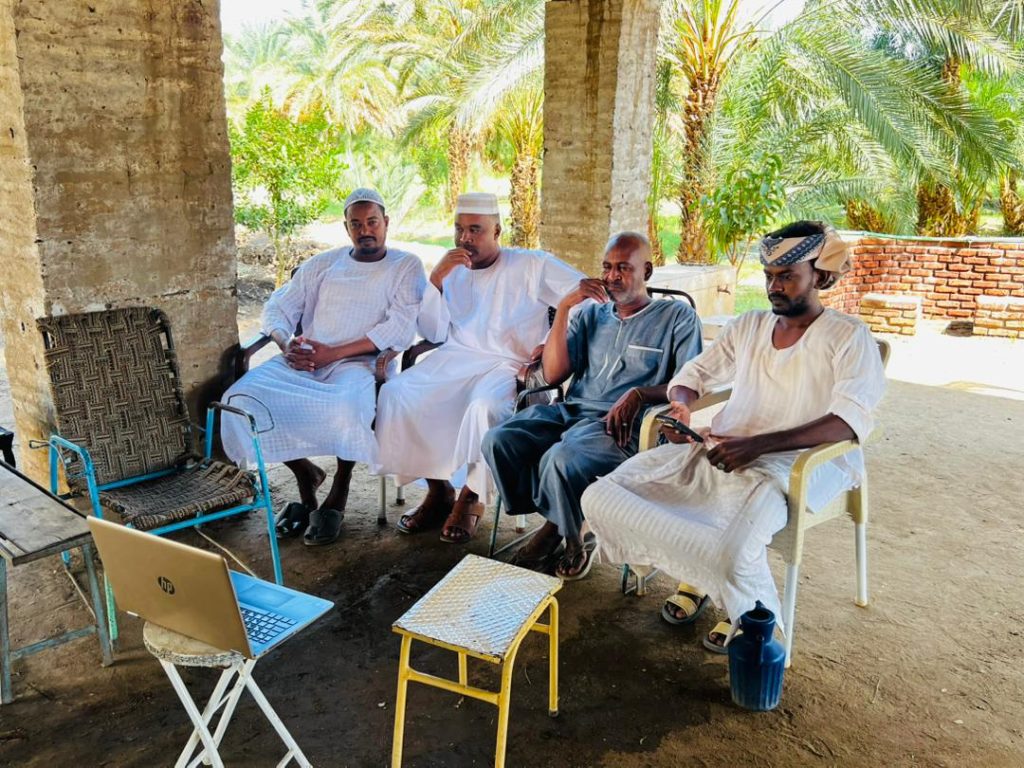
Pictured: Training participants engaging in the AI training workshop, November 2025.
Image courtesy of Save the Children in Sudan.
The discussions during the training helped us better understand ethical and responsible use of AI, especially in sensitive humanitarian settings.
One of the most valuable aspects was learning how AI can support needs assessments, rapid analysis, and evidence-based decision-making in emergency contexts.
Humanitarian AI context in Sudan
This year, the HLA together with Data Friendly Space, led the world’s first study into the use of AI across the humanitarian sector. This research found that 93% of global respondents use AI tools, with 70% using them daily or weekly.
Focusing specifically on survey respondents from Sudan (49):
- 78% said that they are using AI tools daily or weekly
- 58% are using commercial tools like ChatGPT and Copilot
- More than half said that their organisation has not started or does not plan to use AI
- Yet individual AI abilities are ahead: 61% rated their AI skills as intermediate or advanced. They are mostly undertaking self-directed online courses (57%).
As part of his role, Musaab Abdalhadi, a Cash and Voucher Assistance and Group Cash Transfer Coordinator at Save the Children Sudan, leads a range of capacity strengthening initiatives with local responders. After being a part of the HX Port Sudan team and having heard about the humanitarian AI research, Musaab approached the HLA to explore whether a specialist trainer could deliver contextualised guidance to local leaders in Sudan.
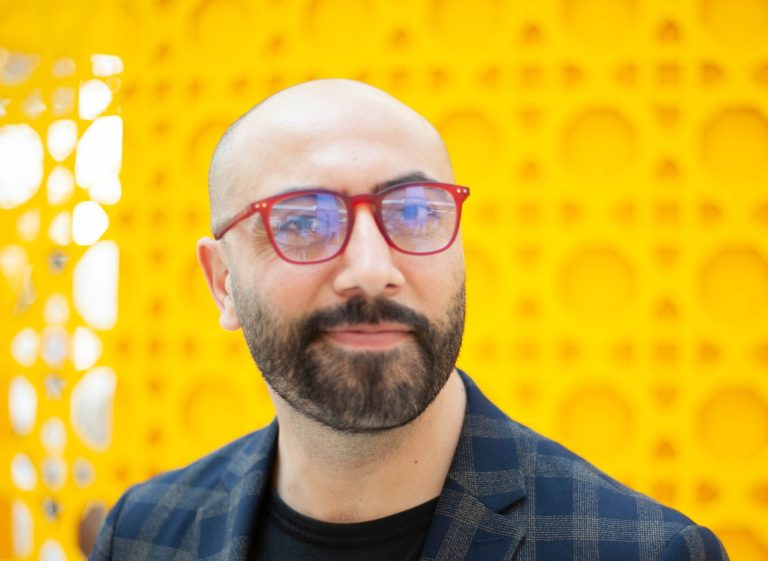
When frontline responders embrace AI tools, they are not just learning technology. They are shaping the future of humanitarian action.

This, I believe, was one of the first AI trainings designed directly for Sudan’s crisis context and delivered fully in Arabic. The impact was visible immediately.
Through this local knowledge and research, the need for practical, Arabic-language support was evident. The HLA mobilised its network and Ka Man Parkinson, the HLA’s humanitarian AI research co-lead, connected the team with Ali Al Mokdad: an independent humanitarian leader with AI expertise, a native Arabic speaker, and with extensive experience across thirteen countries, including Sudan and within wider global impact systems. Ali delivered the training on a pro bono basis.
Ka Man caught up with Musaab and Ali about the development of the training, their reflections, and its potential going forward.
Musaab, thank you for driving this initiative. Tell us the background to this training – why did you decide to initiate capacity strengthening training focused on AI?
Musaab: Over the past year, I noticed a major shift among frontline responders: as access shrank and coordination systems collapsed, local groups increasingly leaned on digital tools to keep their work moving. AI had already entered their workflows, quietly, informally, and without guidance.
From my conversations with Emergency Response Rooms (ERRs), youth groups, and volunteer teams, it became clear they were using AI to help plan their responses, structure operational ideas, and develop long documents.
But they were doing this without understanding risks, verification methods, or ethical considerations. Many told me they wanted a way to use AI that saves time without making them dependent, ‘lazy’, or less creative, and without risking sensitive community information.
I initiated this training because responders needed structured, contextualised, Arabic-language guidance to use AI safely, effectively, and confidently in Sudan’s humanitarian reality.
Why did you decide to reach out to the HLA about this?
Musaab: I approached the HLA because they are one of the few organisations truly committed to strengthening the capacity of local responders, especially in protracted and complex crises. Their work across HX Kampala, Port Sudan, and other frontline settings has consistently centred on empowering local actors with the digital skills, tools, and learning pathways they need to lead their own response. This was an area identified as a potential follow-up action from the HX events, and the recent AI research prompted me to reach out.
HLA brings a clear organisational commitment to upskilling frontline responders, strong humanitarian AI and learning research, experience delivering digital and tech literacy at scale through the Kaya digital learning platform, and practical, accessible guidance designed for people operating in crisis environments.
Partnering with HLA allowed them to combine their long-standing dedication to local capacity building with the realities we witness daily in Sudan. By coordinating the training with a trusted expert facilitator, together we were able to deliver a session that was grounded, contextualised, and genuinely responsive to the needs of frontline humanitarians.
What did the participants tell you about how they are currently using AI in their work?
Musaab: Almost all participants were already using AI, but in an inconsistent and risky way. They used AI to draft reports, translate content, summarise data, generate early versions of proposals, and even outline response plans when time was tight.
However, in conversations with them, several concerns came up again and again: they don’t know how to verify AI’s accuracy; they fear AI might reduce their own creativity or critical thinking; they worry about accidentally sharing confidential or sensitive information; and they are using AI alone, without structure, support, or ethical safeguards.
Most importantly, they directly requested structured learning so they could use AI confidently and safely, especially for planning and proposal development, tools they rely on constantly but have limited time to produce.
What gap were you seeing that local responders needed to fill? How did you assess their learning needs?
Musaab: The core gap was AI literacy: responders were using AI without knowing how to use it safely, ethically, or effectively. We assessed their learning needs through direct conversations with ERRs and volunteer groups.
The learning needs they identified were very practical, including how to verify AI outputs; how to protect community and organisational data; and how to generate content in Arabic that works for real field constraints.
They didn’t need ‘AI theory’, they needed guided, safe, contextualised use.
Tell us about the participants who attended
Musaab: They were a diverse cohort representing real frontline responsibility and high operational pressure.
There were 28 participants – 40% women – from Kassala, Northern State, River Nile. Organisations represented included Emergency Response Rooms (ERRs), youth-led volunteer groups, community kitchen networks as well as local NGOs and mutual aid groups.
Their roles included team and field coordinators; MEAL focal points; field monitors; communication officers; team leaders; as well as data entry and reporting volunteers.
Tell us about the experience of the training from your perspective? What kind of impact do you think it made to the cohort to receive contextualised training (in Arabic and for the humanitarian context)?
Musaab: This, I believe, was one of the first AI trainings designed directly for Sudan’s crisis context and delivered fully in Arabic. The impact was visible immediately.
Participants learned how to make AI outputs context-accurate and relevant; challenge and verify AI instead of copying it blindly; and protect themselves from privacy risks.
The training demystified AI. Instead of feeling overwhelmed or intimidated, participants left confident, empowered, and clearer about how AI can support, not replace, their judgement and creativity.
For many, it was the first time they understood AI as a practical, safe, everyday tool for humanitarian work.
What kind of feedback have you received from the participants? What kind of impact has it had?
Musaab: We received highly positive feedback from participants, praising the quality, applicability and relevance of the training for the Sudanese context.
I received written feedback in Arabic, translated directly from the original, highlighting the immediate learning points that can be applied across all aspects of work.
“The training was extremely important for me. Since the beginning of the war, we have relied on artificial intelligence to meet donor requirements, especially for proposal writing and reporting, and this training helped me use these tools more effectively and confidently.”
“The knowledge gained will help improve service delivery and the overall quality of humanitarian programming in our community.”
“Overall, the training was a real addition, and I expect to continue benefiting from it directly in my work on the ground in Jazirat Bedei.”
“I found the training very practical, and the tools introduced can be applied immediately in real field conditions.”
The convening experience and knowledge exchange was also highly valued:
“It was very useful to exchange experiences with other humanitarian actors and learn how they are using artificial intelligence in their daily work.
There was much more feedback received, this is just a selection! Our sincere thanks to Ali Al Mokdad for this impactful training.
Ali, congratulations and thank you for delivering this training. What was the format of your training and what kind of considerations needed to go into designing the session?
Ali: The key starting point was understanding the participants, their backgrounds, the estimated number attending, the roles they play on the ground and their current familiarity with AI tools. Based on this, we designed a session with two connected parts.
The first part focused on establishing foundations: clear definitions, an overview of key tools, opportunities and risks, and the ways AI can support humanitarian work and emergency response. The aim was to give participants a structured understanding of how AI can increase speed and efficiency in active emergency contexts where decisions need to be made quickly and with limited resources.
The second part was purely practical and built around the participants themselves. It included their questions, reflections and real examples of how AI can be used in their daily work. The examples were shaped directly by the needs and requests raised during the session. Things related to communication, planning, research, brainstorming, budgeting and other operational topics.
The training session – Artificial Intelligence in the Workplace: Understanding and Adapting for Speed and Efficiency – was delivered fully in Arabic, with key technical terms explained in both Arabic and English to ensure clarity. We closed the session with practical guidance on next steps, recommended tools and pathways for further learning, with a specific focus on Sudan and emergency response environments.
Did contextualising the training content for humanitarians in Arabic language present any unique considerations or challenges?
Ali: Yes. The training was not created in English and then translated – it was built from the beginning in Arabic, which meant designing the logic, the flow and the examples in a way that speaks directly to Arabic-speaking responders. This required bringing together language, culture, context and technology so that the content feels relevant, practical and immediately usable.
It required understanding the Sudanese context, the pressure local responders work under and the speed at which they need to operate during emergencies.
Many AI terms do not yet have standard Arabic equivalents, so the session needed careful explanation of key concepts in both Arabic and English without losing meaning.
Cultural understanding was also essential. Examples had to reflect the realities of responders in Sudan, not generic or corporate use cases. This meant emphasising tools and approaches that work in low-connectivity settings, high-pressure environments and with limited time and resources.
Another important consideration was distinguishing what matters in Sudan’s emergency context from what might be relevant elsewhere. Some AI applications that make sense in stable or well-resourced settings are simply not priorities in active crises. Tailoring the content to the lived experience of participants was central to making the session practical and meaningful.
What was your experience of the training from your personal perspective?
Ali: I left the session feeling genuinely touched and inspired. I have delivered this kind of training in many countries, but the level of engagement from this group was different. Their questions were thoughtful, their curiosity was real and the way they participated was stronger than what I have seen in similar sessions in Europe or the United States.
One moment that stayed with me was when a participant turned on his camera and showed a group sitting together in front of one screen, taking notes as a team. Seeing that level of dedication, especially under difficult conditions, really moved me.
What inspired me most was their sense of purpose. Even with all the pressure they are facing, they were focused on how AI can help them work faster, more efficiently and in ways that support their communities. Their willingness to learn and try new things in the middle of a crisis reminded me why investing in local leaders matters so much.
Did you learn anything as a trainer from working with this group?
Ali: Yes, definitely. Seeing the tools from their perspective gave me new insights and helped me put many things in context. Their way of finding low cost and accessible tools, and making them work with very limited resources, was impressive. It reminded me that innovation does not always come from advanced systems, but from people who are trying to solve real problems with what they have.
The group also pushed me to think more practically. Their questions were not theoretical. They were based on real challenges in emergency response, which made me reflect on how AI can be adapted to low connectivity, high pressure environments.
Do you think this kind of training can be scaled, and if so, what would be needed to enable this?
Ali: I believe it can be scaled, and I am confident it must be scaled. The real transformation in AI use will come from the grassroots, because these tools are becoming part of the resilience of responders and frontline teams. Scaling this is not about building big programmes at the HQ level. It is about reaching the front line and building from the roots, with the people who are actually responding to emergencies every day.
For this to scale well, the training needs to stay simple, easy to understand and directly connected to the context people are working in. It also needs to be accessible, practical and flexible enough to work with low connectivity and limited resources. If we maintain those principles, and if local organisations and networks help carry it forward, this kind of training can reach many more responders and have a real impact.
Do you have any closing reflections?
Ali: Technology is not the problem. Transformation is. We should not overestimate the risks of AI and underestimate the opportunities it can bring, especially for people working in crisis. For many responders, AI tools are becoming a quiet form of resilience, helping them work faster, organise better and support their communities even with limited resources. What matters now is making this knowledge accessible and keeping it connected to real needs at country level before the global one.
The real transformation in AI use will come from the grassroots, because these tools are becoming part of the resilience of responders and frontline teams.
With thanks and appreciation to Ali Al Mokdad and Musaab Abdalhadi for making this possible and congratulations to all training participants.
About the contributors
Ali Al Mokdad is a strategic senior leader specialising in global impact operations, governance, and innovative programming. With a global footprint across the Middle East, Africa, and Asia, he has led complex humanitarian and development responses through senior roles in INGOs, UN agencies, donor institutions, and the Red Cross and Red Crescent Movement. Ali Al Mokdad is known for driving operational excellence, advancing inclusive governance, and designing people-centred programmes that hold both purpose and impact at their core.
Read an opinion piece by Ali Al Mokdad on AI and organisational transformation:
Read the article
Listen to a Fresh Humanitarian Perspectives podcast episode featuring Ali as a guest:
Leading with vision and heart: reflections on humanitarian leadership with Ali Al Mokdad
Musaab Abdalhadi is a Cash and Voucher Assistance Coordinator focusing on Group Cash Transfer interventions and trainer with in-depth knowledge of Sudan. He has supported the development and execution of a strategy to engage and mobilise local actors and stakeholders in support of humanitarian response initiatives in Sudan. He has also conducted data collection, mapping, communication, and capacity-building activities to identify and address the needs of the humanitarian sector. In addition to extensive collaboration with mutual aid groups in different states – including delivering training, facilitating connections with INGOs and donors, assisting in fund proposals, and providing technical assistance and support.
Read about Musaab and his work with HX:
Read the article
Listen to a Fresh Humanitarian Persectives podcast episode featuring Musaab as a host (Arabic with English translation):
At the Table or On the Menu? Local Responders on the Frontlines of Humanitarianism
Ka Man Parkinson is Communications and Marketing Lead at the Humanitarian Leadership Academy. She takes an interdisciplinary, people-centred approach to her work, blending multimedia campaigns with learning and research initiatives. In May 2025, she initiated and co-led the world’s first study into global humanitarian AI adoption together with Data Friendly Space, reaching 2.5k practitioners in 144 countries. Ka Man produces the HLA’s Fresh Humanitarian Perspectives podcast and leads the HLA webinar series.
Read Ka Man’s humanitarian AI research reflection article:
How are humanitarians using artificial intelligence in 2025? Reflections on a six-month research journey
Related resources
AI training courses on Kaya
AI Fluency videos from Microsoft | Watch the videos, available in AR, EN, ES, FR
Report and supporting resources | How are humanitarians using AI in 2025?