Podcast transcript
This transcript and translation have been produced using automated tools. It has been checked but minor errors or omissions may remain.
Huseyin:
A warm welcome to you, Mr Fady. We’re delighted to have you on this episode of the podcast with the Humanitarian Leadership Academy, the platform that brings together the voices of humanitarian leaders and practitioners in the fields of humanitarian and development work from around the world.
Through this podcast, we aim to highlight inspiring experiences, foster mutual engagement, and discuss the issues, challenges and opportunities that contribute to building a more inclusive, sustainable and impactful humanitarian leadership, thereby supporting local humanitarian work and strengthening communities’ resilience and capacity for recovery.
Our topic today is how local actors are leading the response, local leadership in humanitarian work, and the strength of community-led responses in the context of the humanitarian situation in Gaza, given its extreme complexity.
What are the key lessons learnt and experiences you have gained as an organisation active on the ground? And how can this role be strengthened and supported in the future? We are delighted to welcome our distinguished guest today, Dr Fady, and thank you for joining us and sharing your expertise and insights.
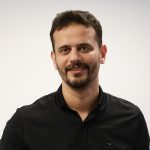
My name is Huseyin Arslan, a staff member at the Humanitarian Leadership Academy, and we welcome our guest. Could you please introduce yourself briefly and tell us about your role in the community-led response in Gaza?
Fady:
Thank you very much for your invitation, for organising this meeting, and for your prominent role in advocating for the causes of Palestinian society, particularly the people of Gaza, given the difficult circumstances the Gaza Strip is currently facing.
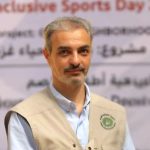
I am Fady Abed, an engineer and currently the director of the Association fo Our Deaf Children in the Gaza Strip. The Association for Our Deaf Children is a Palestinian organisation that has been operating for more than thirty-three years, serving both people with and without disabilities within a holistic framework.
I took over the management of the Association for Our Deaf Children in September 2023, roughly a month before the war in the Gaza Strip. I wasn’t even given the chance to get my papers in order as the new director of this organisation.
I found myself and our large team facing a devastating war that destroyed the very foundations of life. It left the whole community in a state of profound shock. Before the war, the Our Deaf Children Association team comprised around 135 staff members, alongside a number of paid volunteers.
Today, nearly three years after the war in Gaza, the Association for Our Deaf Children has not only held its ground but has actually expanded. Our team now comprises more than 280 staff members on both permanent and temporary contracts.
Our work ranges from emergency humanitarian response to inclusive education, where we provide services to nearly 4,500 pupils, both with and without disabilities, across more than fifty educational centres spread throughout all the governorates of Gaza.
In addition, Our Deaf Children’s Association works in the field of rehabilitation, supporting people with disabilities in the areas of protection, accommodation and community-led facilities run by people with disabilities. We also work in the field of economic empowerment.
One of the highlights during the war on Gaza was that Our Children’s Association received the Zero Award, an international prize awarded by the United Nations on the International Day of Persons with Disabilities, in recognition of our model for removing barriers to the participation of people with disabilities, specifically regarding their involvement in leading the emergency response.
To be honest, this award was not so much a tribute to the association’s management as it was global recognition that people with disabilities are not merely recipients of aid, but are part of society – indeed, they are leaders who shaped the response.
From the very first day of the war, we at Our Children’s Association – like all local organisations – became the first line of defence. Our own teams were displaced and affected, yet we continued to provide shelter, psychological support, humanitarian aid and specialised services to people with and without disabilities.
They are often the last to receive any support and are therefore excluded; they are the most severely affected by the difficult circumstances and, sadly, suffer from unintentional marginalisation and exclusion.
Huseyin:
Thank you, Mr Fady, for the introduction and for telling us more about Our Children’s Association and the strong and admirable work you are doing. I have one further question to better understand the current situation and context in the Gaza Strip.
How would you describe the current humanitarian situation in Gaza from the perspective of local action and community response? Especially as you are working on the ground and have a wide reach. If possible, could you describe the humanitarian situation for us?
Fady:
In short, the needs are enormous and exceed any capacity to respond. Sadly, overnight, more than two million people in the Gaza Strip found themselves homeless. Evacuation and displacement orders covered the entire Gaza Strip, across all its governorates.
Two million people were left homeless and without a source of income. They can barely find safe drinking water amidst a humanitarian infrastructure that is exhausted, dilapidated and destroyed. Let me illustrate this with figures from studies carried out by the Association for Deaf Children during the war on Gaza, based on field surveys.
These figures are not mere statistics; they are stories, suffering and personal experiences that we have lived through alongside all our beneficiaries, both with and without disabilities. They are stories told to us personally by those affected.
They speak of suffering. 97.6 per cent of households in the Gaza Strip were displaced at least once. 93 per cent of respondents, or those who completed the questionnaire, have no source of income.
99 per cent of households have an income insufficient to cover basic needs. Seventy-six per cent do not have access to safe drinking water. Twenty-two per cent of households are unable to secure even one meal a day.
This is the situation for people in general. When we talk about people with disabilities, we are telling another story of compound suffering that may not be clearly apparent in the reports.
Nearly 88 per cent of people with disabilities have described the shelters and accommodation centres where they live as unsafe, unsuitable and not inclusive for them, failing to provide the minimum living standards required under international conventions, the Sphere Standard and other agreements.
Imagine that 83 per cent of people with disabilities lost their assistive devices whilst displaced: hearing aids, wheelchairs, crutches. Imagine losing your home.
Then losing the one device that connects you to the outside world and enables you to move about – it is no longer with you. We have stories; we have cases that we have identified and dealt with – unfortunately, these are just examples, and the details are as follows.
A child with a hearing impairment lost their hearing aid whilst being displaced. This child became completely cut off from communicating with others. They cannot hear them. They cannot communicate with them. They cannot know what is going on around them.
A family including a person with a mobility disability was ordered to evacuate their area immediately. This happened frequently. We have heard many such stories and accounts. Stories that were recounted, documented and published without any assistive devices to facilitate their evacuation in a way that preserved their dignity.
A person with a disability was required to evacuate their home. A mobility impairment. In a very short space of time. Without a wheelchair or any assistive devices. A family with a hearing impairment lost their lives simply because the evacuation order did not reach them.
They didn’t know there was an evacuation order. They didn’t know the situation had become dangerous and that they had to leave. Consequently, we have indeed identified a number of families in this situation. In this particular case, they lost their lives because they didn’t know they had to leave the premises.
Imagine a man with a mobility impairment who cannot use the toilet because the bathrooms at the shelter are not accessible. And we’ve heard stories from people with hearing impairments who try to minimise their fluid intake.
They don’t drink water. They go without drinking water for long periods so they don’t have to go to the toilet. Because if they need to go to the toilet, they need several people to help them get there. And that assistance isn’t always available. Imagine a head of household with a disability being denied emergency aid because the distribution point itself isn’t accessible – they simply can’t get there.
Imagine a medical centre. A person with a hearing impairment cannot communicate with medical staff or healthcare providers because the healthcare providers do not know sign language, so they are forced to write down anything they need, such as painkillers. This, unfortunately, is the reality we have experienced, observed and dealt with — through stories, not just figures.
This is a direct violation of the rights guaranteed by the Convention on the Rights of Persons with Disabilities. The right to protection and safety in situations of danger. The right to accessibility. The right to a standard of living on an equal footing with others.
The difference between the local perspective and the international perspective—or that of other organisations—is that we do not deal with separate sectors. We deal with human beings. It is at the intersection of their needs that everything comes together.
Local organisations and the local community are the only ones capable of seeing these intersections, these details, because we are part of the community itself. We were displaced with them, we lost with them, we remained with them; we live in the tent next to that of the beneficiaries.
Huseyin:
Thank you very much, Mr Fady, for shedding further light on the suffering and the current situation; I am truly sorry for this suffering. Of course, the role of organisations is a very significant one, despite the scarcity of resources and limited capacity; yet local organisations always remain a key actor in alleviating the suffering as much as possible for the affected people and those most in need.
I have a question regarding the role of local leaders, particularly civil society leaders, in responding to day-to-day humanitarian needs. In your day-to-day work in the field, what role do local leaders and the community play in the response?
Fady:
Thank you very much for this question. It is an important one. The local role has been, and continues to be, the backbone of the response. When the crisis struck, all international organisations – including UN agencies – were affected, and the majority of them, even in the early stages, ceased operations completely or even partially due to a lack of security and a reluctance to take risks, which is true.
There was a very high security risk for their staff. But when it comes to needs, when it comes to the suffering of local organisations, they did not stop. Simply because they are part of the community, part of the people, part of the suffering.
They are the ones who know where families are, where people with disabilities and their families are. They know who is most vulnerable. How to actually reach them. How to strike a balance between safety, intervention and speed of response.
Local leadership plays an integral role. First and foremost is direct implementation. We are the ones who distribute aid, provide shelter and deliver services on the ground, on the ground. We are the ones who translate real needs into a language that international partners understand.
And we ensure that no group is excluded or marginalised—no group at all—particularly people with and without disabilities, older people and girls. The very existence of a local organisation that continues its work despite everything is, in itself, a message of hope and resilience, and a message to every individual that there are those who are taking responsibility, that there are actors who have not left beneficiaries to fend for themselves.
When local leadership involves a person with a hearing impairment running a community kitchen serving hundreds of families, this not only changes the reality of the response but also transforms the whole community’s perception of what disability and ability mean.
Huseyin:
Right.
Thank you, Mr Fady. Based on your experiences, what are the most effective methods or initiatives that have proven their worth in locally-led responses, and during your work with local organisations or voluntary groups? In other words, which approaches have demonstrated that, through these initiatives, it is possible to reach the most vulnerable groups or access areas of greatest need or where there are particular challenges?
If you could share an example with us, or shed some light on a model you’ve encountered or worked with.
Fady:
Certainly, one of the key characteristics of local leadership is flexibility and preparedness.
You know, and everyone knows, that the recurrence of crises in the Gaza Strip over the past three decades – and indeed the even longer period of previous rounds of escalation that the Gaza Strip has endured – has meant that local organisations have pre-prepared contingency plans and teams trained to deal with exceptional circumstances.
Here at the Our Deaf Children’s Association, we were able, in a very short space of time, to come to terms with the shock, recover and resume our response, whilst other organisations were still, no, no, no—still only just figuring out how to intervene.
Taking the Our Deaf Children’s Association as an example, within less than ten days our teams were deployed everywhere, working with those in need. We provide them with counselling and emergency relief aid in Gaza, in the central region and as far as Khan Yunis.
Our Deaf Children’s Association maintains continuous contact with people with disabilities and their families. We provide them with assistance, guidance and awareness-raising, alleviate their psychological stress and help them navigate the dangers and difficulties.
The second aspect is our work through networks and the community itself. Our staff, volunteers and neighbourhood committees are part of the community, and our teams are geographically distributed across all governorates. This has enabled us to reach all beneficiaries.
This strength is unique to community-based organisations and is not found in any other institutions. Another factor is the holistic approach to working with people with disabilities – an approach advocated by international standards, which calls for the inclusion of people with disabilities in the general response and emergency response.
At the same time, we provide them with specialised services. For example, sign language interpretation at district centres and distribution points; the provision of assistive devices; psychological support sessions; and counselling with a sign language interpreter.
These models, which were developed before the war and on which our staff were trained, proved highly effective during the war on Gaza. We did not merely provide services; we also conducted a multi-sectoral assessment comparing the situation of people with disabilities with that of people without disabilities across all areas: shelter, water and food, livelihoods, and protection.
We transformed these studies, which have been published, into an advocacy tool for all international and UN agencies and donors. For example, when we say that 83 per cent of people with disabilities lost their assistive devices, we are talking about reality, about needs, about concrete figures.
It is not merely general information. We are talking about what is known as evidence derived from field surveys conducted using sound scientific methodology.
Unfortunately, flexible funding was not widely available, but this would have given local organisations the scope to respond more quickly, smoothly and tangibly according to need, rather than on a case-by-case basis, given that needs are highly variable.
Circumstances change frequently, so funding needs to be more flexible in order to be more effective.
Huseyin:
Thank you, Mr Fady. You mentioned some challenges; could we delve a little deeper into the challenges faced by local leadership during the response? These might include flexible funding, the blockade, or high levels of need.
So, from your perspective, what are the main challenges you would highlight or remind us of that you face on a daily basis, and how do you deal with them?
Fady:
To be honest, one of the simplest challenges is that our teams, our staff, are part of the community.
They, like everyone else, are suffering just as much as the rest of the community. Our staff have lost their homes. We have lost some of our staff; some of our colleagues have been injured.
Yet we continue to carry on with our work. This places a double responsibility on us as leaders to look after our staff, both psychologically and professionally. There can be no effective response without meeting the essential needs of the staff who are working and providing services to the whole community.
Among the challenges and problems faced by the Association for Deaf Children, as well as all members of community organisations and all local community institutions, is that our premises have been completely destroyed. Our headquarters have been destroyed, and there is an almost total lack of logistical support.
We have lost all our material resources and have had to start almost from scratch. Added to this are difficulties with mobility, fuel shortages, communication blackouts and a lack of liquidity. We have faced all these difficulties and challenges.
We had a plan for every aspect of our work – Plan A, Plan B and Plan C. We operate like a chess game, as a local management team navigating a complex reality.
We had to adapt the plan and our working methodology on a daily basis. We had to adopt a dynamic mindset so that we could establish a dynamic management structure capable of adapting from one moment to the next, in order to balance the continuity of service provision with the safety of our staff in the face of the risks and challenges we faced.
Then there was the issue of funding. Unfortunately, there was a lack of adequate and appropriate funding. The local organisation is the primary point of contact for service users and the community.
All people with disabilities turn to the Association for Deaf Children and to organisations that support people with disabilities. However, the need is far greater than we are able to meet. Consequently, local organisations are the first point of contact and the primary port of call for these beneficiaries.
We strive to alleviate their suffering, assist them and respond to their extremely difficult circumstances. Although the international community committed years ago to channelling a significant portion of humanitarian funding directly to local organisations, unfortunately local organisations actually receive only a very small proportion of direct funding, particularly under the current circumstances.
It is the international organisations that have come to dominate the sector and have ended up taking on our trained staff. Consequently, this places a significant burden on the management of local community organisations.
Huseyin:
Thank you, Mr Fady. My next question is: what kind of support do local actors need to strengthen their role in a more effective and sustainable way? Also, what is the key message or lesson you would like to share with the humanitarian community, international organisations or international actors regarding local leadership in Gaza?
Fady:
First and foremost, the support required for civil society organisations or local organisations is direct, well-thought-out, multi-year funding that is not contingent on specific conditions, so that we are treated as ongoing programmes rather than projects that cease when the contract ends.
Partnerships that allow us to plan, build capacity and retain qualified staff over the long term. Not the way things are currently done, with limited interventions that force organisations to think within a very narrow framework.
Unfortunately, this is not the optimal or most efficient way to conserve resources – whether financial or even human resources. Secondly, investment in the organisation: operational costs, strong governance and accountability, and staff wellbeing.
These are not expenses but the foundation of sustainability. As we have seen, local organisations have been the first line of defence in confronting difficulties and alleviating people’s suffering. Local organisations and the local community must be integral to decision-making, humanitarian coordination mechanisms, programme design and the setting of priorities.
Those who know the needs must be involved in defining the response. And since organisations of people with disabilities themselves – including those working with people with disabilities – apply the principle of ‘nothing about us without us’, which is upheld by people with disabilities, their participation is essential in all interventions, from planning, implementation and supervision right through to monitoring and evaluation.
Huseyin:
Thank you very much for your valuable contribution, Mr Fady, to this podcast and this episode. I greatly appreciate your time, your expertise and the inspiring insights you have shared with us today. You have shed light on many issues and challenges, and the discussion was truly inspiring regarding the reality of humanitarian work in Gaza and the role of local leadership.
We have highlighted the opportunities and challenges associated with strengthening local leadership and empowering stakeholders. This perspective has also reflected on people with disabilities and the vital role they play in local leadership.
We hope this episode has contributed to enriching the dialogue and the exchange of knowledge, and that it inspires further cooperation and partnerships that place local communities at the heart of humanitarian work. We also look forward to these discussions continuing to stimulate ideas and initiatives that promote shared learning and support capacity-building and leadership at the local level.
Thank you to our valued listeners for tuning in. We hope this has been a fresh experience and that the information has enriched your thinking and proved useful to you.
We look forward to meeting you again, Mr Fady, in a new episode. Thank you and best regards. May you all be well.
Fady:
Thank you. Thank you very much, and may you all enjoy good health.