24th October 2026
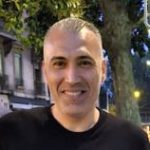 Ibrahim Abu Sobeih
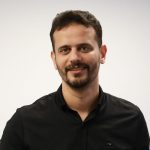 Huseyin Arslan
“You cannot expect a child to attend school, or even a temporary learning centre, whilst they are hungry.”
In this episode of the Arabic-language podcast series, Local leadership in humanitarian action: Voices from Palestine, we look at the state of education in the Occupied Palestinian Territories after three years of conflict, and what it will take to rebuild it.
Ibrahim Abu Sobeih, Programme Director and Humanitarian Operations Advisor at Save Youth Future Society, has worked in humanitarian response in Gaza for more than 15 years, including with Save the Children International. His organisation, founded in Gaza in 2001, works on education in emergencies, child protection, psychosocial support and youth empowerment.
Speaking with the HLA’s Huseyin Arslan, Ibrahim describes a generation cut off from formal schooling, and the toll that displacement, hunger and loss have taken on children’s learning and mental health. He makes the case for a holistic response that links education with food, health, water and sanitation, and psychosocial support, and for greater support for teachers, who are living through the same crisis as their students.
The conversation also explores how communities and local organisations have kept learning going, from volunteer-run learning tents to youth-led initiatives, and why local actors must help shape the response.
This podcast discussion is in Arabic. English captions and transcripts are available, as well as an English-language companion article.
Visit the Arabic language webpage
About the speakers
Ibrahim Abu Sobeih is the Programme Director and Humanitarian Operations Advisor at Save Youth Future Society, a local Palestinian organisation established in Gaza in 2001. The organisation works on education in emergencies, child protection, psychosocial support, youth empowerment and humanitarian response. He has more than 15 years of experience in humanitarian and development work in Gaza, including several years in programme and operations management at Save the Children International. In recent years, the organisation has set up and managed temporary learning spaces, trained teachers and facilitators, and provided psychosocial support to children and families affected by displacement.
Huseyin Arslan is a humanitarian professional with more than 12 years of experience leading emergency response, programme development, and organisational capacity strengthening across the Middle East, Africa, and Europe. Having begun his career in Syria during the early years of the conflict in 2012, he has since held senior management roles with international organisations, overseeing multi-sectoral programmes in education, child protection, health, and livelihoods. He currently works with the Humanitarian Leadership Academy (HLA), where he supports the design and delivery of training initiatives that strengthen the skills of humanitarian actors and civil society organisations, with a focus on capacity development, local leadership, and partnership engagement.
The views and opinions expressed in our podcast are those of the speakers and do not necessarily reflect the views or positions of their organisations.
Transcript in English
This transcript and translation have been produced using automated tools. It has been checked but minor errors or omissions may remain.
Huseyin: Welcome to the Humanitarian Leadership Academy podcast, the platform where we meet with experts, leaders and practitioners in the humanitarian sector to discuss the most important issues affecting communities, and to share experiences and lessons that can contribute to building a more sustainable humanitarian response.
I’m Huseyin Arslan, Head of Humanitarian Work Development and Leadership at the Humanitarian Leadership Academy. I’m delighted to have you with us for this new episode. Today’s episode is about rebuilding education: The future of education in the Occupied Palestinian Territories. Education is not just about classrooms, schools and books; it is hope, a sense of stability, and a genuine investment in the future of children, young people and society as a whole.
However, as the crises and challenges facing the Occupied Palestinian Territories persist, particularly in Gaza, the question has broadened beyond simply how to get pupils back to school. It has become: how do we build an education system that is more resilient, more equitable and better prepared for the future?
In this episode, we will discuss the reality of education today and the challenges facing students, teachers and educational institutions, as well as the role that local organisations and humanitarian partners – such as NGOs and civil society – can play in rebuilding the education sector, not only in terms of infrastructure, but also in terms of the quality of education, psychosocial support, access to technology, the development of education, and ensuring the continuity of education even in the most difficult circumstances.
We are delighted today to welcome our distinguished guest, Mr Ibrahim Abu Sobeih, Humanitarian Operations Adviser and Programme Director at the Save Youth Future Society, which operates in Gaza and the West Bank. A warm welcome to you, Mr Ibrahim.
Ibrahim: Welcome, Huseyin, and many thanks for having me. We’re delighted to be with you today for this discussion. God willing, it will be a constructive and meaningful conversation. As you so rightly said, education is hope and the foundation for the future; God willing, this meeting will be a fruitful discussion, offering insights and recommendations on how we can rebuild the education sector, God willing.
Huseyin: Thank you. Could you tell us a bit more about yourself, share your role and experience, and tell us about the organisation you work for, so that our listeners can get a broader understanding of who you are? Please go ahead.
Ibrahim: Certainly. My name is Ibrahim Abu Sobeih, and I am currently the Programme Director and Advisor for Humanitarian Operations at the Save Youth Future Society. Save Youth Future Society is a local Palestinian organisation established in 2001 in the Gaza Strip. It has been active since then, working across a wide range of sectors, including education in emergencies, child protection – also in emergency situations – psychosocial support, youth empowerment, as well as humanitarian response.
We all know that the Gaza Strip is, in essence, a land of conflict; there are always major challenges on the ground and recurrent violence due to the Israeli occupation. Consequently, humanitarian response is also a constant feature.
We have worked in more than one field and responded to numerous emergencies over the years since the organisation’s inception. Prior to the establishment of the Save Youth Future Society, I also worked in the humanitarian and development sectors in—in Gaza for more than fifteen years, with a strong focus during that period on the humanitarian response in the Strip.
I also worked for several years in programme and operations management at Save the Children International. The organisation works hard, like other organisations, to provide high-quality services in response to the humanitarian needs of children and families in general in the Gaza Strip.
Through our work, we have approached education not merely as an academic service, but as a space for protection, recovery and rebuilding, as Professor Huseyin mentioned. In recent years, we have been involved in setting up and managing temporary learning spaces, training teachers and facilitators, and providing educational activities and psychosocial support to children and families in extremely complex circumstances, characterised by displacement, a lack of safety and security, and a shortage of resources and space.
If we’re going to talk about education, we could easily spend more than one session discussing it – talking about what education is and what has happened to the education sector in the Gaza Strip.
Huseyin: Thank you, Professor Ibrahim, for the introduction. I’d like to, in the context of the educational reality— particularly as an organisation present on the ground and working extensively in the education sector, both in Gaza and the West Bank— ask you to describe the current state of education for us.
How are children receiving their education? How is the educational process actually unfolding? Based on your work, what is the reality of education and the context within the current situation in the Occupied Palestinian Territories?
Ibrahim: If we’re to talk about the reality, the reality is that we’re actually living through a crisis. The situation differs between the Gaza Strip and the West Bank, including Jerusalem. However, in both cases, it constitutes a genuine crisis regarding the right to education.
The right to education is a right guaranteed under United Nations conventions and covenants. But in the Gaza Strip, we are not just talking about schools being closed during the recent war or the current conflict we are experiencing, which is casting its shadow over all the people of the Gaza Strip, especially the children.
Today, we are not just talking about school closures, but about the fact that almost an entire generation has been cut off from formal, face-to-face education for nearly three academic years. This is a serious indicator, Professor Huseyin. For example, the latest UNICEF report states that approximately 700,000 children aged between four and seventeen have been deprived of formal, face-to-face education.
And nearly ninety-eight per cent of school buildings have been damaged, which means that more than ninety-three per cent of these facilities or school buildings require major refurbishment or complete reconstruction.
We are talking about nearly 420,000 children who currently have no access to any form of face-to-face education in the Gaza Strip. This is a major disaster. Now, the Save Youth Future Society, together with other organisations – whether international, such as the United Nations, or even Palestinian organisations – has begun working in temporary educational spaces.
Despite the significant expansion of these temporary educational spaces in the absence of school buildings and educational facilities, there remains a vast gap. In other words, in the first half of 2026, organisations operating in the Gaza Strip were able to support approximately 435,000 children by establishing more than 610 temporary learning spaces.
Support was also provided to more than 11,000 teachers and educational staff. This is a significant achievement, but it does not necessarily mean that all children have received regular daily schooling, sufficient teaching hours, or are making measurable educational progress.
And this is where the serious concern lies. Today we are talking about temporary alternative learning spaces rather than formal, face-to-face education, and this has cast a shadow over educational progress. We are talking about an entire generation that has now missed out on nearly three academic years of education.
I’m sure you understand, Professor Huseyin, the indicators and figures we are discussing; these are alarming figures that cannot be ignored. Consequently, this requires action from all institutions. We work with a number of organisations, including Save the Children International, the United Nations Office for the Coordination of Humanitarian Affairs (OCHA), and other organisations such as the International Rescue Committee (IRC) and Plan International. We are striving, alongside local organisations and our partners on the ground, to provide education.
Unfortunately, formal education is not possible under the previous system, so we rely on non-formal education – learning through play – because this also addresses the psychological state our children are currently experiencing in the Gaza Strip.
Of course, we cannot exclude the West Bank. In the West Bank, the challenge takes a different form, but we are talking about approximately 150,000 children who face barriers to safe and continuous education due to restrictions on movement, violence, displacement and, at times, damage to infrastructure.
To this day, we follow the news and see that there are challenges on the ground regarding movement and passing through checkpoints in every area under occupation. We have also witnessed violence at the hands of settlers, which further limits children’s access to schools in the West Bank.
We are talking about eighty-four schools, including those in Jerusalem. In Jerusalem, too, schools continue to face demolition orders or orders to cease operations. This serves as an indicator that the situation threatens the education of thousands of children and pupils in the West Bank.
We can say that the education crisis in Palestine is not merely a crisis. It is not just a crisis of school buildings; it is a crisis of access. It is a crisis of safety, quality and continuity.
It is a crisis of mental health. And it is a crisis concerning the entire future of children and young people. We have always heard the saying that young people and children are the pillars of the future for any nation. Unfortunately, when it comes to education, we are facing a serious crisis.
A crisis for which, if no systematic solution is found, we will lose a generation and lose those who are the true builders of the future of the State of Palestine. Everyone is still working tirelessly, and efforts are being made on the ground, but the need is great and there must be a clear plan across all areas – including the major rehabilitation of school buildings that have been destroyed, or the complete reconstruction of new schools to which our children can return so that their lives, can resume as normal.
The educational arrangements we are using today, or the temporary learning spaces, are an attempt on our part as institutions to ensure our children and students do not miss out on their education. However, they are not the best or most ideal learning environment; we cannot say that they are providing services properly and correctly, in the same way as the formal, pre-war education system.
We hope that today we will be discussing early recovery and plans for the reconstruction of Gaza; we hope that education will be at the top of the priorities in these plans. Why? Because the people of Gaza – and the people of Palestine in particular – are among those with the highest rates of education; consequently, education is of great importance to them.
The people of Palestine value and cherish education; it is of great importance to them, and so they always accord it the highest priority and significance. We hope that this very real crisis which our people are currently experiencing in Gaza or the West Bank will not undermine the right to education guaranteed by United Nations conventions, a right which is also of the utmost importance to the people of Palestine.
Huseyin: Thank you, Ibrahim, for your detailed explanation and for providing the examples and figures. To be honest, the figures are shocking. The reality of education faces immense difficulties due to the war and the circumstances that have arisen over the last three years.
I have a question regarding these challenges. You mentioned that more than 700,000 children are out of education and deprived of their right to formal education, following the shelling of schools and safety concerns regarding access to temporary educational facilities.
Naturally, this leads to many significant challenges, including children dropping out of school, which will create major difficulties and challenges. So, if we were to discuss these challenges, what specific challenges are you facing?
For example, are you noticing an increase in violence against children, child labour, risks faced by children due to a lack of access to education, and challenges in providing temporary facilities for delivering educational services?
As far as I am aware, there are also difficulties in obtaining educational materials such as notebooks, pens and erasers, as these are all imported, which involves significant delays and scrutiny of supply chains. If we were to go into more detail about these challenges, what might you tell us from your own experiences?
Ibrahim: Well, if we’re to talk about the risks or challenges facing the continuity and quality of the educational process, we’re actually discussing a set of interlinked challenges here; we can’t separate one from the other because they’re so closely intertwined.
I’d like to start where I left off in the example concerning the risk of children dropping out of school permanently. This is indeed one of the serious indicators that all of us, as organisations working in the field of education, must be aware of and pay attention to, and we must start planning programmes to tackle school dropout among children.
We have seen many teenagers in particular – and when we say teenagers, we mean those aged roughly between ten and seventeen. Many of them, especially boys, as you mentioned, have turned to dangerous work to help their families.
Today we are discussing an unprecedented humanitarian crisis, a dire humanitarian situation. We are talking about famine. Even before this, some reports indicated that more than 142,000 children under the age of five were at risk of famine or malnutrition.
Amidst all these challenges that our children and young people on the ground are facing, we are witnessing poor or negative coping mechanisms being adopted by some families; this is why we are discussing children’s involvement in dangerous work to support their families.
The dangerous aspect is that we are not simply talking about boys as boys today. The war has also cast its shadow. Today, there has been a swift transition from childhood to adulthood among children in the Gaza Strip.
This is a dangerous indicator. Today, children anywhere in the world, just like their peers across the globe, must be able to experience childhood in its fullness. There must be an enabling environment. They must not be turned from children into adults who bear responsibilities.
This is what we refer to in our work—as Professor Huseyin is surely aware—as ‘negative coping strategies’ or ‘mechanisms’. This is a serious indicator, particularly amongst boys. Meanwhile, girls face risks related to mobility, domestic care, gender-based violence and early marriage.
We are seeing an increase in the rate of early marriage. The longer the disruption to their schooling and the longer it takes for them to return to school, the more difficult it becomes for them to re-engage with education. This is also a very serious indicator, and we must start planning for it and working intensively to address this issue and prevent the negative coping mechanisms that the parents of these children —or even the children themselves—are forced to adopt.
Because today we are witnessing a strange transformation – which we have seen, and which you have no doubt followed, and which reports have discussed – whereby children have felt that they have become adults and have been forced to help their families to meet their needs, that is, to obtain basic necessities amidst the shortage of resources and supplies in the Gaza Strip.
Today we are also discussing a challenge related to the irregular nature of temporary education. Some children receive only a few hours’ education per week. Therefore, we must not be content merely with asking how many children we have reached. This is perhaps the most misleading of questions, one that leads us into a grey area.
The questions must be: how often did the child attend, how many hours did they spend learning, what did they actually learn, and did they continue or drop out? Currently, efforts on the ground through temporary educational centres are providing this service.
This is wonderful, and we are grateful to all the organisations involved – whether they are supporting bodies, funders, or even those working directly on the ground. But this is not enough. It is not a substitute for the formal, face-to-face education that our students used to attend.
What is currently on offer prevents permanent disruption to their education. However, the lack of regularity in temporary education is also one of the major challenges we face. We are talking about short-term programmes.
We are not talking about long-term programmes. We work with more than one organisation. I may have mentioned some of these organisations to you, for whom education is on their agenda or forms part of their programmes. However, we know that, in terms of efforts and the scale of funding, the education sector is currently one of the sectors receiving the least funding.
There is a greater focus on improving livelihoods – humanitarian aid – to provide food, drink and even hygiene and personal care items for families living in tents.
But the key point is that education is of paramount importance to us as Palestinians, and it is arguably one of the areas we prioritise and favour over other fields and sectors.
Unfortunately, in terms of funding, education is one of the worst-funded sectors. We’re talking about approximately—I don’t recall the exact percentage, Professor Huseyin, but I believe it was less than 20 per cent.
If we round it up, perhaps 20 per cent plus a little of the funding required for education has been secured or obtained. This therefore indicates that the education sector is deprioritised and considered less important than other sectors, such as the livelihoods sector, the protection sector and others.
You also kindly raised a crucial point. We may have noticed the supply chains in the current system, which governs entry into the Gaza Strip—whether for people, goods or humanitarian supplies.
Entry is therefore via two or one point. These crossings are controlled by Israel, so not everything is permitted to enter, nor does entry occur on a regular basis. We have heard that the ceasefire agreement was implemented, but since then we have not seen any positive change regarding supply chains and their smooth entry into the Gaza Strip.
No, today there is a backlog of humanitarian supplies at the crossings that requires coordination and approval from the Israeli side. This is one of the challenges. Today, when we talk about the Gaza Strip, there are no educational materials and no teaching aids that we need to provide high-quality education for our children in the temporary learning centres.
This, too, undermines the quality of the programmes we deliver as an organisation. We have repeatedly requested that certain educational materials and resources be allowed into Gaza on a regular basis so that we can provide the highest possible standard of service under the current circumstances.
Of course, we will not achieve the same standard as formal, face-to-face education, because, as we have mentioned, the vast majority of schools – perhaps more than 96 or 98 per cent of educational buildings – have sustained damage, requiring either complete restoration or reconstruction.
This is difficult at present because no building materials are being allowed into the Gaza Strip. If educational materials and teaching aids are not getting through, we must surely assume that building materials and the materials needed to repair these schools will not get through either.
Some of these are considered by the Israeli side, or the Israeli government, to be dual-use materials. Of course, this is yet another challenge. One of the ideas put forward by Save Youth Future Society was to introduce prefabricated schools.
The idea is to move away from tents and instead set up prefabricated schools that can be erected quickly and are supplied from abroad. Of course, when we talk about prefabricated schools, they inevitably contain metal bars and steel components.
So when we approached several donors, they informed us that it would be difficult to bring these in because they contain dual-use materials. This, too, is one of the challenges. Today, we are providing services inside tents.
These tents aren’t the best quality either, because high-quality tents will certainly contain iron or metal components, and so these are also considered dual-use humanitarian materials. Consequently, we have reached a real crisis.
Even schools that are now derelict and unsafe are currently being used as accommodation by displaced people who have lost their homes from all over the Gaza Strip. This is also a major challenge. Another challenge is the situation of teachers and facilitators. The teachers and facilitators themselves are displaced; they are exhausted and have lost their homes, their relatives and their sources of income.
Some of them are working in very difficult conditions with a shortage of materials and overcrowded classrooms. There is already immense psychological pressure on teachers and facilitators; we cannot create supportive learning environments for children with teachers who are exhausted and unsupported.
That is why this has always been one of the messages we convey to decision-makers and those shaping the education agenda who are planning for the future: the situation of teachers.
Teachers are not people living far removed from the conflict. No, they are not. They are part of the conflict. They themselves are displaced. They themselves have lost their homes. They themselves have lost relatives or family members. They themselves have lost their sources of income. Consequently, their situation today is extremely difficult because they are an integral part of the community.
They are not isolated. Whatever is happening to society as a whole in Gaza today, teachers are experiencing it too. The same situation also exists in the West Bank. And when we talk about Gaza, we do not separate Gaza from the West Bank. Perhaps in Gaza the situation is worse in terms of displacement and migration.
But in the West Bank, too, we see that getting to school is a major challenge for parents. There are even unethical practices by occupation soldiers at some checkpoints and entrances to certain towns.
We may have heard that some soldiers engage in unethical behaviour – often with sexual implications – towards female students.
This, too, casts a shadow and poses risks to the girls who are travelling to school and passing through checkpoints.
Consequently, this may limit the ability of girls in the West Bank to attend school, as their parents have also become obsessed with and fearful that they might be subjected to sexual violence at the entrances to Palestinian villages and towns by occupation soldiers.
This is also one of the issues, Professor Huseyin, or challenges that we can discuss. Today we’re talking about the living conditions of children and their families. So how can we expect a child to concentrate on their studies when they’re living in a tent, or searching with their family for water and food, or have lost a parent, or have been displaced numerous times – ten times, twenty times?
Education cannot take place in isolation from food, health, protection, water and sanitation. We must – and perhaps it’s no use me telling you this – recognise that education is extremely important.
You cannot expect a child to attend school, or even a temporary learning centre, whilst they are hungry. It is very, very difficult. That is why, when I quoted the figure of 142,000 children under the age of five suffering from malnutrition, if no genuine treatment plans are put in place to tackle malnutrition, then these children will grow up and, after six years in these temporary educational areas, they will enrol in school, but they won’t have a real chance of an education because of their malnutrition.
We might say that education is linked to cognitive skills, and that part of it involves developing these cognitive skills in children. But today, a child is hungry or lacks access to healthcare, water, personal hygiene or sanitation.
It is difficult for me to work on these skills with children in such appalling living conditions – conditions that are simply indescribable. And when we talk about a child losing a parent, a brother or a sister, this is also a humanitarian situation requiring long-term treatment; the treatment plan may succeed, but only if the conflict ends and the war comes to an end.
To this day, we are still witnessing daily killings and injuries in the Gaza Strip since the announcement of the so-called ceasefire or truce. The war is still ongoing. Today we are talking about education. We are talking about difficult living conditions and asking our children to maintain their enthusiasm for learning so that their education is not interrupted.
This is a noble goal for all of us. However, for us to succeed, the Israeli violations against the people of Gaza, which occur on a daily basis, must stop. Another challenge relates to the massive educational loss. It is difficult today to ask a child who was in third grade in October 2023 to return straight away to the sixth grade curriculum, as if the past years had passed normally.
That is simply not the case. Some children have lost their reading, writing and numeracy skills, and this is perhaps one of the programmes we were focusing on through our partnership with Save the Children International before the war. Literacy and numeracy were among the programmes that formed part of basic education, and we focused on them with our colleagues at UNRWA in UNRWA schools before the war.
We faced challenges even then, in those ‘rosy’ pre-war days. Today, in this situation, with a three-year disruption… Certainly, there are children who have lost these skills; we’ve noticed and seen this in our work with them. They’ve lost their reading, writing and numeracy skills, and a large proportion – particularly the younger children – never acquired the necessary foundations in the first place.
So today, if we’re talking about a child who was three years old three years ago, they’re now six. Today, they are due to enrol in schools or temporary learning centres, even if the formal face-to-face system is up and running.
It is difficult for them to enter the education system in this way because the necessary foundations are not there; consequently, it is difficult for the child to achieve the results we hope for.
This, too, is a serious indicator. Three years is no small matter. So it’s no use talking about a direct return to the curriculum. The past three years – and more – have not passed in a normal manner. No, of course not; they have been abnormal and unprecedented. Another challenge, Professor Huseyin, is the lack of safe places to learn.
We have discussed this and touched upon it, and we have pointed out on more than one occasion and in more than one context that schools in the Gaza Strip have been destroyed, damaged or used for other purposes; we have seen that they have been used as reception centres, with some schools now housing more than 5,000 families.
The alternative spaces available are limited but overcrowded, as they were originally set up in areas where displacement centres or refugee centres are located, and where overcrowding already exists. We are well aware that the entire population – or more than a million people, though the figure has fallen slightly to 800,000 today – is confined to the Al-Mawasi area in Khan Yunis, between Khan Yunis and Rafah.
As this area is already heavily congested with tents and displaced people, any alternative spaces we set up there will be limited and crowded, situated within or between the displaced people’s settlements.
Before opening any new space, we must ensure the site is safe. We check for any rubble and ensure it is cleared. We also carry out risk assessments for unexploded ordnance. We work with several partners, including UNMAS. We collaborate with MAG and UNICEF to assess the risks posed by unexploded ordnance and to raise awareness of these dangers amongst children and adults.
Unexploded ordnance. Today, you might be setting up a temporary or new educational space right on top of a landmine. The Gaza Strip has become such an area. The Gaza Strip has been bombed and more munitions have been dropped on it than were dropped or fired during the First and Second World Wars combined.
We are therefore talking about a small geographical area that is like a rumbling volcano. Consequently, even creating new spaces that meet safety standards is difficult. We, as local organisations, in collaboration with international organisations and United Nations agencies, are extremely vigilant and always strive to ensure the safety of the locations where these spaces are established.
The situation is catastrophic. The challenges are interlinked. Everyone is making tremendous efforts. We are constantly striving to ensure that children do not lose their right to education and do not fall even further behind in their educational journey.
However, the challenges are greater than any of us. We hope that the education sector will once again become one of the core and primary priorities for organisations working in the humanitarian sector. We have seen that the education sector is not among those sectors that have been recommended as being of key importance, and advocacy for it has faltered.
We have tried, in more than one place and in various contexts, to restore education to its rightful place amongst the sector’s top priorities. Yet we still face challenges. It is still not regarded as a core sector, even by donors.
Donors today, in their current approach, tend to focus more on providing humanitarian aid or life-saving interventions. This is understandable – needs are interlinked – but at the same time, they do not accord the education sector the priority or attention it deserves.
This is perhaps one of the challenges we see: a shift in donors’ focus towards other sectors at the expense of education, which is one of the sectors that receives – or has received – the least funding to meet current needs.
The absence, Professor Huseyin, is also an issue we need to address. Ah, the absence of the rule of law. The absence of an effective government on the ground in the Gaza Strip. This, too, is a major challenge today. We are unable to work with a coordinating body.
We coordinate with the Ministry of Education in Ramallah. There is coordination in place with organisations through the Education Cluster. In other words, we’re trying to coordinate with all the organisations involved, but at times – given the absence of the rule of law and the absence of an official body that’s genuinely and tangibly present on the ground – this also poses a challenge for us in continuing our efforts in the education sector.
This is part of a whole set of interlinked challenges, Professor Huseyin. I hope I’ve answered your question, but the challenges may well be greater than those I’ve mentioned. As I said, the reality is as I described—particularly in the context of a blockade, a war and a period lasting more than three years— so the circumstances are extremely difficult and there is suffering on all sides.
Huseyin: I touched upon the issue of the response by certain organisations. I mentioned temporary schools and emergency education schemes, so perhaps you could share your insights on the topic of the response: how is this response being carried out, whether by organisations, local communities, teachers or voluntary initiatives?
To what extent is Palestinian society currently responding to ensure that education continues amidst all these challenges and circumstances? In particular, parents have always expressed a strong desire to ensure their children do not miss out on education and are not deprived of this fundamental right.
So, if you could briefly explain to us the nature of the response or what measures are being taken by civil society or organisations.
Ibrahim: Thank you, Professor Huseyin, for that question. One of the most important lessons we have learnt in Gaza is that the community did not wait for the full restoration of the education system before resuming teaching. We saw teachers, local institutions, volunteers and parents making use of whatever was available.
Tents, community spaces, partially damaged buildings – sometimes even very small spaces – were used to get children back into learning. This certainly highlights the point, Professor Huseyin, made at the end: that parents hold education in the highest regard; the people of Gaza hold education sacred. This therefore confirms what I’ve been saying: that the community didn’t wait.
It harnessed all available resources to get children back to learning. Based on the experience of the Save Youth Future Society, we found that an effective response begins with the community itself. The community itself – as they say in local and Arabic – is the crux of the matter; it is the starting point.
So when we decide to set up a learning space, we don’t just start by choosing a location and putting up a tent. We work with local families; we collaborate with parents, teachers and community committees. We gather information from them about the number of children present, their ages, their educational levels and any protection risks, and we work with them to determine the best times for learning and ensure accessibility for children with disabilities.
We’ve also noticed that local teachers have a great capacity to adapt. They know the children and their families, their dialect and their circumstances. They share the same living conditions as them.
Consequently, they were able to adapt activities and curricula to suit the reality on the ground. However, this flexibility requires technical support, supervision, teaching materials, and incentives – not to mention ongoing psychological support.
One of the successful models we have found useful is integrating education with psychosocial support, without turning the educational space into a place for entertainment alone. That is not the aim; we are integrating education with psychosocial support.
Children need to feel safe, to play and to interact, but they also need to read, write, do maths and return to a clear educational routine. This is one of the fundamentals and models that the Save Youth Future Society, as well as other organisations working on the ground alongside us, can adopt; consequently, this is one of the successful models we have identified.
Involving parents has also been essential for us. It’s not enough to work with a child for two or three hours and then have them return to an environment that doesn’t understand their needs. And, of course, they’re excused. Support sessions for mums and dads also help them cope with stress; they help them encourage their children to persevere, and to spot signs of distress, dropout or the need for protection.
The most important lesson for us as organisations is that local organisations are not merely implementing bodies. They are the organisations capable of knowing where the population has moved to, which spaces are still usable, which teachers are available, and the reasons for children’s non-attendance.
Organisations must therefore be involved in shaping the response and in decision-making. This is a requirement for all local organisations, not just for implementing plans designed far removed from reality. One of the positive experiences, Professor Huseyin, is that from the start of the war we were among the first local organisations to work on education. Through youth initiatives funded by UNFPA, a group of young teachers in various communities came together and launched a number of initiatives, foremost among which was education: setting up educational tents or temporary learning centres.
This was at the start of the war, in 2024. Thank God, we were able to fund them, meet these needs and enable them to provide this service to the children. These were voluntary initiatives undertaken without any incentives or in return for anything, simply to provide educational materials for the tents and to set up temporary learning centres.
This initiative highlights just how much we, as a people, value and cherish education; just how proactive we are; and just how much energy we have to turn a bitter reality into an opportunity, to harness challenges, and to work collectively.
Consequently, the full involvement of the community is one of the things that we really appreciated. We have a youth council, a body established before the war, comprising more than two thousand young men and women.
This has been one of the strengths of the Save Youth Future Society: from the start of the war, this body has stood shoulder to shoulder with the organisation, its programmes and its management to provide a clear picture of the needs of displaced people and residents in various areas.
This youth council is also part of the group of young people who came up with the idea of temporary learning centres. With teachers based in the areas where they live in the camps, these internally displaced young people took the initiative to provide education in their own neighbourhoods.
These have been success stories for us; these young people are, in a sense, our soldiers, and we thank them and value their efforts, their ideas, their sense of belonging and their sense of responsibility since the start of the war. Furthermore, it is impossible to provide education without integrated services across other sectors.
We emphasise that education must be integrated with psychosocial support; it must be integrated with the water and sanitation sector; it must be integrated with health services; it must be integrated with livelihood improvement; and it must be integrated with all the various sectors, Professor Huseyin, because education on its own will be difficult.
Huseyin: Exactly, thank you very much, Brother Ibrahim. We have reached the end of our programme and we extend our sincere thanks to our distinguished guest, Professor Ibrahim Abu Sobeih, for his time and for sharing with us his expertise and insights on one of the most important humanitarian issues today: education in occupied Palestine.
As we heard during the discussion, rebuilding the education system is not limited to schools or classrooms, or the restoration of buildings; rather, it is a long-term process that requires a clear vision and investment in terms of teachers, support for children, parents and young people, and genuine partnerships that prioritise the needs of the local community.
Of course, this requires stability and security so that children can get to school safely. I hope this episode has opened the door to thinking about practical solutions and encouraged a wider dialogue about our shared responsibility to support the future of education in the Palestinian territories, because investing in education is an investment in people and in the future of entire communities.
Thank you for following along and listening. If you enjoyed this episode, please don’t forget to share it with your colleagues. Thank you, Ibrahim, and thank you very much for your contribution.
Ibrahim: Thank you, Professor Huseyin, and thank you for this opportunity. And of course, rebuilding education means rebuilding people, rebuilding trust and rebuilding the future of Palestinian society as a whole.
Huseyin: Thank you.
Ibrahim: No, thank you very much. Goodbye. May God bless you.
Huseyin: You’re welcome. Thank you.
About this podcast series
This podcast was recorded in July 2026 and produced by the Humanitarian Leadership Academy in partnership with Save the Children oPt Country Office to provide a platform to amplify the voices, experiences, and leadership of local humanitarian actors in oPt. We express thanks to Save the Children and local partners for their engagement and support for this initiative. Read more
Episode 1: Local leadership in humanitarian action: The power of community-led response in Gaza – with Fady Abed Listen here
Episode 2: Climate change in Palestine: Its dimensions, implications and mechanisms for adaptation – with Jad Isaac Listen here